


Global Aircraft Tires Market: Market Size & Growth Analysis
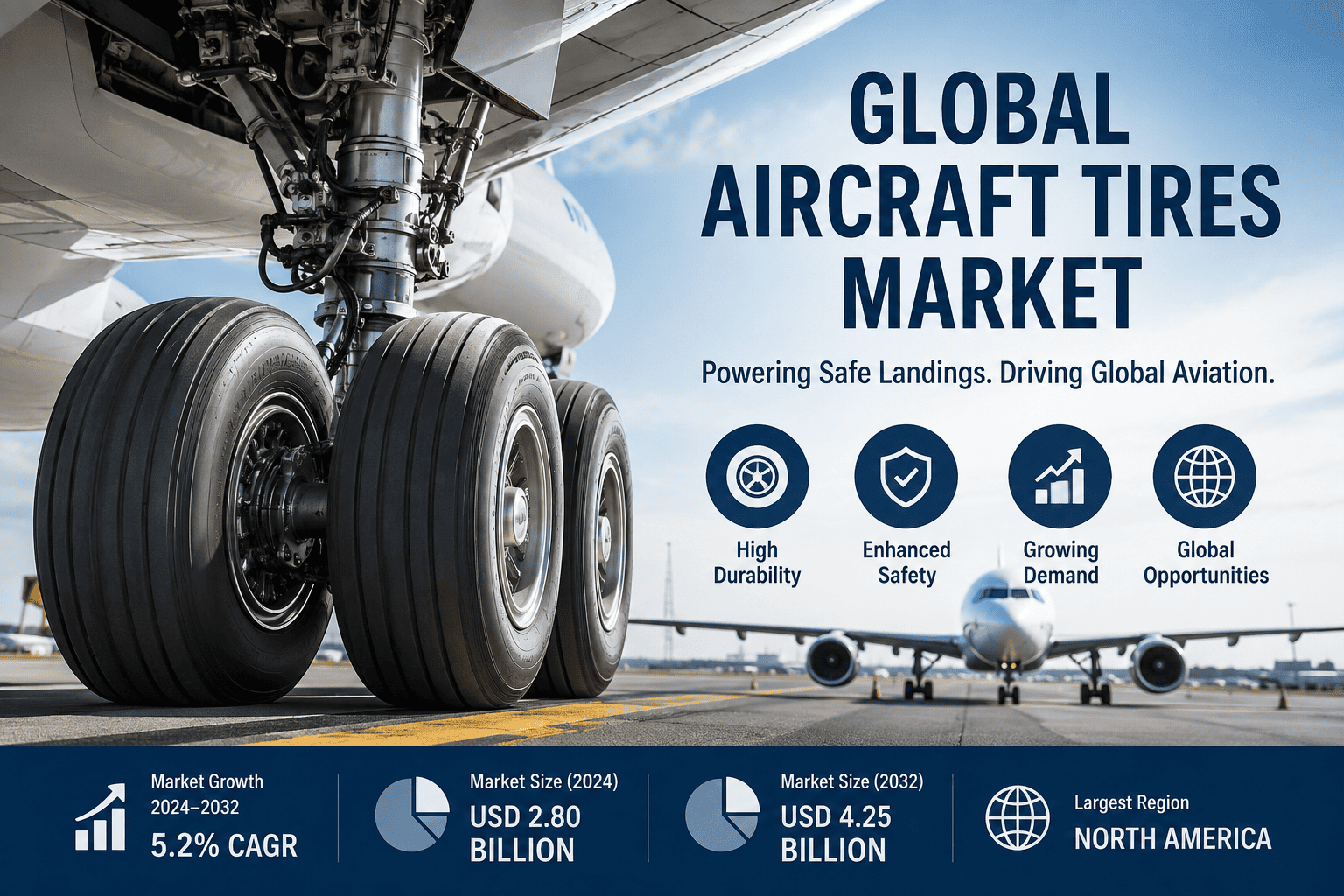
The Global aircraft tires market is gaining momentum as global aviation expands, aircraft fleets increase, and airlines prioritize safety, reliability, and operational efficiency. Aircraft tires perform under extreme conditions, absorbing heavy loads during landing, supporting high-speed braking, and enduring repeated takeoff, landing, and taxiing cycles. These demanding requirements create recurring replacement needs and encourage manufacturers to invest in advanced materials, construction techniques, and tire-monitoring technologies.
According to 6Wresearch, the market was valued at approximately USD 1.6 billion in 2025 and is projected to reach USD 2.3 billion by 2032, representing a CAGR of 5.10% during 2026–2032. This growth trajectory reflects a combination of commercial aircraft fleet expansion, increasing aircraft utilization, MRO activity, replacement requirements, defense modernization, and infrastructure development.
The market's growth story is not limited to new aircraft production. The aftermarket is becoming an increasingly important contributor as existing aircraft require regular tire replacement. At the same time, innovations in radial construction, tubeless designs, sustainable materials, and digital monitoring are creating new opportunities across the aircraft tire value chain.
Advantages of Investing in Global Aircraft Tires Market Growth
One of the most compelling characteristics of the global aircraft tires market is its recurring demand. Aircraft tires are wear-sensitive components, meaning that airlines and aircraft operators must periodically replace them to maintain safe and reliable operations.
This replacement cycle creates an attractive aftermarket opportunity. According to 6Wresearch, the aftermarket segment is expected to expand at a CAGR of 6.5% from 2026 to 2032. Increasing aircraft utilization and the continued operation of aging fleets are expected to sustain replacement requirements.
For manufacturers and investors, this recurring demand provides an important foundation for long-term growth. Companies that combine product reliability with efficient distribution, MRO partnerships, and responsive aftermarket services can establish durable relationships with aviation customers.
Why Aircraft Tire Market Growth Supports Future Aviation
The expansion of global aviation is directly connected with aircraft tire demand. Airlines are adding aircraft to meet rising passenger traffic while replacing older fleets with newer and more efficient models.
This creates a dual market opportunity. New aircraft generate original equipment demand, while aircraft already in service generate replacement requirements. As fleet sizes increase, both channels can expand simultaneously.
Airlines are also increasingly focused on total lifecycle costs. A tire offering longer service life, better durability, or improved operational performance can potentially reduce maintenance interruptions and replacement frequency. Consequently, product selection is increasingly influenced by long-term value rather than purchase price alone.
Search Visibility Through Global Aircraft Tires Market Analysis
Detailed market analysis allows companies to understand how demand differs across tire construction, aircraft type, application, and geographic markets. These differences are important because technology adoption and aircraft fleet composition can significantly influence regional opportunities.
Radial tires currently represent approximately 60% of the market, while tubeless tires account for around 70%, according to 6Wresearch. Their widespread adoption highlights the importance of weight, safety, and performance in modern aircraft tire selection.
Understanding these product trends can help manufacturers determine where to invest in research and development. It can also help suppliers identify product categories with strong customer acceptance and future expansion potential.
Demand and Benefits Strengthen Aircraft Tire Market Size
Commercial aviation remains the dominant demand source. According to 6Wresearch, commercial aircraft accounted for nearly 65% of the global aircraft tires market in 2025.
The continued expansion of passenger aviation creates a broad foundation for market growth. More aircraft and more flights result in greater tire utilization, while increasing aircraft cycles contribute to replacement demand.
Aircraft tires also provide important operational benefits. Reliable products help support safe landings, braking, taxiing, and aircraft ground movement. For airlines, tire durability and predictable maintenance can contribute to improved aircraft availability and more efficient fleet management.
Military aviation provides another growth channel. Defense fleet modernization and increasing requirements for military aircraft are supporting demand for specialized tire solutions, giving manufacturers opportunities beyond commercial aviation.
Enhance User Experience with Advanced Aircraft Tire Technology
Technology is becoming an increasingly important part of the aircraft tire industry's development. Manufacturers are improving rubber compounds, reinforcement materials, construction techniques, and lightweight designs to enhance durability and performance.
Tubeless tire technology is one of the industry's established innovations, while smart monitoring represents a developing opportunity. Digital tire systems could help operators monitor pressure, temperature, wear, and tire condition in real time or near real time.
Such capabilities could support predictive maintenance, helping airlines identify potential issues before they affect operations. Better tire information can also improve maintenance planning and help operators optimize replacement schedules.
Although passengers may rarely think about aircraft tires, improvements in tire technology can contribute indirectly to dependable aircraft operations and a more reliable travel experience.
Lifestyle Benefits from Growing Aviation Connectivity
The expansion of air travel has significant lifestyle and economic effects. Aviation allows people to travel internationally for tourism, business, education, and personal purposes while supporting global commerce and logistics.
As air connectivity improves, airlines increase flight frequencies and expand routes. This raises aircraft utilization, creating additional operating cycles and, consequently, greater demand for aircraft tires.
Emerging markets are particularly important to this trend. Growing middle-class populations, tourism development, and improving airport infrastructure are encouraging more people to travel by air. These developments can create a broader customer base for airlines while strengthening demand throughout the aerospace component supply chain.
Infrastructure Development Supports Global Aircraft Tires Market Expansion
Infrastructure investment is another important contributor to market growth. New airports, expanded runways, aviation hubs, MRO centers, and cargo facilities enable greater aircraft activity and strengthen regional aviation ecosystems.
North America currently holds the largest regional share, while Asia is expected to be the fastest-growing market. According to 6Wresearch, Asia is projected to grow at approximately 7.0% CAGR from 2026 to 2032.
India and China are particularly important to this regional outlook because of their expanding passenger aviation markets, increasing aircraft fleets, and continued investment in aviation infrastructure.
The development of local MRO capabilities can further strengthen aftermarket opportunities by improving access to replacement tires and maintenance services.
Sustainability Influences Future Aircraft Tire Market Growth
Sustainability is becoming a more significant consideration across the aviation supply chain. Airlines and manufacturers are seeking ways to reduce environmental impact while maintaining safety and controlling costs.
Aircraft tire manufacturers are exploring longer-lasting products, sustainable materials, retreading, recycling, and more efficient manufacturing processes. Longer service life can potentially reduce material consumption and replacement frequency while improving lifecycle economics.
As sustainability becomes more integrated into aviation procurement strategies, environmentally responsible tire solutions could become a stronger competitive differentiator. Companies that can combine sustainability with performance and safety may gain greater market relevance.
Emerging Applications Expand Aircraft Tire Market Opportunities
The market is also benefiting from demand beyond conventional commercial aircraft. Military aircraft, helicopters, business aviation, cargo aircraft, and other specialized platforms require tires adapted to their specific operating conditions.
Fixed-wing aircraft currently dominate demand, but rotary-wing applications are expected to experience faster growth through 2032. Military aircraft are also projected to expand strongly as defense aviation modernization continues.
This diversification provides opportunities for manufacturers with broad technical capabilities. Developing products tailored to different aircraft weights, speeds, landing conditions, and mission requirements can allow companies to access specialized market segments and reduce dependence on a single customer category.
Wrapping Up
The global aircraft tires market is demonstrating a positive growth trajectory supported by strong structural fundamentals. From approximately USD 1.6 billion in 2025, the market is projected to reach USD 2.3 billion by 2032, reflecting continued demand from commercial aviation, aftermarket replacement, military fleets, and expanding aviation infrastructure.
The market's appeal extends beyond its projected size. Recurring replacement demand provides an important foundation, while technological innovation creates opportunities for companies offering lighter, stronger, smarter, and more sustainable products.
North America provides an established aviation base, while Asia offers significant future expansion potential. The combination of fleet modernization, rising aircraft utilization, MRO development, and growing air connectivity makes the market strategically relevant for manufacturers, suppliers, investors, and aerospace service providers.
For companies seeking long-term exposure to aviation growth, now is an opportune time to evaluate the global aircraft tires market. Businesses that invest in product innovation, aftermarket capabilities, sustainable technologies, and high-growth regional markets can be well positioned to capture opportunities as the industry progresses toward 2032.
FAQs
1. What is the current size of the global aircraft tires market?
According to 6Wresearch, the global aircraft tires market was valued at approximately USD 1.6 billion in 2025. The market is projected to reach USD 2.3 billion by 2032, reflecting a 5.10% CAGR supported by aviation expansion, replacement demand, and fleet modernization.
2. What is driving aircraft tire market growth?
Key drivers include expanding aircraft fleets, rising passenger traffic, higher aircraft utilization, MRO activity, and recurring tire replacement. Military fleet modernization and airport infrastructure development also contribute to the growth outlook for the global aircraft tires market.
3. Why is the aircraft tire aftermarket important?
The aftermarket is important because aircraft tires experience regular wear and require periodic replacement. According to 6Wresearch, the aftermarket segment is projected to grow at a CAGR of 6.5% through 2032, supported by fleet expansion and increasing aircraft utilization.
4. Which region will grow fastest in the aircraft tire market?
Asia is expected to be the fastest-growing region. The global aircraft tires market in Asia is supported by rising passenger traffic, expanding airline fleets, airport development, and increasing MRO capabilities, particularly in major aviation markets such as India and China.
5. What share does commercial aviation hold in aircraft tire demand?
Commercial aircraft represented nearly 65% of the global aircraft tires market in 2025. Continued airline fleet expansion, increasing passenger travel, and higher flight activity are expected to maintain commercial aviation as the industry's primary demand source through 2032.
6. What aircraft tire technologies are gaining importance?
Radial and tubeless technologies are particularly important. Radial tires account for approximately 60% of the market, while tubeless tires represent around 70%. Lightweight construction, advanced materials, and digital monitoring are also influencing future product development.
7. How does aircraft fleet expansion affect tire demand?
Fleet expansion creates demand for both original equipment and replacement products. New aircraft require tires when delivered, while increasing fleet utilization generates wear and subsequent replacement needs. This dual effect supports sustained growth within the global aircraft tires market.
8. How is sustainability affecting aircraft tire development?
Sustainability is encouraging manufacturers to explore durable materials, longer service life, retreading, recycling, and efficient manufacturing. These initiatives can reduce resource consumption and lifecycle costs while helping aviation companies address environmental objectives.
9. What opportunities exist in military aircraft tires?
Military aviation provides opportunities through fleet modernization and increasing demand for specialized aircraft. Military aircraft often operate under demanding conditions, creating requirements for durable and high-performance tire solutions within the broader global aircraft tires market.
10. Why is the global aircraft tires market attractive for investors?
The market combines recurring aftermarket demand with structural aviation growth. Fleet modernization, rising aircraft utilization, MRO expansion, defense requirements, technology development, and Asian aviation growth create multiple opportunities for businesses and investors seeking long-term aerospace market exposure.
Read more..

 Arabic
 French
 Spanish
 Portuguese
 Deutsch
 Turkish
 Dutch
 Italiano
 Russian
 Romaian
 Portuguese (Brazil)
 Greek