


Jewellery Buying Guide: How to Choose the Right Jewellery for Your Wedding
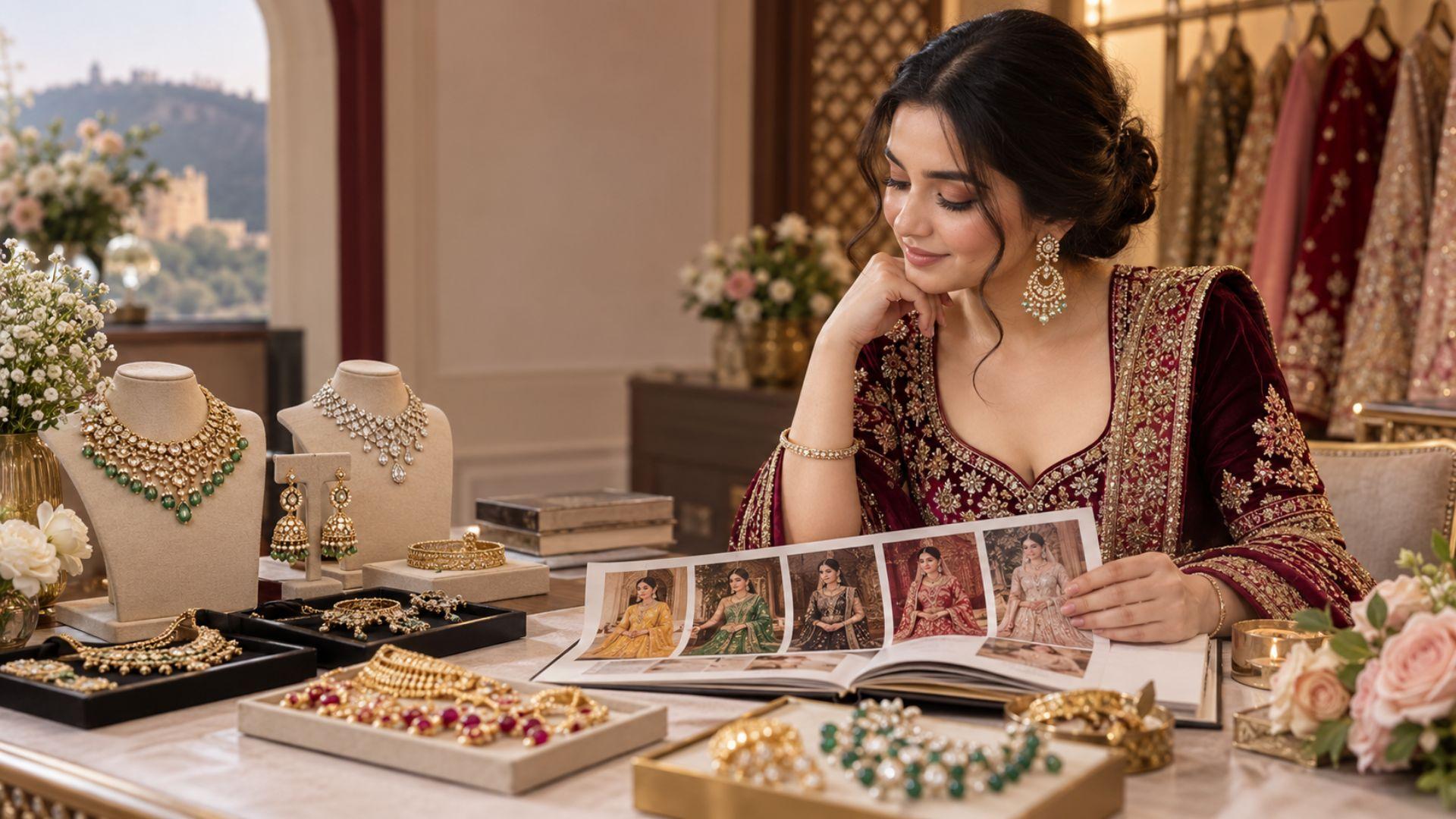
Buying wedding jewellery is one of the biggest decisions you will make before your wedding. The challenge is not finding beautiful jewellery. Indian jewellery stores offer more choices than any bride needs, which is a slightly cruel way to test decision-making during an already busy wedding season.
The real question is simple: what jewellery is right for you?
Your answer depends on your wedding functions, outfits, personal style, skin undertone, budget, gold purity, gemstones, diamonds and how often you expect to wear each piece after the wedding. A good jewellery buying plan brings all these decisions together before you spend.
This jewellery buying guide explains how to approach the process step by step, with practical advice for brides in Jammu, North India and families buying wedding jewellery in India.
How should you start planning your bridal jewellery?
Start with your wedding calendar rather than with jewellery designs. Write down every function, the outfit planned for it and the type of look you want.
For example, your Haldi might need lightweight jewellery with colour and movement. Mehendi might call for statement earrings and bangles. Sangeet gives you more freedom to use a bold necklace or earrings, while the wedding usually needs your most traditional bridal pieces. Reception jewellery often works well when you want a polished look with better post-wedding wear.
Once you have this list, divide jewellery into three categories: essential pieces, supporting pieces and optional pieces.
Your essential pieces form the foundation of your bridal collection. Supporting pieces help create different looks across functions. Optional pieces include trend-led designs or jewellery you want for sentimental reasons.
This simple division prevents you from spending heavily on pieces before knowing where they fit.
Should you choose your wedding outfit before buying jewellery?
In most cases, choose your main wedding outfits before finalising the jewellery. The neckline, colour, embroidery, fabric and silhouette all affect the size, shape and colour of jewellery you need.
Vogue India's bridal jewellery guidance also places importance on considering clothing and personal style when selecting bridal jewellery.
A heavily embroidered blouse might already have enough visual detail around the neckline. Adding a large necklace with similar levels of detail could make the look feel crowded. A simpler blouse gives your necklace or earrings more room to stand out.
Take photographs of your outfits when shopping for jewellery. Better still, carry fabric swatches when available. Jewellery that looks perfect under showroom lighting might create a different effect beside your actual bridal outfit.
Shaadinama follows this outfit-first approach through its discovery process. Wedding events, outfits, preferences and budget form part of the initial consultation before jewellery looks are shortlisted.
What jewellery should you wear for each wedding function?
Your jewellery does not need to look identical across every wedding event. Each function deserves its own styling direction.
| Wedding function | Jewellery direction | Main focus |
|---|---|---|
| Haldi | Lightweight earrings, bangles, floral or colourful jewellery | Comfort and movement |
| Mehendi | Statement earrings, bangles and lighter layered pieces | Hands, comfort and photographs |
| Sangeet | Statement earrings or a defined necklace | Evening styling and stage photographs |
| Wedding | Traditional bridal necklace, earrings, bangles and head jewellery | Ceremony and bridal outfit |
| Reception | Diamond, gold or contemporary jewellery | Evening styling and future wear |
The aim is not to buy five complete jewellery sets. Select a few strong pieces and build different combinations around them.
For instance, one pair of earrings might work with your Sangeet outfit and your Reception look. A versatile bangle set might work across Mehendi and other family functions. Your main bridal necklace can remain exclusive to the wedding ceremony.
Shaadinama's function-wise styling process follows this approach by creating separate looks for Mehendi, Sangeet, Wedding and Reception, with alternate options where needed.
How do you match jewellery with your bridal outfit?
Look at four things first: neckline, outfit colour, embroidery and visual weight.
A deep neckline often gives a necklace more space. A high neckline might work better with statement earrings. A heavily embellished outfit often pairs well with jewellery offering some visual breathing room.
Colour also matters. Yellow gold works naturally with many traditional Indian bridal palettes, while diamonds and white metals often suit cooler or more contemporary outfits. Coloured gemstones introduce another layer, especially when your lehenga already contains strong shades.
Do not try to match every jewellery colour to your outfit. A controlled contrast often creates a better result than exact matching.
The final question should be: which element should people notice first?
If your necklace is the hero piece, keep the earrings and other jewellery supportive. If you have statement earrings, let them lead the look.
[INTERNAL LINK: Bridal Jewellery → Shaadinama]
How do you choose jewellery according to your skin undertone?
Skin undertone gives you a useful starting point when choosing jewellery metals and gemstone colours. Warm, cool and neutral undertones often respond differently to yellow gold, white metals, rose gold and coloured stones.
Shaadinama includes a skin undertone check as part of its styling process. The aim is not to force every bride into a fixed colour chart. The undertone becomes one factor alongside outfit colour, function, personal style and the desired overall effect.
For example, a bride with a warm undertone might enjoy the traditional richness of yellow gold. A bride with a cooler undertone might prefer white metals or gemstones with cooler colour tones.
Your own preference still matters. Bridal jewellery should look like you, not like a colour theory exercise conducted by someone with a clipboard.
Is 22K or 18K gold better for jewellery?
The answer depends on how you plan to use the jewellery.
BIS Hallmarking information identifies 22K gold as 916 fineness and 18K gold as 750 fineness.
22K gold contains a higher proportion of gold and is widely associated with traditional Indian gold jewellery. 18K gold contains a larger proportion of other metals, which affects its properties and makes it common in several diamond and contemporary jewellery designs.
Do not choose purity based on the number alone. Consider the design, stone setting, intended frequency of wear, durability requirements and total purchase price.
If you want traditional gold jewellery for your wedding and future family occasions, discuss the appropriate purity with your jeweller. If you are buying diamond jewellery for frequent use, ask why the particular purity was selected for the design.
How do you check whether gold jewellery is genuine?
Look for three hallmark components: the BIS logo, the purity or fineness mark and the six-digit HUID.
Do not rely on a photograph or verbal confirmation from someone else. Check the HUID yourself.
Also compare the jewellery with your invoice. Review the stated purity, weight and other relevant details before making payment.
BIS consumer guidance also provides information about consumer testing and purity-related complaints.
Shaadinama includes hallmark, stone-setting, finish and comfort checks within its quality-check stage. This gives the bride a practical checklist instead of leaving quality verification until after the purchase.
How much should you spend on bridal jewellery?
Your jewellery budget should begin before your showroom visit.
Decide your total spending limit first. Then divide it across your wedding functions and priorities.
You might allocate more money to your main wedding jewellery and choose lighter pieces for daytime functions. You might also reserve part of the budget for diamond jewellery intended for post-wedding wear.
A useful approach is to create three choices for each important piece:
Preferred option.
Lower-cost alternative.
Upgrade option.
This keeps the decision flexible when you compare actual designs and prices.
Shaadinama's Smart Budgeting process uses budget tiers for different functions and separates core investment pieces from trend-led additions. It also considers upgrades, downgrades and alternate pieces before the final buying plan.
The goal is not to spend less at every opportunity. The goal is to spend deliberately.
What should you check on your jewellery bill?
Never treat the final bill as a formality.
Review the jewellery description, purity, weight and applicable charges. For stone jewellery, ask how the stone component has been calculated. Ask about making charges, taxes, discounts and the final payable amount.
If something looks unclear, ask for an explanation before payment.
This becomes even more important when comparing two pieces from different jewellers. A lower making charge does not tell you the full story unless you compare the gold rate, weight, stone details, workmanship and final price together.
Keep your invoice and related documents safely after the purchase.
What is the difference between Kundan, Polki and Jadau?
Kundan, Polki and Jadau are often discussed together in Indian bridal jewellery, but the terms do not describe exactly the same thing.
Polki generally refers to uncut diamonds used in jewellery. Kundan relates to a traditional setting technique involving gemstones set into refined gold foil. Jadau refers to a traditional jewellery-making style associated with setting gemstones into the metal through an intricate handcrafted process.
The exact construction and terminology used by jewellers varies, so ask what materials and techniques a particular piece uses before comparing prices.
A guide from Aza Fashions on Kundan, Polki and Jadau jewellery also highlights these distinctions.
This matters because two pieces might look similar in photographs while differing in materials, workmanship and construction.
How should you buy diamond jewellery?
Learn the 4Cs before comparing diamonds: cut, colour, clarity and carat weight.
Do not assume a larger carat weight means a better-looking diamond. Look at how the stone performs visually and compare diamonds within your budget.
For significant purchases, ask for an independent grading report from a recognised gemological laboratory. GIA also recommends viewing diamonds under different lighting conditions before making a decision.
If a diamond has undergone treatment, ask for disclosure. GIA explains how diamond treatments affect colour, clarity, value and care requirements.
How should you choose gemstones for bridal jewellery?
Colour is only one part of gemstone selection.
If you plan to wear a gemstone piece often, consider hardness, toughness and stability. These properties affect how a gemstone responds to scratches, impact, heat, light and chemicals.
GIA's gemstone durability guidance explains why hardness alone does not describe the full durability of a gemstone.
You should also ask whether the stone has received treatment. GIA's gemstone treatment guidance explains why treatment information matters for understanding a gemstone and caring for it properly.
For bridal jewellery, think beyond the wedding photographs. A gemstone selected for a necklace worn twice a year has different requirements from a gemstone used in an everyday ring.
How do you avoid buying jewellery you will never wear again?
Before buying a piece, ask yourself where you expect to wear it after your wedding.
A heavily traditional necklace might have strong sentimental value and still remain an occasional piece. A pair of diamond earrings, gold bangles or a versatile pendant might work across family functions, festivals and everyday occasions.
Both types of purchases have value. The important thing is knowing which type you are buying.
Shaadinama separates investment pieces from trend-led additions during its budgeting process. This helps brides spend more deliberately on jewellery they expect to keep wearing.
What should you ask a jeweller before buying?
Before paying, ask:
What is the purity of the gold?
Where is the BIS hallmark?
What is the HUID?
What is the net gold weight?
How much are the making charges?
How have the stones been priced?
Is the diamond independently graded?
Have any gemstones or diamonds received treatment?
What does the invoice include?
What are the exchange, return and buyback terms?
Do not feel awkward about asking questions. You are making a high-value purchase. A good jeweller should explain the details clearly.
GIA's diamond buying guidance also recommends working with knowledgeable jewellery professionals and asking questions about grading reports, the 4Cs and your budget.
How can you coordinate jewellery for the whole family?
Bridal jewellery does not exist in isolation.
Your mother, mother-in-law, sisters and other close family members often appear in the same photographs and ceremonies. Their jewellery does not need to match yours, but the overall styling should feel balanced.
Start with the bride's main looks. Then coordinate family jewellery through colour, metal tone or level of detail.
For example, if the bride wears heavy Polki jewellery for the wedding, family members might choose simpler gold or diamond pieces rather than competing with the bridal set.
Shaadinama includes bride and family styling coordination as part of its consultation approach. The aim is to create individual looks while keeping the wedding photographs visually balanced.
How do you create a bridal jewellery plan without feeling overwhelmed?
The easiest way is to stop making every decision at once.
Start with your wedding calendar. Add every outfit. Match each outfit to a function. Decide the jewellery direction. Then narrow the choices using neckline, colour, skin undertone, metal, stones, budget and future wear.
Shaadinama follows a similar process through discovery, style mapping, function-wise shortlisting, try-on and feedback, budget planning, quality checks and a final checklist.
The result is a jewellery plan rather than a collection of screenshots.
You know what you need for each function. You know which pieces deserve more of your budget. You know which jewellery you want to reuse. Most importantly, you have a reason behind each purchase.
For a bride planning her wedding in Jammu or elsewhere in North India, this approach keeps traditional expectations, personal style and practical spending in the same conversation.
Frequently Asked Questions
What should I buy first when planning bridal jewellery?
Start with your wedding functions and main outfits before choosing individual jewellery pieces. This gives you a clear view of what you need and prevents duplicate purchases.
Is 22K gold good for bridal jewellery?
22K gold has a fineness of 916 and suits many traditional Indian gold jewellery styles. The right purity still depends on the design, stone setting and intended use.
How do I verify gold jewellery in India?
Look for the BIS logo, purity or fineness mark and six-digit HUID. Verify the HUID through the BIS CARE app before completing your purchase.
Should bridal jewellery match the wedding outfit?
Your jewellery should coordinate with the outfit rather than copy every colour and detail. Consider the neckline, embroidery, colour, visual weight and the overall bridal look before choosing each piece.

 English
 French
 Spanish
 Portuguese
 Deutsch
 Turkish
 Dutch
 Italiano
 Russian
 Romaian
 Portuguese (Brazil)
 Greek