


What Happens When Nobody Protects the Way a Product Looks
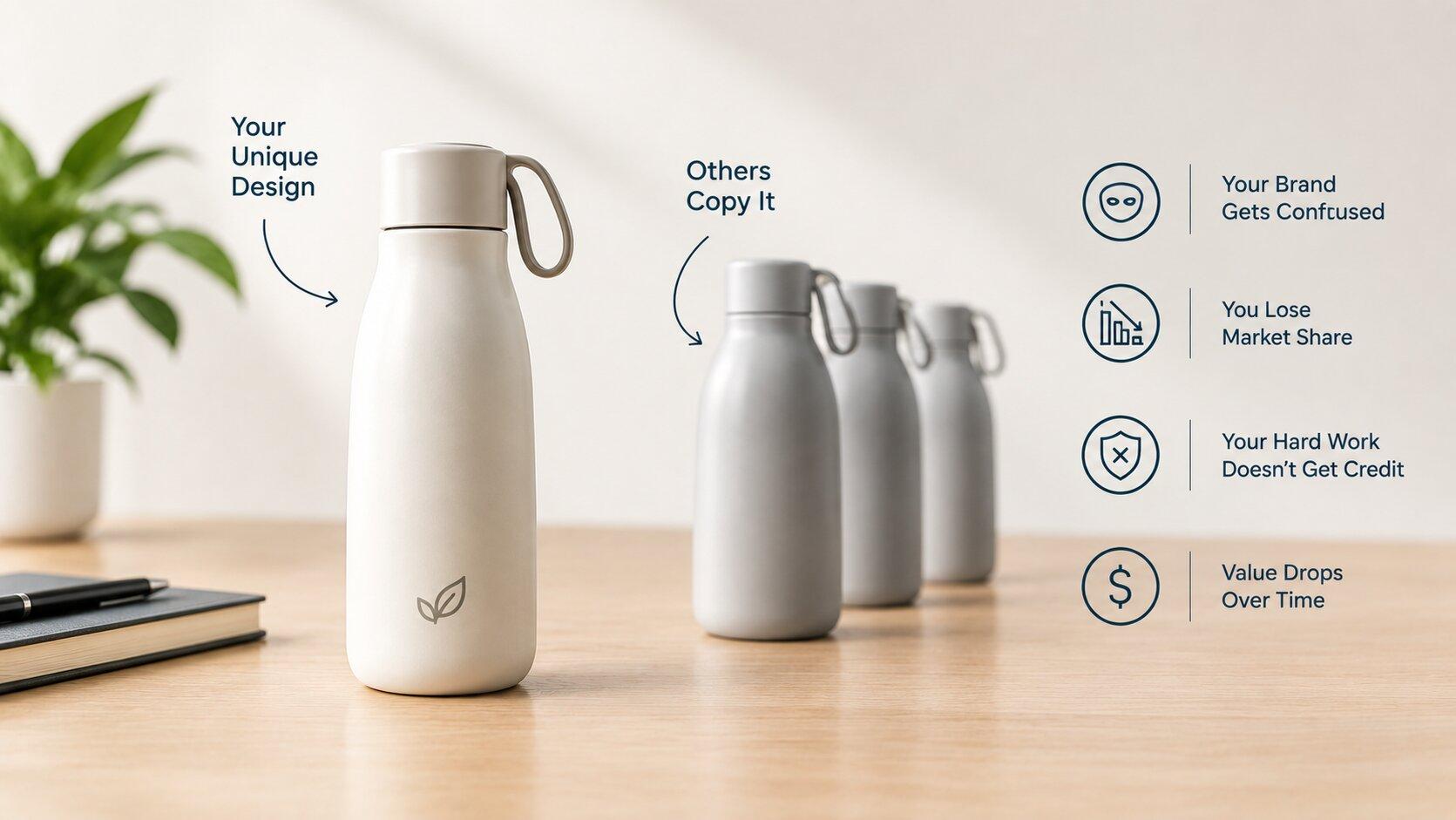
A furniture maker spends months perfecting the curve of a chair back. A textile business develops a print nobody else has used before. A packaging designer lands on a bottle shape that makes a product recognizable from across a store aisle. None of these things are the product's function. They're simply how it looks. And in every one of these cases, the appearance itself is often what actually sells the product.
Here's the uncomfortable part. None of that visual work is automatically protected. Unlike some other creative outputs, the look of a manufactured product needs a specific legal step before the law will actually stand behind it, and that step is design registration in Pakistan.
This article looks at what that protection actually covers, why so many businesses overlook it until it's too late, and what the process realistically involves from start to finish.
The Blind Spot Most Businesses Have
Ask a business owner about protecting their brand, and they'll usually mention a name or a logo. Ask about protecting a product's shape, pattern, or overall silhouette, and you'll often get a blank look.
That gap matters more than it seems. A name tells customers who made something. A shape or pattern is often what makes them stop and pick it up in the first place. Competing manufacturers know this too, and copying a successful product's appearance is far easier, and far cheaper, than building an equally recognizable design from scratch.
Design registration exists specifically to close that gap. It gives the creator of a distinctive appearance an exclusive legal right over that look, entirely separate from whatever brand name or logo sits alongside it.
Where the Legal Line Actually Sits
Legally, a design refers only to the shape, configuration, pattern, or ornamentation of a manufactured article, judged purely on visual appeal. Nothing about how a product performs falls under this definition.
That draws a clean boundary between two branches of intellectual property law:
- Appearance falls under design law.
- Function falls under patent law.
If a feature exists purely because the product needs to work a certain way, that's a patent matter. If it exists because someone made a deliberate aesthetic choice, that's a design matter. Plenty of products need protection on both sides of that line at once. A container might have a distinctive external shape worth registering as a design, wrapped around an internal mechanism worth protecting separately as a patent.
What Actually Qualifies
Design registration protects the outward appearance of a manufactured article, meaning its shape, configuration, surface pattern, and decorative treatment.
It generally does not extend to:
- The underlying method or process used to build something
- Mechanical or functional features that exist purely out of necessity
- Internal parts not visible once the product is finished
- Standalone artistic works such as paintings, sculptures, or engravings
- Photographs, architectural plans, or works of craftsmanship
- Brand names, logos, and other trade dress elements, which fall under a separate area of law entirely
A common early mistake is filing a design application for something that's actually a functional feature dressed up as an aesthetic one. Sorting out that distinction before filing saves months of avoidable delay later.
Establishing Who Actually Owns a Design
Ownership isn't always as obvious as "whoever thought of it." A few scenarios come up regularly:
- The individual designer who personally created it
- An employer, where the design was made by an employee as part of their role
- Whoever a written commercial agreement assigns ownership to, where a design was commissioned externally
- A party who received rights through formal assignment
- Multiple people jointly, where more than one person genuinely contributed to the design
Whoever files needs a clean, demonstrable chain of ownership, whether through an employment relationship, a signed contract, or a documented transfer. Where two parties end up disputing a similar design, the earliest filing date generally settles the matter.
Products Where This Protection Actually Pays Off
Design protection tends to matter most in categories where appearance genuinely drives the sale:
- Product shapes and packaging designs
- Textile prints and surface patterns
- Furniture pieces and product casings
- Everyday consumer goods with a distinctive form
It's worth being equally clear about what falls outside this scope. Architectural drawings, technical schematics, and internal business processes belong to entirely different areas of law, and design registration was never built to cover them.
The Novelty Test Examiners Actually Apply
To qualify, a design has to be genuinely new, meaning it hasn't already been shown to the public before the filing date. Examiners weigh a few things closely:
- Whether the design already surfaced in catalogues, exhibitions, or online listings
- Whether the claimed differences are meaningful, rather than purely cosmetic
- Whether combining already-known features actually produces something new
There is a grace period, generally around twelve months, that can cover certain disclosures made before filing, such as a designer showing their own work publicly first. Relying on that grace period is still legally riskier than simply filing before any public reveal.
How the Application Actually Moves
Filing can happen in person, by courier, or through an online portal, and the process generally runs through these stages:
- Submitting the application with the required fee and a clear visual representation
- Receiving an acknowledgment and application number
- A formality check that flags missing paperwork or fee shortfalls
- Formal and substantive examination, assessing whether the design is registrable, novel, and original
- A response window if the examiner raises objections
- Certificate issuance, followed by publication in the official Gazette
Assuming no major complications, a reasonable estimate for the whole process is around six months. That's a working estimate rather than a fixed guarantee, since objections or backlogs can extend it.
Why the Visual Representation Decides Everything
If one part of a design application determines its outcome, it's the representation, meaning the actual images that define what's being protected. Get this part wrong, and you either invite unnecessary objections or end up with protection narrower than intended.
A few standards examiners consistently expect:
- Multiple angles, including front, back, side, top, and perspective views, along with open and closed positions for anything with moving parts
- Neutral backgrounds, free of clutter, watermarks, or distracting elements
- Consistency, so every view shows the same version of the article
- Sharp resolution, since blurry or pixelated images are one of the most common, entirely avoidable causes of delay
- Consistent colour treatment, since black-and-white or colour both work, but mixing them across views creates confusion
A carefully written novelty statement, identifying exactly which feature is being claimed, and disclaimers marking out unclaimed elements both play a real role in how strong the eventual registration turns out to be.
How Long the Protection Actually Lasts
Once granted, a design is protected for an initial ten years from filing. That period can be renewed twice more, in ten-year blocks, bringing total protection to as much as thirty years. A grace period is generally available if a renewal deadline slips past unnoticed.
What It Actually Means to Copy a Registered Design
Using a registered design's appearance without permission, whether in a competing product, packaging, or marketing material, generally counts as infringement, exposing the copier to a claim for damages, an injunction, or both.
To succeed, the design owner typically has to show a valid, active registration along with a clear connection between that registration and the copied product. There's a limited defence available for someone who genuinely didn't know a design was registered, and the law also protects against the opposite problem. If someone makes infringement accusations without real grounds, the accused party has their own remedy available too.
Design or Patent, and How to Tell the Difference
This question comes up constantly, and the honest answer depends entirely on what's actually being protected.
If it's about how something looks, that's a design matter. If it's about how something works, that's a patent matter. Many products genuinely need both, and treating a product's appearance and its mechanism as a single question usually leaves one half with no protection at all.
Businesses working through this exact question often turn to a firm like Khatri IP Attorneys, since reviewing a product's name, look, and mechanism together tends to catch gaps that get missed when each is filed separately.
A Few Things Worth Doing Before You File
- File before any public launch, display, or marketing push
- Sort out ownership documentation early, especially where employees or outside vendors were involved
- Put real effort into the representation and the novelty statement
- Use disclaimers to keep the claimed scope tightly focused
- Respond to any objections quickly to avoid unnecessary delay
Bringing It All Together
A product's appearance is frequently the reason a customer notices it in the first place, and it's just as often the first thing a competitor tries to copy. Registering that appearance turns something easy to imitate into something genuinely enforceable.
The details tend to matter more than most people expect going in. The representation, the novelty statement, and the classification each shape how much protection ends up on record, and mistakes here are far harder to correct after filing than before it. If your business depends on how a product looks rather than just its name, that's a gap worth closing sooner rather than later.
Frequently Asked Questions
How is design registration different from patent registration?
Design registration protects appearance, meaning shape, pattern, and surface treatment. Patent registration protects function, meaning the mechanism or process behind how a product works.
Is registering a design a legal requirement in Pakistan?
No. It's entirely optional, but skipping it leaves much weaker grounds to stop a competitor from copying a product's look, and no formal right to take legal action.
How long does the protection last once granted?
An initial ten years, renewable twice more, for a maximum of thirty years total.
Can a single product carry both design and patent protection?
Yes, and it's fairly common. A product can have a distinctive shape and a genuinely novel internal mechanism, each requiring its own separate filing.
What can actually be done if someone copies a registered design?
The owner can pursue a claim for damages, an injunction, or both, provided they can show a valid registration and a clear link to the copied product.
Is there any leeway if a design was shown publicly before filing?
There's generally a grace period of around twelve months for certain kinds of disclosure, though filing before any public reveal remains the safer route legally.
Roughly how long does the whole process take?
About six months from filing to registration for a straightforward application, assuming no major objections come up along the way.
Do I need legal help to file a design application?
It isn't mandatory, but the visual representation, novelty statement, and classification are easy to get wrong without experience, and errors there are much harder to fix once filed than to avoid at the outset.

 English
 Arabic
 French
 Spanish
 Portuguese
 Deutsch
 Turkish
 Dutch
 Italiano
 Romaian
 Portuguese (Brazil)
 Greek