


Asian Vegetables Wholesale Guide for Foodservice Buyers
Meta Title: Asian Vegetables Wholesale Guide for Foodservice Buyers
Meta Description: Learn how Asian vegetables wholesale supports restaurants and foodservice operations through better variety, sourcing, storage, quality, and inventory planning.
A Practical Guide to Sourcing Asian Vegetables for Foodservice
Asian vegetables wholesale gives restaurants, caterers, hotels, and foodservice businesses access to diverse ingredients at commercial quantities. Asian vegetables include leafy greens, roots, mushrooms, gourds, shoots, and specialty produce. Each variety offers different flavors, textures, and preparation requirements. Therefore, foodservice buyers need to understand sourcing, quality, storage, and purchasing factors before ordering. In addition, working with a reliable wholesale Asian vegetables supplier can help businesses maintain steady inventory. However, buyers should evaluate more than price when selecting products. Product freshness, consistency, packaging, availability, and storage requirements can directly affect kitchen operations and food quality.
Understanding Asian Vegetables
Asian cuisine uses a wide range of vegetables across different cooking traditions. Therefore, restaurants may need several varieties to support their menus.
Common examples include bok choy, Chinese broccoli, napa cabbage, daikon, bitter melon, water spinach, lotus root, and bamboo shoots. Each vegetable has specific culinary uses and handling requirements.
Leafy Asian Vegetables
Leafy vegetables often require careful temperature and moisture management. Bok choy, mustard greens, and water spinach can lose quality quickly under unsuitable conditions.
Therefore, kitchens should inspect leafy vegetables immediately after delivery. They should also remove damaged leaves before storing the remaining produce.
Root and Bulb Vegetables
Root vegetables generally provide better storage stability than delicate leafy greens. Daikon, lotus root, and Asian radishes work well in soups, stir-fries, pickles, and other dishes.
However, proper storage still matters. Excess moisture can affect texture and encourage deterioration.
Specialty Vegetables
Specialty vegetables help restaurants create authentic regional dishes. Bitter melon, bamboo shoots, Thai eggplant, and Chinese long beans provide distinctive characteristics.
Consequently, chefs should understand preparation methods before purchasing unfamiliar varieties. This approach helps reduce waste and improves kitchen efficiency.
Why Restaurants Use Asian Vegetables
Restaurants select Asian vegetables for several practical reasons. First, these vegetables support traditional recipes and regional menus. Second, they provide textures and flavors that standard produce may not replicate.
Furthermore, Asian vegetables can help restaurants expand their menus. A broader vegetable selection allows chefs to offer more dishes influenced by Chinese, Thai, Vietnamese, Korean, Japanese, and other Asian cuisines.
Supporting Menu Variety
Restaurants can use different vegetables across appetizers, soups, stir-fries, noodle dishes, rice dishes, and side dishes. Therefore, one vegetable can sometimes support several menu applications.
For example, bok choy can work in stir-fries, soups, and steamed dishes. Similarly, napa cabbage can support dumplings, soups, salads, and fermented preparations.
Maintaining Consistent Recipes
Consistency remains important in commercial kitchens. Customers expect familiar flavors and textures whenever they order the same dish.
Therefore, kitchens should maintain clear ingredient specifications. These specifications can include vegetable variety, size, freshness standards, and acceptable quality characteristics.
Important Factors When Buying Asian Vegetables
Foodservice buyers should consider several factors before placing commercial orders. Price matters, but it should not become the only purchasing criterion.
Freshness, product consistency, packaging, availability, shelf life, and delivery conditions also influence overall value.
Freshness and Appearance
Fresh vegetables generally show appropriate color, firmness, and texture. Buyers should avoid products showing excessive wilting, bruising, discoloration, or deterioration.
Additionally, buyers should consider how long vegetables will remain in storage before use. Products with limited shelf life require more careful inventory planning.
Product Consistency
Consistent sizing can simplify preparation. When vegetables arrive in similar sizes, kitchen employees can process them more efficiently.
Moreover, consistent products can improve portion control. This factor becomes particularly important for restaurants preparing large quantities every day.
Seasonal Availability
Some Asian vegetables have limited availability during certain periods. Weather conditions, growing regions, transportation issues, and market demand can affect supply.
Therefore, buyers should understand seasonal patterns before planning menus around specialty vegetables.
Working With a Wholesale Supplier
A reliable wholesale Asian vegetables supplier can simplify purchasing for businesses that require regular deliveries. However, buyers should evaluate supplier performance carefully.
They should review product range, packaging standards, delivery schedules, order minimums, and communication processes.
Product Range
A broad product range can reduce the need to coordinate multiple suppliers. However, restaurants should still prioritize product quality and consistency.
For example, a supplier offering leafy vegetables, roots, mushrooms, and specialty produce can support several menu categories.
Delivery Reliability
Fresh produce requires dependable logistics. Delayed deliveries can affect kitchen preparation and inventory planning.
Therefore, buyers should establish clear delivery schedules. They should also maintain communication channels for changes in availability or order quantities.
Packaging Standards
Appropriate packaging helps protect vegetables during transportation. Packaging should limit physical damage while supporting ventilation where necessary.
Furthermore, package sizes should match the buyer's storage capacity and consumption levels.
Storage and Handling Practices
Proper storage helps preserve vegetable quality after delivery. Different vegetables require different temperature, humidity, and handling conditions.
Leafy vegetables generally need careful refrigeration. Meanwhile, some root vegetables can tolerate longer storage under suitable conditions.
Organizing Commercial Storage
Kitchen staff should separate different produce categories when appropriate. They should also keep storage areas clean and organized.
A first-in, first-out system can help kitchens use older inventory before newer deliveries. Consequently, businesses can reduce unnecessary spoilage.
Inspecting Incoming Produce
Staff should inspect every delivery before placing products into storage. They should check packaging, appearance, temperature where relevant, and signs of damage.
Any quality concerns should receive attention immediately. This practice helps prevent unsuitable products from entering kitchen preparation areas.
Reducing Waste in Commercial Kitchens
Vegetable waste can increase operating costs. Therefore, kitchens should monitor purchasing patterns and actual consumption.
Managers can compare ordered quantities with weekly usage. This information can help identify products that require smaller or more frequent orders.
Improving Preparation Efficiency
Standardized preparation methods can reduce unnecessary trimming and handling losses. Kitchen teams should train employees to follow established procedures.
Moreover, chefs can plan recipes around available produce. This approach helps businesses use ingredients efficiently before quality declines.
Managing Demand
Demand forecasting can improve purchasing accuracy. Restaurants should consider customer volume, seasonal changes, holidays, and menu promotions.
For example, a restaurant expecting higher demand for a particular dish should increase relevant vegetable inventory carefully. However, managers should avoid excessive stock that may deteriorate before use.
Comparing Suppliers Before Ordering
Businesses should compare suppliers using several measurable factors. These factors can include product quality, pricing, minimum order quantities, delivery schedules, packaging, and product availability.
However, the lowest price does not always represent the lowest overall cost. Poor quality can increase waste, preparation time, and replacement purchases.
Evaluating Samples
Sample orders allow buyers to evaluate vegetables before making larger commitments. Chefs can inspect appearance, texture, flavor, and cooking performance.
This process provides practical information about how products perform in the actual kitchen.
Reviewing Order Flexibility
Flexible ordering can benefit restaurants with changing demand. Businesses may need different quantities depending on customer traffic and seasonal menus.
Therefore, buyers should understand order modification policies before establishing regular purchasing arrangements.
The Role of Asian Vegetables in Modern Foodservice
Asian vegetables continue to support restaurants that serve traditional and contemporary Asian-inspired dishes. They also provide chefs with ingredients for fusion menus and new recipe development.
As foodservice businesses diversify their menus, demand for specialty vegetables can vary between regions and customer groups.
For example, one restaurant may require large quantities of bok choy and napa cabbage. Another may focus more heavily on Thai eggplant, daikon, or bitter melon.
Consequently, purchasing strategies should reflect each kitchen's specific menu and customer demand.
Final Considerations for Buyers
Foodservice businesses should evaluate Asian vegetables based on freshness, consistency, availability, storage requirements, and total operating value. Careful purchasing can reduce waste while supporting dependable kitchen production.
Asian vegetables wholesale purchasing can provide access to diverse produce when businesses select products according to their actual requirements. Additionally, proper storage and inventory management help maintain quality after delivery.
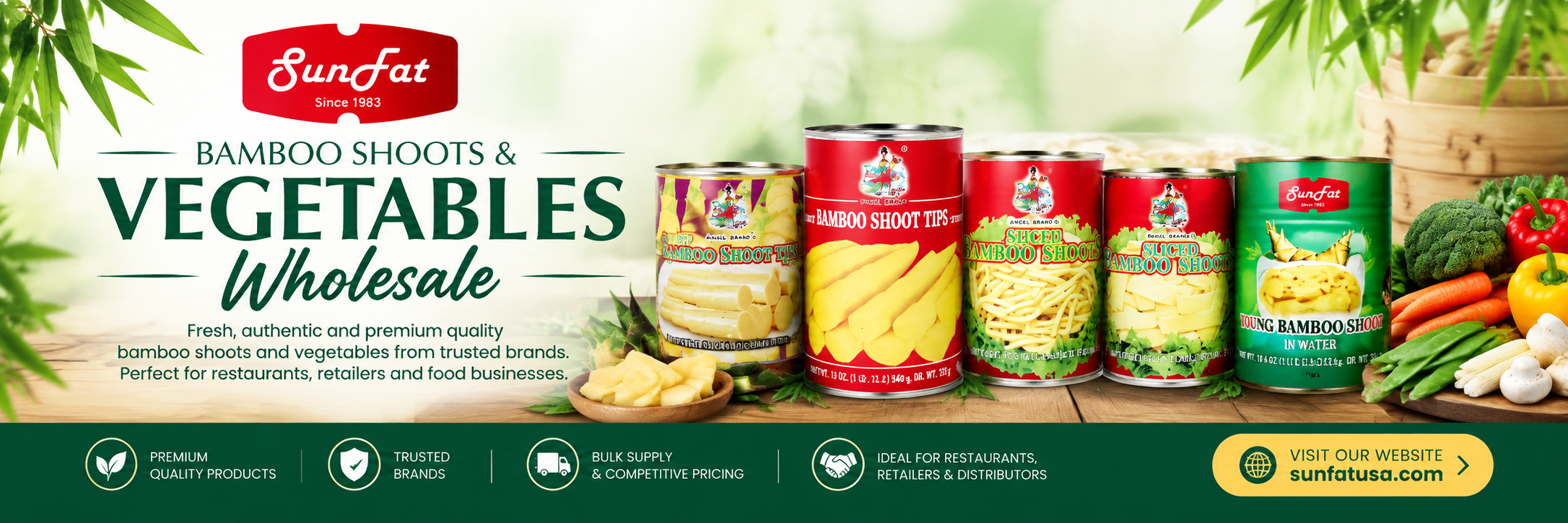
Sunfat USA is one brand associated with Asian food products and commercial foodservice sourcing. However, buyers should assess every supplier using objective factors rather than relying on brand recognition alone.
Ultimately, Asian vegetables wholesale works best when purchasing decisions align with menu requirements, storage capacity, kitchen demand, and quality expectations. A structured sourcing process can help restaurants maintain reliable ingredients while controlling waste and operational costs.

 English
 Arabic
 French
 Portuguese
 Deutsch
 Turkish
 Dutch
 Italiano
 Russian
 Romaian
 Portuguese (Brazil)
 Greek