


Industrial Laser Cleaner: Modern Surface Cleaning for Demanding Workplaces
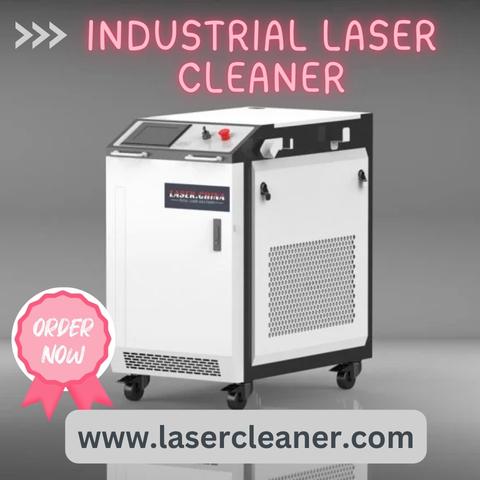
Industrial cleaning has become an important part of modern manufacturing, maintenance, and metal processing. Removing rust, paint, oil, oxide layers, and other unwanted materials from surfaces can take considerable time when traditional cleaning methods are used. As industries look for more precise and controlled solutions, laser technology has become an increasingly practical option. An Industrial laser cleaner provides a modern approach to surface preparation by using concentrated laser energy to remove contaminants from a wide range of materials.
From workshops and factories to automotive facilities and heavy equipment maintenance, laser cleaning can be used for many applications. It offers controlled processing and can be adapted to different surface conditions, making it suitable for both routine maintenance and specialized industrial work.
Understanding Industrial Laser Cleaning
An industrial laser cleaner uses a focused laser beam to interact with unwanted material on a surface. When the laser energy reaches contaminants such as rust, paint, dirt, grease, or oxide, the material absorbs the energy and is separated from the underlying surface.
The process can be carefully adjusted according to the material being cleaned and the type of contamination present. Operators can control parameters such as laser power, scanning speed, frequency, and beam movement to achieve the desired cleaning effect.
Unlike conventional methods that may rely heavily on abrasive materials or chemical solutions, laser cleaning works through controlled light energy. This makes it particularly interesting for manufacturers that need accurate surface preparation without unnecessarily affecting the base material.
Why Industrial Surface Preparation Matters
Clean surfaces are essential in many industrial processes. Rust, oxidation, paint residues, oil, and accumulated dirt can interfere with welding, coating, painting, inspection, and maintenance.
For example, a metal component prepared for welding may require the removal of rust and surface contamination before processing. Similarly, a metal structure being prepared for repainting needs a clean and consistent surface so that the new coating can properly adhere.
Industrial laser cleaning provides a controlled way to prepare these surfaces. Instead of treating cleaning as a simple maintenance activity, manufacturers can integrate laser processing into their wider production and refurbishment workflows.
Removing Rust From Industrial Components
Rust removal is one of the most recognized applications of laser cleaning technology. Metal components exposed to moisture, chemicals, outdoor conditions, or long-term storage can develop oxidation over time.
An Industrial laser cleaner can scan across affected areas and remove rust while allowing the operator to control the cleaning intensity. This is useful for machinery components, metal frames, tools, automotive parts, industrial equipment, and structural components.
The cleaning process can also be applied selectively. Operators may target specific rusty sections instead of processing an entire component unnecessarily. This level of control can be valuable when working with parts that have different surface conditions.
Paint and Coating Removal
Industrial equipment often requires paint removal before repair, inspection, welding, or recoating. Traditional paint stripping methods can involve abrasive blasting or chemical products, depending on the application.
Laser technology offers another method by directing energy toward the coating layer. The operator can configure the process according to the thickness and type of coating being removed.
This approach can be particularly useful for maintenance operations where precise removal is required. Instead of manually scraping small areas or using multiple cleaning products, laser equipment can provide a more systematic process.
Cleaning Oil, Grease, and Surface Contamination
Manufacturing environments frequently involve lubricants, oils, grease, and other residues. These contaminants can accumulate on machinery, tools, molds, and metal components.
Laser cleaning can be used as part of maintenance procedures to remove unwanted deposits from suitable surfaces. In production environments, this can help prepare components for inspection, repair, welding, painting, or further processing.
The exact cleaning method depends on the contamination and substrate. Proper parameter selection is important because different materials and contaminants respond differently to laser energy.
Applications Across Manufacturing Industries
The versatility of industrial laser cleaning allows the technology to be considered for many sectors. Metal fabrication companies can use laser cleaning during surface preparation before welding and coating.
Automotive manufacturers and repair facilities can apply laser cleaning to components, molds, tools, and selected vehicle parts. Heavy machinery companies can use the technology during equipment maintenance and refurbishment.
It can also be useful in aerospace-related manufacturing, shipbuilding, railway maintenance, electronics production, and general metalworking. Each industry may have different requirements, but the fundamental goal remains the same: achieving controlled removal of unwanted material from a target surface.
Laser Cleaning Before Welding
Surface preparation is an important part of welding. Rust, paint, oil, oxidation, and other residues can affect the welding area and make preparation more difficult.
An industrial laser cleaner can be used to prepare selected areas before welding. By removing unwanted surface material, manufacturers can create a cleaner working area for subsequent fabrication processes.
Handheld laser cleaning equipment can be especially practical when components vary in size or shape. The operator can move the cleaning head across the required area instead of depending entirely on fixed cleaning equipment.
Cleaning Industrial Molds and Tools
Molds and tools can accumulate residues during repeated production cycles. If these deposits are not properly removed, they may interfere with future production or require additional maintenance.
Laser cleaning can provide a controlled method for treating suitable molds and tooling surfaces. Because the process can be directed toward specific areas, it may be suitable for detailed maintenance work where precision is important.
Before using laser cleaning on a particular mold or tool, operators should evaluate the material, coating, geometry, and contamination type. Appropriate settings and testing help establish a safe and effective cleaning procedure.
Choosing the Right Industrial Laser Cleaner
Selecting industrial laser cleaning equipment requires consideration of the intended application. Laser power is an important factor, but it is not the only consideration. The type of material, contamination thickness, cleaning area, operating frequency, and required processing speed should also be evaluated.
A company cleaning light surface oxidation may have different requirements from a facility removing thick paint or heavy rust. Portable equipment can be useful for maintenance teams that move between different work areas, while larger systems may be suitable for dedicated production environments.
Manufacturers should also consider operator controls, scanning systems, cooling arrangements, working modes, and available support when selecting equipment.
Safe and Controlled Operation
Laser equipment requires proper handling and workplace controls. Industrial laser cleaners should be operated by trained personnel who understand the equipment and the applicable laser safety requirements.
The work area should be arranged appropriately, and suitable protective equipment should be used according to the laser system and application. Operators should also follow the manufacturer's instructions for setup, maintenance, cleaning procedures, and parameter selection.
Before beginning large-scale processing, testing a small section can help determine suitable settings and reduce the possibility of unwanted surface effects.
Building a Modern Cleaning Workflow
For businesses considering laser cleaning, the technology can become part of a broader production and maintenance workflow. A company may use it for rust removal during equipment refurbishment, paint stripping before repair, or surface preparation before welding and coating.
The ability to adjust the process for different applications makes laser cleaning suitable for businesses with changing production requirements. As equipment technology continues to develop, more manufacturers are exploring laser-based methods as part of their industrial maintenance strategies.
Final Thoughts
An Industrial laser cleaner represents a modern approach to removing rust, paint, oxidation, grease, and other unwanted materials from suitable industrial surfaces. Its controlled laser process can be applied across manufacturing, maintenance, fabrication, automotive, heavy equipment, and other industrial environments.

 English
 Arabic
 Spanish
 Portuguese
 Deutsch
 Turkish
 Dutch
 Italiano
 Russian
 Romaian
 Portuguese (Brazil)
 Greek