


Future Technology Trends in Indonesia Data Center Market
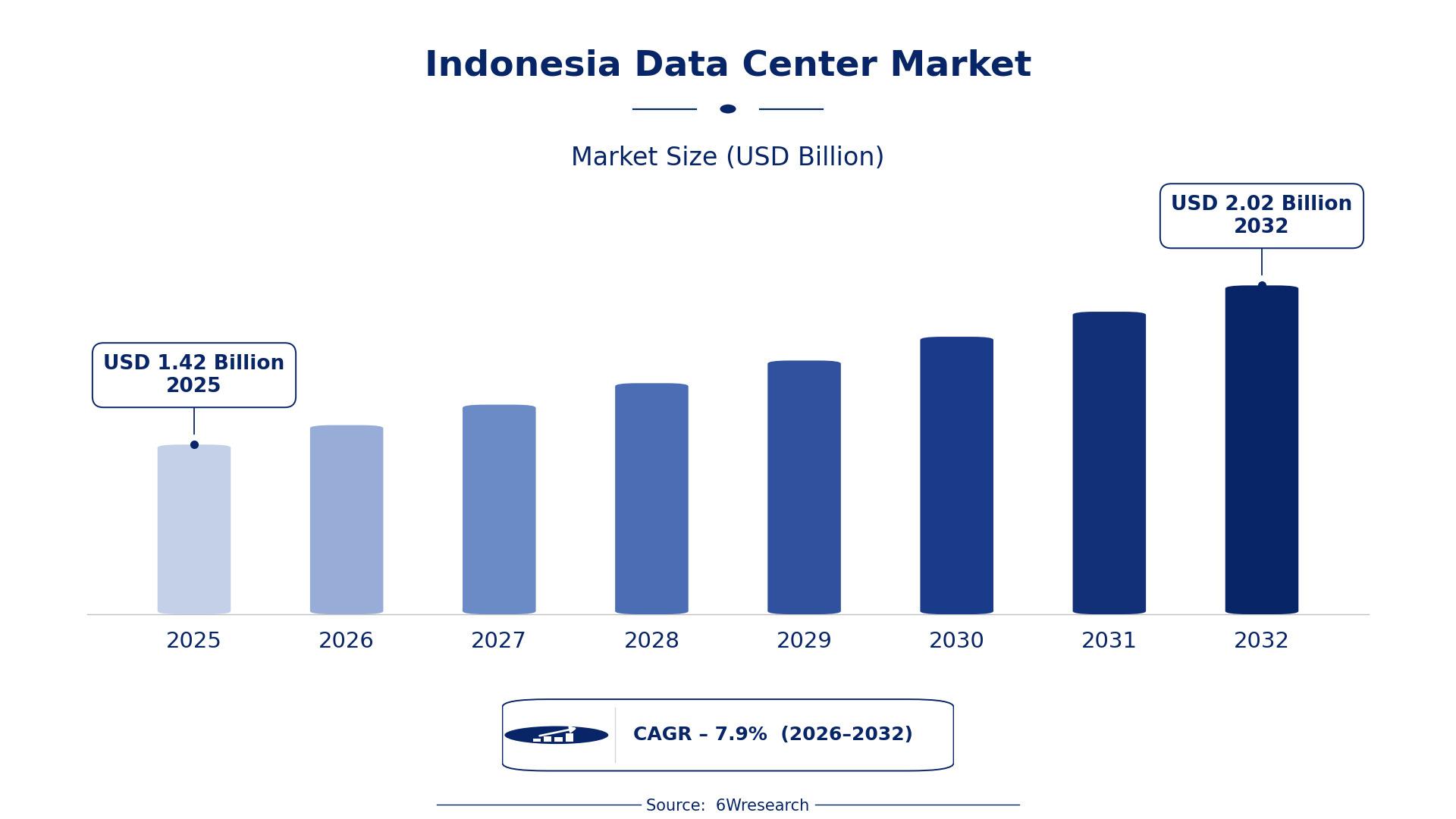
Digital Transformation Is Shaping the Future of Data Centers
The Indonesia Data Center Market is evolving as businesses, consumers, and public organizations increasingly depend on digital technologies. The expansion of cloud computing, online payments, e-commerce, mobile applications, and enterprise software is increasing the need for reliable data storage and processing facilities. At the same time, emerging technologies such as artificial intelligence, automation, advanced cooling, and intelligent power management are changing how data centers are designed and operated. These developments are creating opportunities for infrastructure developers, technology providers, and investors seeking to participate in Indonesia's expanding digital economy.
Artificial Intelligence Is Creating Demand for Advanced Computing
Artificial intelligence is becoming an important influence on data center development. Businesses are exploring AI applications for customer service, fraud detection, predictive analytics, workflow automation, and personalized digital experiences. These applications can require substantial computing resources, particularly when organizations process large datasets or deploy advanced AI models.
As AI adoption increases, data center operators may need to install specialized processors, high-performance servers, and infrastructure capable of supporting intensive workloads. These requirements can also increase electricity consumption and cooling demands, making facility design an important consideration.
In the Indonesia Data Center Market, AI adoption could create opportunities for developers that can provide flexible computing capacity and support changing customer requirements. Existing facilities may also need upgrades to accommodate more demanding workloads. However, the scale of this opportunity will depend on enterprise adoption, infrastructure readiness, electricity availability, and the commercial viability of AI services.
Cloud Computing Is Reshaping Infrastructure Requirements
Cloud computing continues to influence how organizations purchase and manage technology resources. Instead of relying entirely on privately owned servers, businesses can use cloud platforms to access storage, computing power, databases, and software according to their needs.
This approach provides flexibility and allows organizations to expand or reduce computing resources as workloads change. It can also reduce the need for substantial upfront spending on internal infrastructure, particularly for small and medium-sized enterprises.
For data center operators, increasing cloud adoption creates demand for reliable facilities, strong network connections, and scalable capacity. Colocation providers can support organizations that want to maintain control over their equipment while using professionally managed infrastructure.
As businesses modernize their operations, the Indonesia Data Center Market may benefit from continued demand for cloud-related infrastructure. Providers that combine reliable service, flexible capacity, and efficient operations will be better positioned to serve customers with different technical and financial requirements.
Automation Is Improving Data Center Operations
Automation is becoming increasingly important as data centers grow more complex. Operators must manage power consumption, cooling performance, equipment health, physical security, and network availability while minimizing service interruptions.
Automated monitoring systems can collect information from servers, cooling equipment, and electrical infrastructure. Analytics tools can then help operators identify unusual operating conditions, anticipate maintenance requirements, and improve resource allocation. These capabilities can reduce dependence on manual monitoring and support faster responses to technical issues.
Automation can also help operators manage facility capacity more efficiently. By identifying underutilized equipment or inefficient cooling patterns, data center teams may be able to improve performance while controlling operating costs.
For Indonesia's developing digital infrastructure ecosystem, these technologies offer opportunities to modernize facility management and strengthen service reliability. However, automation systems require appropriate implementation, skilled personnel, cybersecurity controls, and ongoing maintenance to deliver their intended benefits.
Advanced Cooling Technologies Are Becoming More Important
Cooling is a major technical consideration in data center design because servers generate heat during operation. As computing workloads become more intensive, conventional cooling arrangements may need to be supplemented or redesigned to maintain suitable operating conditions.
Advanced cooling technologies can help operators manage heat more effectively. Depending on the facility and workload, options may include improved airflow management, liquid cooling, efficient heat exchange, and intelligent temperature monitoring. These approaches can be particularly relevant for high-density computing environments used for AI and other demanding applications.
Energy efficiency is closely connected to cooling performance. Better system design and monitoring can help reduce unnecessary electricity consumption while maintaining reliable equipment operation.
The Indonesia Data Center Market may see greater interest in advanced cooling as operators evaluate ways to support higher computing densities and manage operating expenses. Investors and developers should consider local climate conditions, water availability where relevant, maintenance requirements, and the technical needs of prospective customers before selecting a cooling strategy.
Intelligent Power Management Is Supporting Reliable Operations
Reliable electricity is essential for data center performance. Power interruptions can affect business applications, digital transactions, communications, and other services that depend on continuous availability. Data center operators therefore need effective power distribution, backup arrangements, monitoring systems, and maintenance procedures.
Intelligent power management technologies can help operators monitor electricity consumption and identify inefficiencies. Automated controls may support more effective load management, while modern power distribution equipment can improve visibility into facility performance.
Energy sourcing is another important consideration. As organizations pay greater attention to operating costs and environmental objectives, access to renewable electricity and other lower-carbon energy options may influence investment decisions. The practical availability and cost of these resources will vary by location.
For future development in Indonesia, power infrastructure will be a critical factor in determining where facilities can expand and which technologies they can support. Developers must assess electricity capacity, grid reliability, backup requirements, and long-term operating costs before committing to major projects.
Edge Computing Can Improve the Delivery of Digital Services
Edge computing places certain computing resources closer to the users, devices, or systems generating data. This approach can reduce the distance information needs to travel, making it useful for applications that require rapid responses.
Potential applications include industrial automation, connected devices, real-time monitoring, smart infrastructure, and selected telecommunications services. As Indonesian businesses adopt more connected technologies, edge computing may complement larger centralized data centers.
Rather than replacing conventional facilities, edge infrastructure can work alongside centralized cloud and colocation environments. Organizations can process time-sensitive information locally while using larger facilities for long-term storage, analytics, and other workloads.
This development could create opportunities for providers offering distributed infrastructure and reliable connectivity. The commercial outlook will depend on specific use cases, network availability, deployment costs, and customer willingness to invest in low-latency services.
Cybersecurity Technologies Are Strengthening Digital Infrastructure
As more information moves through digital systems, cybersecurity remains a major concern for businesses and data center operators. Facilities support workloads involving financial transactions, customer information, corporate records, and sensitive operational data, making security an essential part of infrastructure planning.
Modern security strategies can combine physical access controls, network monitoring, encryption, identity management, threat detection, and incident response procedures. Automated security tools may help teams identify suspicious activity and investigate potential risks more quickly.
Data center operators must also establish clear responsibilities with customers, particularly when services involve shared infrastructure or third-party cloud platforms. Compliance requirements, data governance, backup procedures, and disaster recovery arrangements should be evaluated as part of service selection.
In the Indonesia Data Center Market, strong security capabilities can help providers build customer confidence and support demand from organizations with strict operational requirements. Technology investments must be accompanied by regular testing, trained personnel, and updated security policies to remain effective.
Sustainable Infrastructure Is Influencing Future Investment Decisions
Environmental performance is becoming an important consideration in data center development. Electricity demand, cooling requirements, equipment utilization, and resource management can all influence a facility's operating costs and environmental footprint.
Developers can explore energy-efficient servers, optimized cooling systems, intelligent monitoring, and improved power distribution to reduce unnecessary resource consumption. Where feasible, renewable energy procurement and more efficient facility designs may also support sustainability objectives.
These investments should be assessed carefully because the most suitable solutions depend on local energy infrastructure, climate conditions, project size, and customer requirements. Sustainability improvements must also preserve reliability and the ability to accommodate future computing workloads.
For investors, efficient infrastructure may offer advantages through better cost management and alignment with customer expectations. The long-term value of a project will still depend on demand, financing, operating performance, and the ability to deliver reliable services at competitive prices.
Future Technology Trends Are Creating New Business Opportunities
The combination of AI, cloud computing, automation, edge computing, advanced cooling, and intelligent power management is expanding the range of potential opportunities across the data center value chain. These opportunities extend beyond constructing facilities to include equipment manufacturing, infrastructure monitoring, cybersecurity, connectivity, maintenance, and specialized technical services.
Businesses may benefit from these developments by accessing more scalable infrastructure, improving application availability, and supporting digital products more efficiently. Consumers can also experience indirect benefits through more reliable online banking, shopping, communication, education, and entertainment services.
For investors, the Indonesia Data Center Market offers a range of potential entry points, but each requires a different level of capital, technical expertise, and risk tolerance. Evaluating customer demand, power availability, connectivity, project costs, regulatory requirements, and competitive conditions can help identify realistic opportunities.
Companies that invest in suitable technologies and build their plans around measurable customer needs may be better positioned to respond to the industry's changing requirements.
Wrapping Up
Future technology trends are reshaping the Indonesia Data Center Market as AI applications, cloud adoption, automation, advanced cooling, and cybersecurity become increasingly important to digital infrastructure. These developments are creating potential opportunities for facility operators, technology suppliers, infrastructure developers, and investors seeking exposure to Indonesia's digital transformation.
The strongest opportunities will depend on more than adopting the latest technology. Reliable electricity, suitable locations, efficient operations, strong connectivity, and a clear customer strategy will remain essential to long-term success.
For businesses and investors considering entry, researching the market now can help identify technology requirements, establish partnerships, and prepare for future demand. Buying into a data center-related opportunity should follow careful financial and operational assessment rather than assumptions about inevitable growth. With a focus on real customer needs, energy efficiency, and scalable infrastructure, stakeholders can position themselves to participate in Indonesia's evolving digital economy.
Who We Are
About 6Wresearch
6Wresearch is a commercial strategy and growth advisory firm founded in 2011 and headquartered in New Delhi, India, with partners across Southeast Asia and the Middle East & Africa. The firm has delivered over 20,000 commercial engagements for over 2,000 organizations, including Fortune 500 companies, government agencies, and multilateral institutions such as the World Bank and the Asian Development Bank. Backed by proprietary market research and advanced analytics, 6Wresearch combines sector expertise with data-driven intelligence to help organizations navigate market complexity and drive sustainable growth. These capabilities explain why organizations trust 6Wresearch Global Market Research & Consulting Firm for reliable commercial insights and confident decision-making.
Our Proprietary Platform: 6W Export GTM
6W Export GTM is 6Wresearch’s proprietary trade intelligence and go-to-market platform, built on UN Comtrade data and enhanced with 6Wresearch’s in-house analytical and simulation models, including system dynamics-based forecasting. Unlike broad, sector-level market sizing tools, 6W Export GTM operates at the individual product level down to specific HS codes and micro-segments to identify precise, actionable export opportunities by country and product pair, including markets where trade currently does not exist. This granular, simulation-driven approach allows 6W Export GTM to surface opportunities that sector-wide analysis typically misses, positioning it among a small number of platforms globally offering this depth of product-and-country-specific export intelligence.
Read More..

 English
 Arabic
 French
 Spanish
 Portuguese
 Deutsch
 Turkish
 Italiano
 Russian
 Romaian
 Portuguese (Brazil)
 Greek