


ROASCalculate: A Simple Guide to Measuring Ad ROI
Introduction
Advertising helps businesses reach potential customers, promote products, and increase sales. However, spending money on ads does not always guarantee a positive return. Businesses need to measure campaign results to understand whether their advertising budget is being used effectively. Learning how to calculate ROAS can help marketers compare revenue with advertising costs and make better decisions. With the right tracking process, businesses can identify successful campaigns and improve weak ones. RoasCalculate makes understanding advertising performance easier by focusing on clear calculations and practical results.
What Is ROAS in Digital Advertising?
Return on Ad Spend (ROAS) measures how much revenue a business generates for every dollar spent on advertising. It is commonly used in Google Ads, Facebook Ads, Instagram campaigns, and other paid marketing channels.
For example, if a business spends $500 on advertising and generates $2,000 in revenue, its ROAS is 4:1. This means the campaign produces $4 in revenue for every $1 spent on ads.
ROAS helps marketers evaluate campaign performance without relying only on clicks, impressions, or website visits. These metrics show audience activity, while ROAS connects advertising expenditure with the revenue attributed to the campaign.
However, revenue is not the same as profit. Businesses must also consider product costs, shipping, taxes, agency fees, and other operating expenses when evaluating overall profitability.
Understanding the ROAS Formula
The ROAS formula is straightforward and easy to apply to different advertising campaigns.
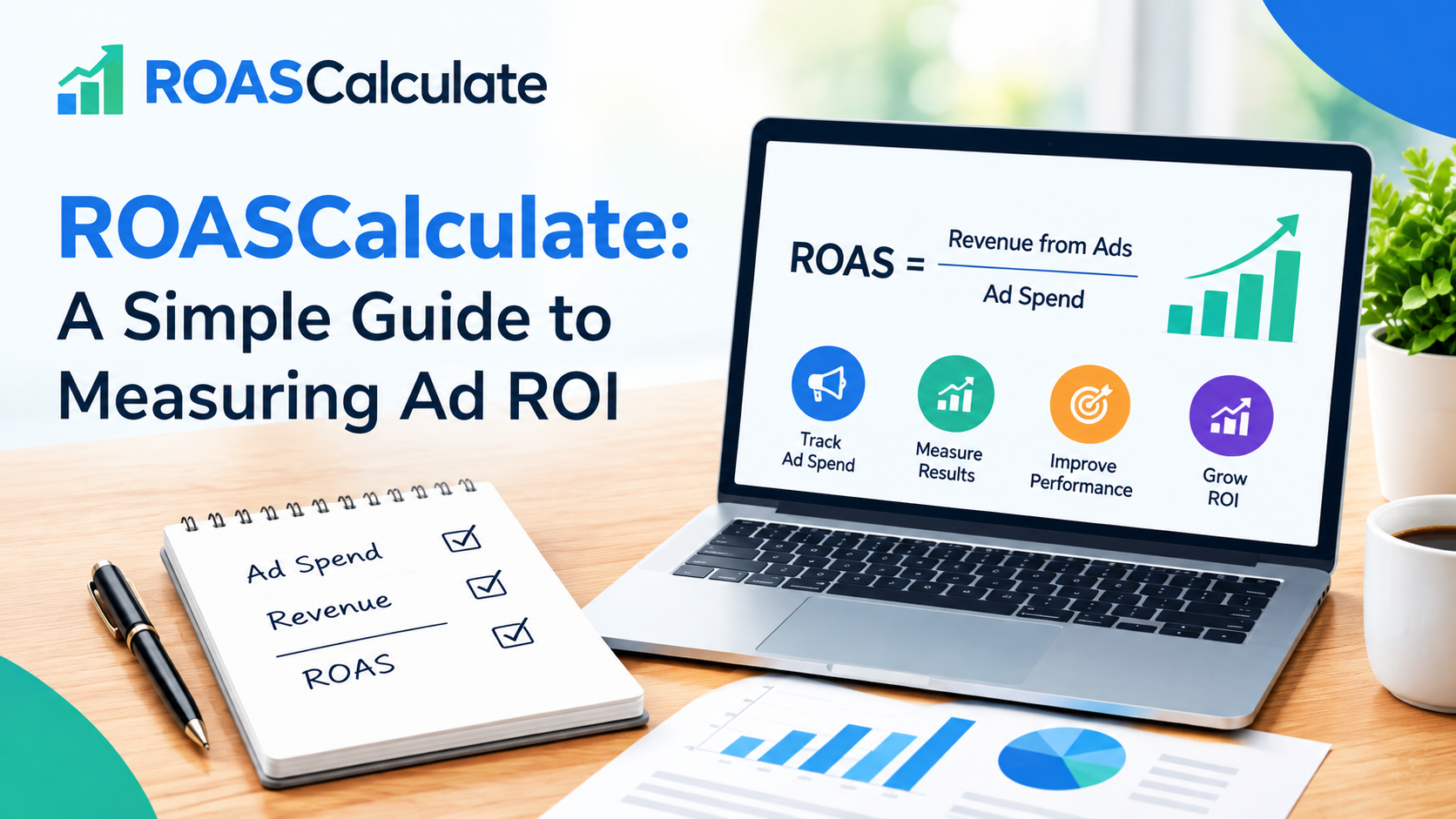
ROAS = Revenue from Ads ÷ Advertising Cost
Suppose an online store spends $1,200 on a paid advertising campaign and generates $4,800 in attributed sales.
ROAS = $4,800 ÷ $1,200 = 4
The result is a 4:1 ROAS, or 400% when expressed as a percentage. For every dollar spent on advertising, the business generates four dollars in revenue.
Marketers should use consistent reporting periods and reliable conversion tracking. If sales are counted incorrectly or attributed to the wrong campaign, the calculation may not reflect actual performance.
How to Calculate ROAS Step by Step
Businesses can calculate ROAS by following a simple process.
1. Determine Advertising Costs
Start by identifying the amount spent on the campaign during a specific period. Include the relevant platform advertising costs and keep reporting periods consistent.
2. Measure Attributed Revenue
Next, calculate the revenue generated by customers who purchased through the campaign according to your chosen attribution method. Tracking tools and analytics platforms can help connect conversions with advertising activity.
3. Apply the Formula
Divide the attributed revenue by the advertising cost. The result shows how much revenue the campaign generated for each unit of advertising expenditure.
4. Compare Campaign Results
Review ROAS across different campaigns, audiences, products, and advertising channels. This comparison helps businesses decide where to test changes or allocate more budget.
How a ROAS Calculator Helps Marketers
A ROAS calculator reduces manual calculations and makes campaign analysis more convenient. Marketers can enter advertising costs and attributed revenue to determine their return on ad spend.
For instance, consider a campaign that generates $6,000 in revenue from $1,500 in advertising costs. The calculated ROAS is 4:1.
A calculator can help teams compare several campaigns quickly, check performance after budget changes, and estimate the revenue associated with different advertising investments.
RoasCalculate can support this process by helping marketers understand the relationship between advertising expenses and campaign revenue. The goal is to make performance measurement easier to understand, especially for small businesses and marketers who need a practical way to evaluate paid advertising.
The Role of an Ad Spend Calculator
An ad spend calculator helps businesses estimate advertising budgets and review spending against campaign targets. When used alongside ROAS calculations, it provides a clearer view of advertising efficiency.
Imagine a business wants to generate $10,000 in attributed revenue and expects a 5:1 ROAS. Based on that target, the estimated advertising budget would be $2,000.
This estimate assumes the campaign can achieve the expected return. Actual performance may differ because of competition, audience demand, product pricing, and conversion rates.
Businesses should review campaign results regularly rather than treating estimates as guaranteed outcomes. Small budget adjustments and controlled tests can help identify which strategies perform best.
Practical Case Study: Measuring Campaign Performance
Consider an online retailer running two advertising campaigns during the same month.
Campaign A spends $800 and generates $3,200 in attributed revenue. Its ROAS is 4:1.
Campaign B spends $1,000 and generates $3,000 in attributed revenue. Its ROAS is 3:1.
Campaign A generates more revenue per advertising dollar, even though its total spending is lower. The retailer could investigate why Campaign A performs better and test whether its audience, product selection, or advertising message can be applied to other campaigns.
Before moving the entire budget, the retailer should also compare profit margins, sales volume, customer quality, and conversion tracking. A higher ROAS does not automatically mean a campaign produces more total profit.
Using RoasCalculate as a reference point for understanding ROAS can help marketers focus on measurable results and make informed campaign decisions.
Common ROAS Measurement Mistakes
Several mistakes can make ROAS reports less useful.
- Counting total business revenue instead of revenue attributed to advertising.
- Ignoring refunds, cancelled orders, or inaccurate conversion values.
- Comparing campaigns with different reporting periods or attribution settings.
- Assuming a high ROAS always means high profit.
- Increasing advertising budgets without checking whether performance remains stable.
Accurate tracking and regular reporting help reduce these problems. Businesses should also establish a target ROAS based on their margins, operating costs, and business goals.
Conclusion
Measuring advertising performance requires more than tracking clicks and impressions. ROAS connects advertising costs with attributed revenue and helps businesses evaluate their campaigns using clear figures. The ROAS formula, a ROAS calculator, and an ad spend calculator can all support better budget decisions when used with reliable data.
By reviewing campaign performance, checking profitability, and testing improvements, marketers can develop a more practical advertising strategy. RoasCalculate helps make the basic concepts easier to understand so businesses can measure results and plan their next steps with greater confidence.
Frequently Asked Questions
1. What does ROAS mean?
ROAS stands for Return on Ad Spend. It measures the revenue generated for each unit of money spent on advertising.
2. How do you calculate ROAS?
Divide revenue attributed to advertising by the advertising cost. For example, $2,000 in revenue divided by $500 in ad costs equals 4:1 ROAS.
3. What is a good ROAS?
A good ROAS depends on product margins, operating expenses, and business goals. A 4:1 return may work for one business but be insufficient for another.
4. Is ROAS the same as ROI?
No. ROAS compares attributed revenue with advertising costs, while ROI measures the return relative to investment costs and is commonly used to assess profitability.
5. Can a ROAS calculator improve advertising results?
A ROAS calculator helps marketers measure performance and compare campaigns. Better results still depend on accurate data, effective advertising, and informed budget decisions.

 English
 Arabic
 French
 Spanish
 Portuguese
 Deutsch
 Turkish
 Dutch
 Russian
 Romaian
 Portuguese (Brazil)
 Greek