


Vitamins Be Harmful to Womens
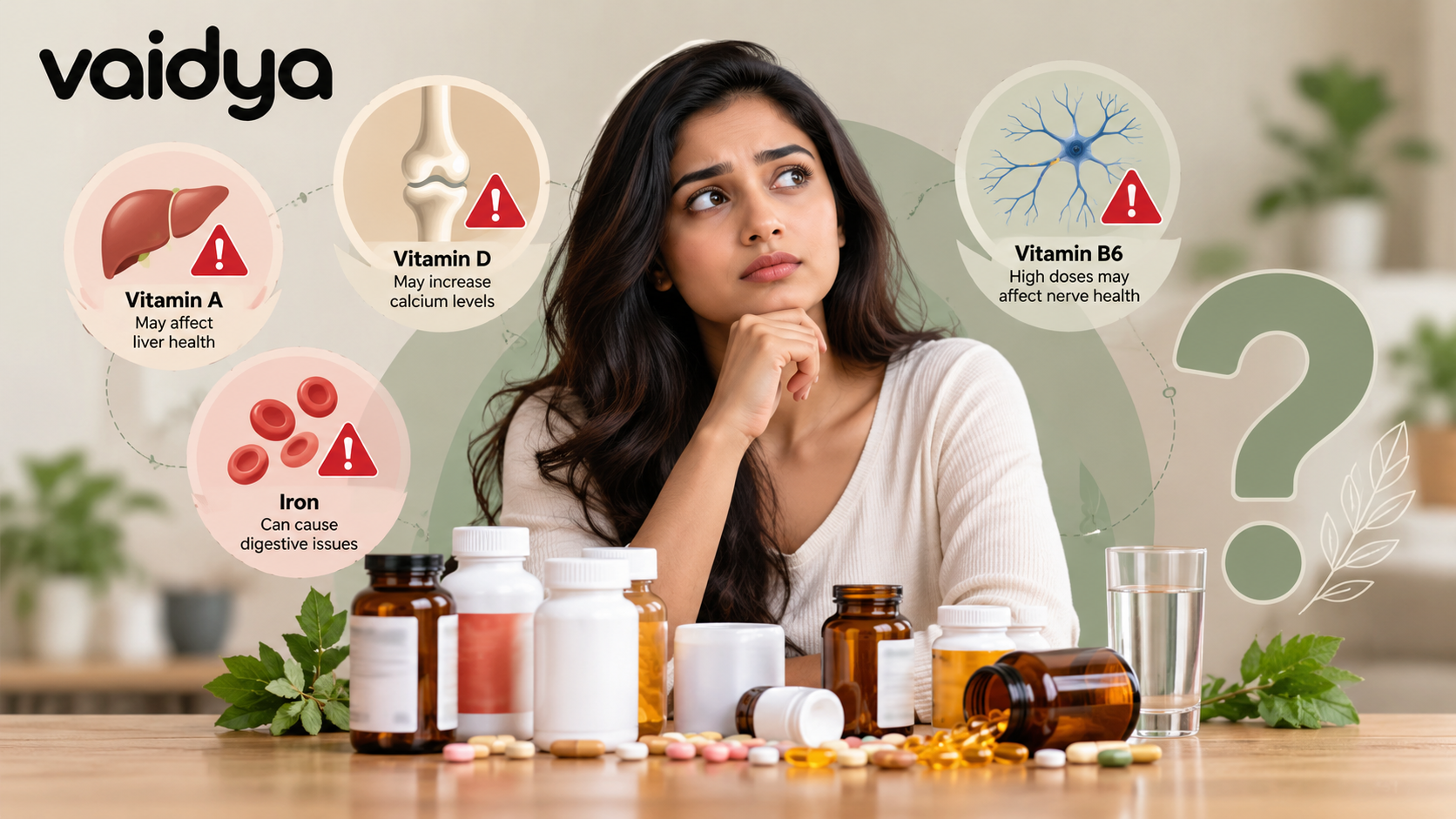
Vitamins help the body perform essential functions, but taking more than necessary does not automatically lead to better health. Women sometimes combine supplements for hair, skin, energy, and bone health without checking whether the products contain similar nutrients.
This habit can increase total vitamin and mineral intake beyond what the body requires. Understanding the risks of excessive supplementation helps women make informed decisions without avoiding supplements that may genuinely be needed.
Why Can Taking Extra Vitamins Be Harmful?
Every vitamin has a specific role in the body. Some nutrients have established tolerable upper intake levels, which indicate the highest average daily intake unlikely to cause adverse effects in most healthy people.
According to the NIH guidance on multivitamin safety, basic multivitamins are generally unlikely to cause harm. However, combining supplements with fortified foods or additional tablets can increase the risk of excessive intake of certain nutrients.
Women considering ayurvedic multivitamin tablets should therefore examine nutrient quantities rather than assuming that more ingredients mean better results.
Can Too Much Vitamin A Cause Health Problems?
Vitamin A contributes to normal vision, immune function, and cellular development. However, excessive intake of preformed vitamin A, including retinol, may cause liver problems and other adverse effects.
High intake during pregnancy is particularly concerning because it can increase the risk of birth defects.
The adult upper intake level for preformed vitamin A is 3,000 micrograms of retinol activity equivalents daily. This limit does not apply in the same way to beta-carotene naturally present in vegetables.
What Happens When Vitamin D Intake Becomes Excessive?
Vitamin D supports calcium absorption and bone health. However, high-dose supplementation can cause excessive calcium accumulation in the blood, potentially affecting kidney function.
The NIH research guidance on vitamin D toxicity identifies 4,000 IU (100 micrograms) daily as the tolerable upper intake level for adults.
This is a safety threshold, not a recommended daily target. Higher doses may sometimes be prescribed under medical supervision.
Why Should Women Be Careful With Iron Supplements?
Iron is essential for haemoglobin production and oxygen transport. Menstruating women may have greater iron requirements because of regular blood loss.
Nevertheless, unnecessary iron supplementation can cause constipation, nausea, and abdominal discomfort. Severe iron overdose can be dangerous.
Before choosing vitamin tablets for women, it is important to understand whether additional iron is appropriate.
Women with suspected iron deficiency should seek professional assessment instead of independently taking high doses.
Can Excess Vitamin B6 Affect Nerve Health?
Vitamin B6 supports metabolism and nervous system function. However, prolonged intake of excessive supplemental amounts may cause peripheral neuropathy.
Symptoms can include tingling, numbness, and difficulties with coordination. Safety thresholds differ across regulatory authorities, making it important to avoid unnecessary high-dose use.
Women combining a B-complex supplement with other vitamin products should check their total vitamin B6 intake.
Are Herbal Multivitamins Always Safer?
Natural ingredients are not automatically free from adverse effects. Herbal formulations may contain botanical compounds alongside vitamins and minerals.
An ayurvedic multivitamin for women should be evaluated according to its complete formulation, recommended dosage, and possible interactions with medicines.
Similarly, women exploring multivitamin ayurvedic tablets should verify whether the product actually provides the nutrients they need.
Professional advice is particularly important during pregnancy, breastfeeding, or treatment for an existing medical condition.
How Can Women Avoid Overlapping Supplements?
One of the simplest safety measures is to compare the ingredient labels of every supplement being used.
Women selecting multi vitamin tablets for women should review nutrient quantities and serving sizes before adding separate vitamin or mineral products.
When comparing multivitamin tablets for womens in india, it is also useful to check the declared percentage of daily value and applicable regulatory information.
Practical precautions include:
- Read supplement labels before starting a new product.
- Avoid taking multiple products containing the same high-dose nutrients.
- Follow recommended dosages unless advised otherwise.
- Consider fortified foods when estimating total nutrient intake.
- Tell healthcare professionals about all supplements being used.
- Seek medical guidance before treating a suspected deficiency.
Does Every Woman Need Vitamin Supplements?
Not necessarily. A varied diet can meet many women's nutritional requirements. However, pregnancy, restrictive diets, absorption difficulties, and diagnosed deficiencies may create situations where supplementation is appropriate.
The safest approach is to identify a specific nutritional need rather than taking additional products simply as a precaution.
Supplements should complement balanced nutrition, not replace healthy eating habits or medical treatment.
Conclusion
Taking too many vitamins can be harmful when certain nutrients are consumed in excessive amounts, particularly through high-dose supplements or overlapping formulations.
Vitamin A, vitamin D, vitamin B6, and iron demonstrate why dosage and individual requirements matter.
Women can make safer choices by reviewing labels, avoiding unnecessary combinations, and seeking professional guidance when needed.
Good nutrition is about receiving the right nutrients in appropriate amounts, not consuming the greatest number of supplements.

 English
 Arabic
 French
 Spanish
 Deutsch
 Turkish
 Dutch
 Italiano
 Russian
 Romaian
 Portuguese (Brazil)
 Greek