


Can Premium Packaging and Product Quality Give India’s Packaged Coconut Water Market a Competitive Edge?
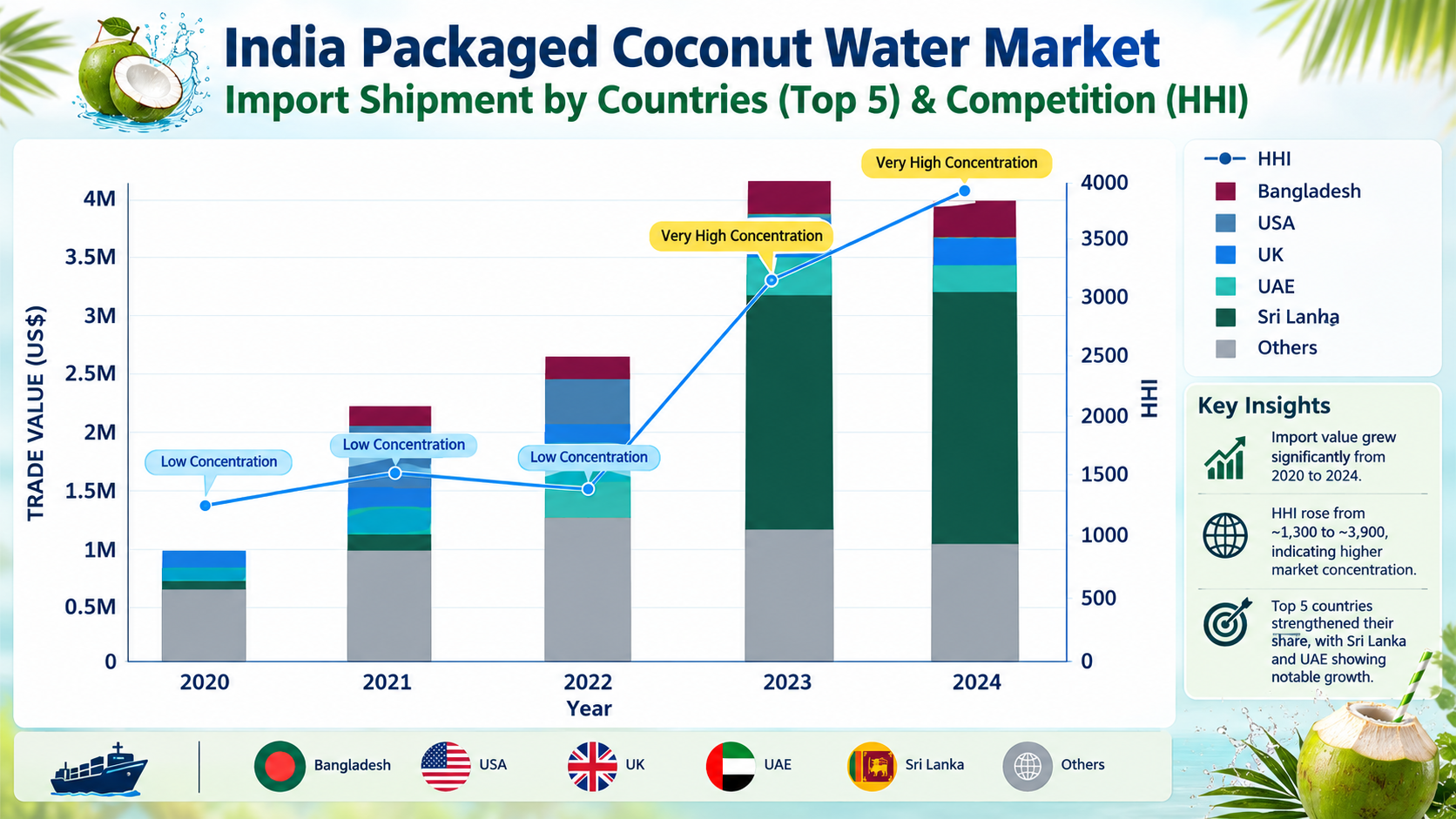
The India Packaged Coconut Water Market offers beverage brands an opportunity to transform a familiar natural drink into a convenient, quality-focused consumer product. Although fresh coconut water remains widely recognised, packaged alternatives offer advantages in portability, storage, and access beyond traditional coconut-selling locations. As brands compete for attention, packaging quality, consistent flavour, ingredient transparency, and reliable distribution can determine whether consumers make a one-time purchase or become regular customers.
Why Does Quality Matter More Than Appearance?
Attractive packaging can encourage trial, but product quality determines whether consumers return. Coconut water is often associated with freshness and simplicity, so unexpected changes in flavour, colour, aroma, or texture may affect customer confidence.
Manufacturers must develop production systems that protect the product from sourcing through final distribution. This involves choosing suitable raw materials, maintaining hygienic processing conditions, validating preservation methods, and monitoring product stability.
Important quality priorities include:
-
Consistent taste: Consumers should receive a reasonably consistent product experience across purchases and production batches.
-
Ingredient transparency: Labels should clearly communicate ingredients, nutritional information, and any added sugars or flavours.
-
Food safety: Processing, packaging, and storage procedures must comply with applicable food safety requirements.
-
Shelf-life validation: Manufacturers need evidence that the product maintains its required quality and safety throughout its stated shelf life.
These fundamentals create the foundation for a credible brand. Marketing cannot compensate for inconsistent quality or misleading product claims.
How Can Packaging Strengthen Brand Positioning?
Packaging communicates a product's identity before the consumer tastes it. Colours, typography, pack shape, serving size, and label design can influence whether a beverage appears affordable, premium, natural, or suitable for active lifestyles.
Different formats provide different advantages:
-
Bottles: Often convenient for individual consumption and resealing, depending on the design.
-
Cans: Can support single-serve positioning and efficient stacking.
-
Pouches: May provide lightweight portability and flexible pack design.
-
Tetra packs and cartons: Can suit products manufactured and processed for the relevant packaging and storage conditions.
A successful packaging strategy should begin with the intended consumer and purchase occasion. A product designed for a quick commute may require different features from a family multipack or a premium offering sold through speciality retailers.
Brands must also consider transport durability, leakage prevention, storage conditions, material costs, and disposal infrastructure. Packaging that looks attractive but performs poorly during distribution can damage both sales and reputation.
Can Premium Products Justify Higher Prices?
Premium positioning may appeal to shoppers who value sourcing transparency, convenient formats, quality assurance, and distinctive product experiences. However, a higher price must be supported by meaningful benefits rather than packaging alone.
Companies can establish value through clear ingredient information, dependable taste, convenient serving sizes, appropriate quality certifications, and reliable availability. Where organic positioning is used, relevant certification and labelling requirements should be met.
To evaluate a premium strategy, businesses can examine:
-
Willingness to pay: Assess whether the target audience values the proposed benefits enough to accept the price.
-
Repeat purchases: Determine whether consumers return after trying the product.
-
Retail performance: Measure sales velocity, stock turnover, and promotional dependence.
-
Profitability: Account for packaging, processing, distribution, marketing, and retailer margins.
A premium product that attracts attention but fails to generate repeat demand may struggle to sustain its market position.
What Role Does Sustainability Play?
Environmental considerations are becoming relevant to packaging decisions across the beverage industry. Consumers, retailers, and business partners may examine material use, recyclability, and waste management.
For coconut water brands, sustainability requires a practical approach. Companies can assess packaging weight, reduce unnecessary components, improve transport efficiency, and select materials compatible with available recovery systems.
Sourcing practices also matter. Responsible supplier relationships, efficient use of raw materials, and measures to minimise production losses can contribute to operational efficiency.
Brands should avoid vague environmental claims. Statements such as recyclable, biodegradable, or environmentally friendly should be accurate, appropriately qualified, and supported by evidence. Actual outcomes depend on material composition, local infrastructure, and consumer disposal behaviour.
How Can Brands Build Strong Retail Relationships?
Even a high-quality product cannot succeed if consumers cannot find it. Retailers evaluate shelf productivity, demand, supply reliability, pricing, and the likelihood of repeat purchases.
Manufacturers can improve retail relationships by providing dependable deliveries, suitable pack sizes, promotional support, and clear product information. Sampling programmes may help introduce unfamiliar brands, while multipacks can encourage household trial.
Online platforms add another dimension. Product descriptions, ingredient lists, pack images, customer feedback, and delivery reliability can influence purchasing decisions. Brands should maintain consistent information across retail websites and physical packaging.
What Competitive Risks Should Businesses Watch?
Packaged coconut water competes with fruit juices, flavoured water, sports beverages, and other drinks marketed around refreshment or wellness. This competition makes differentiation essential.
Companies must also manage raw-material price fluctuations, seasonal supply variations, processing costs, and regulatory compliance. Import dependence for selected inputs or products may expose businesses to additional logistics and cost pressures.
The most resilient strategies combine quality management with disciplined pricing, reliable sourcing, and channel-specific marketing.
Conclusion
Premium packaging can help attract attention, but sustained competitiveness depends on the complete consumer experience. Companies that combine trustworthy quality, suitable packaging, transparent communication, and effective distribution may be better placed to strengthen their position in India's packaged coconut water category.
Who We Are
About 6Wresearch
About 6Wresearch: 6Wresearch is a commercial strategy and growth advisory firm founded in 2011 and headquartered in New Delhi, India, with partners across Southeast Asia and the Middle East & Africa. The firm has delivered over 20,000 commercial engagements for over 2,000 organizations, including Fortune 500 companies, government agencies, and multilateral institutions such as the World Bank and the Asian Development Bank. Backed by proprietary market research and advanced analytics, 6Wresearch combines sector expertise with data-driven intelligence to help organizations navigate market complexity and drive sustainable growth. These capabilities explain why organizations trust 6Wresearch Global Market Research & Consulting Firm for reliable commercial insights and confident decision-making.
Our Proprietary Platform: 6W Export GTM
6W Export GTM is 6Wresearch's proprietary trade intelligence and go-to-market platform, built on UN Comtrade data and enhanced with 6Wresearch's in-house analytical and simulation models, including system dynamics-based forecasting. Unlike broad, sector-level market sizing tools, 6W Export GTM operates at the individual product level down to specific HS codes and micro-segments to identify precise, actionable export opportunities by country and product pair, including markets where trade currently does not exist. This granular, simulation-driven approach allows 6W Export GTM to surface opportunities that sector-wide analysis typically misses, positioning it among a small number of platforms globally offering this depth of product-and-country-specific export intelligence.

 English
 Arabic
 French
 Spanish
 Deutsch
 Turkish
 Dutch
 Italiano
 Russian
 Romaian
 Portuguese (Brazil)
 Greek