


Fire Waking Watch Services UK | Duties, Costs & Safety
Introduction
Fire safety is essential for residential buildings, commercial properties and workplaces across the UK. When a fire alarm system stops working or serious fire safety defects are identified, building occupants may face increased risks. In certain circumstances, a fire waking watch service provides temporary human monitoring to support early fire detection and emergency evacuation.
Trained fire waking watch personnel patrol designated areas, look for signs of fire and follow established emergency procedures. However, this service is an interim measure and should not replace permanent fire safety improvements.
This guide explains how fire waking watch services work, when they may be required, the responsibilities of fire wardens and the factors affecting service costs.
What Is a Fire Waking Watch?
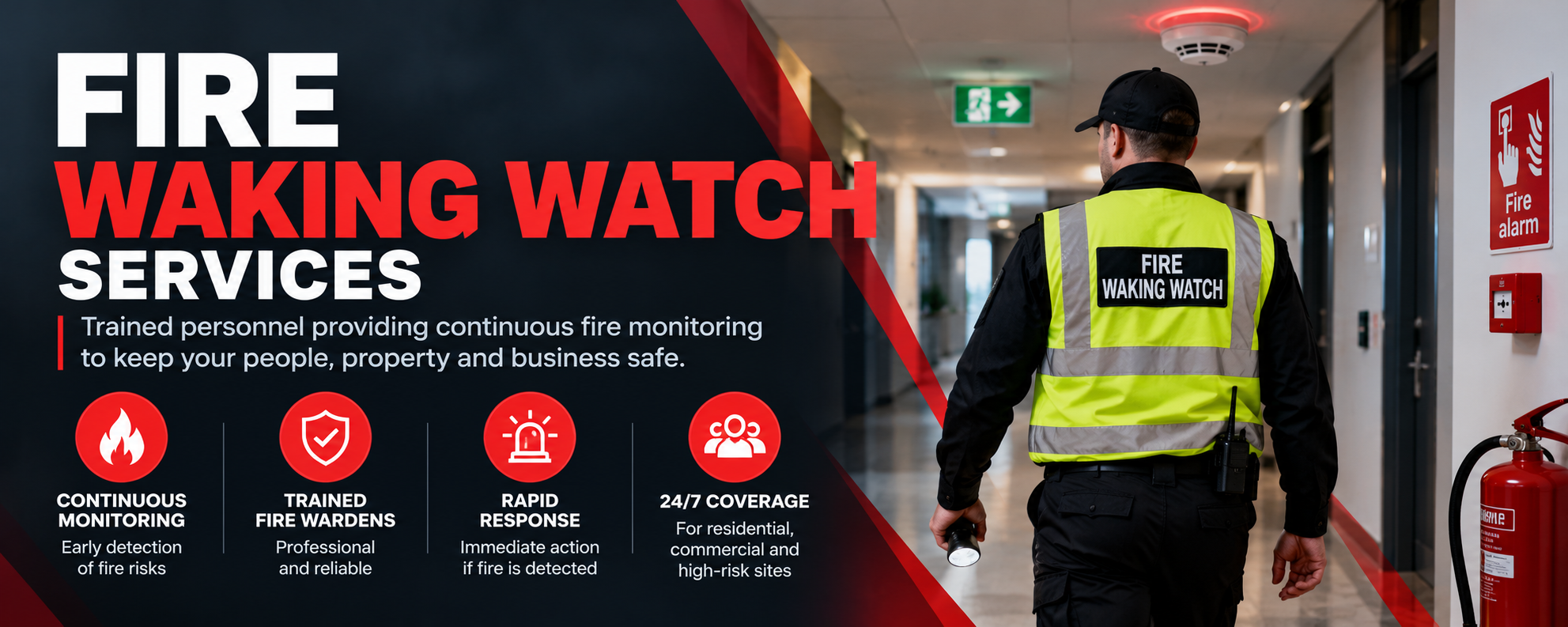
A fire waking watch is a temporary fire safety measure involving trained personnel who continuously monitor a building for signs of fire.
The service is generally introduced when serious fire safety concerns require additional precautions until permanent solutions are implemented.
Fire waking watch personnel follow an agreed monitoring and evacuation plan. Their responsibilities may include inspecting designated areas, identifying smoke or fire, raising the alarm and helping occupants respond to emergencies.
Unlike automatic fire detection systems, waking watch arrangements rely on people carrying out regular observations and following established procedures.
A waking watch does not automatically make an unsafe building safe. Its suitability must be determined through a competent fire risk assessment.
When Is a Fire Waking Watch Required?
Fire Alarm System Failure
Fire alarm systems provide essential warnings when smoke or fire is detected. If a system fails, the building may lose part of its ability to alert occupants.
In some circumstances, temporary fire watching personnel may be needed while repairs are completed.
However, the appropriate response depends on the building's risk assessment, occupancy, existing protection and the extent of the failure.
Buildings With Fire Safety Defects
Residential buildings with serious fire safety defects may require temporary precautions while remediation work is arranged.
For example, concerns involving external wall systems or inadequate compartmentation can sometimes affect the suitability of an existing evacuation strategy.
In these situations, a competent assessment may identify the need for a temporary change to simultaneous evacuation.
A waking watch is one possible measure, although suitable common fire alarm systems and other alternatives should also be evaluated.
Construction and Renovation Projects
Construction and renovation work can introduce temporary fire risks.
Hot work, changes to escape routes and disruption to existing fire protection systems may increase the need for additional monitoring.
Depending on the site and work being undertaken, trained fire watch personnel may support temporary safety arrangements.
High-Risk Commercial Premises
Some warehouses, manufacturing facilities and commercial buildings may require additional fire monitoring during unusual operating conditions or temporary system outages.
The level of protection should reflect the actual hazards, building layout and emergency procedures.
How Do Fire Waking Watch Services Work?
Initial Fire Risk Assessment
Before a waking watch begins, a competent person should assess the building's fire risks and determine whether on-site monitoring is appropriate.
The assessment considers building height, occupancy, fire detection arrangements, escape routes and any identified structural or system defects.
It also helps establish whether a waking watch is proportionate or whether another temporary measure would be more suitable.
Continuous Building Patrols
Where a waking watch is required, trained personnel patrol designated parts of the building according to an agreed plan.
Their purpose is to detect signs of fire as early as reasonably possible and respond using established emergency procedures.
Depending on the risk assessment, patrols may include corridors, stairwells, communal spaces and other relevant locations.
The number of personnel and monitoring arrangements must be appropriate to the building.
Emergency Warning and Evacuation
If a fire is detected, waking watch personnel follow the building's emergency plan.
This may involve raising an alarm, contacting the fire and rescue service and communicating evacuation instructions to occupants.
The correct response depends on the building's agreed evacuation strategy.
Incident Documentation
Fire waking watch personnel maintain records of patrol activities, identified hazards and relevant incidents.
These records help building managers review the operation of temporary fire precautions.
Accurate documentation also supports communication between building management, contractors and fire safety professionals.
Responsibilities of Fire Waking Watch Personnel
Identifying Fire Hazards
One of the main duties of fire waking watch personnel is identifying visible or otherwise observable signs of fire.
These may include smoke, flames, unusual burning smells or other indicators that require immediate investigation.
Personnel must understand the limits of their role and should never place themselves in unnecessary danger.
Monitoring Escape Routes
Fire watchers may observe communal corridors, staircases and exits to identify obstructions or hazards affecting evacuation.
Clear escape routes are important because occupants must be able to leave safely when instructed.
Any problems identified during patrols should be reported promptly to the responsible person.
Supporting Emergency Communication
During a fire emergency, clear communication is essential.
Waking watch personnel may contact emergency services, notify building management and communicate warnings to residents or employees.
Their responsibilities should be clearly defined before the service begins.
Maintaining Patrol Records
Regular patrol documentation helps demonstrate that agreed monitoring arrangements are being followed.
Reports may include patrol times, observations, identified defects and actions taken.
These records are useful for operational oversight but do not replace the building's legal fire safety responsibilities.
Fire Waking Watch Regulations in the UK
Fire safety responsibilities vary across the UK.
In England and Wales, the Regulatory Reform (Fire Safety) Order 2005 establishes fire safety duties for relevant premises and responsible persons.
For residential buildings, additional requirements may apply under legislation such as the Fire Safety Act 2021 and Building Safety Act 2022.
The National Fire Chiefs Council's fourth-edition Simultaneous Evacuation Guidance also addresses temporary evacuation arrangements for purpose-built blocks of flats.
Current guidance discourages unnecessary or prolonged waking watches and encourages proportionate, risk-based decisions.
A waking watch should therefore not be treated as a universal legal requirement whenever fire defects are discovered.
Building owners and managers should seek competent advice to establish the appropriate temporary precautions and permanent remediation measures.
Fire Waking Watch vs Fire Alarm Systems
A waking watch relies on trained people to monitor the premises and provide warnings according to an agreed procedure.
A fire alarm system uses detection equipment and warning devices to identify potential fires and notify occupants.
Both can play a role in building safety, but they operate differently.
Automatic fire alarms can provide continuous detection across appropriately designed areas without relying solely on manual observation.
For many buildings, installing a suitable common fire alarm system may be a more practical long-term alternative to maintaining an extensive waking watch.
However, the choice must be supported by a competent assessment and suitable evacuation planning.
How Much Does a Fire Waking Watch Cost in the UK?
The cost of fire waking watch services depends on building size, staffing requirements, risk levels and service duration.
A small premises requiring limited temporary monitoring will have different costs from a multi-storey residential building needing continuous coverage.
Building layout also matters because complex sites may require additional personnel to maintain effective patrols and emergency communication.
Other factors include location, shift arrangements, specialist training requirements and the duration of the temporary measures.
Continuous staffing can become expensive over time, particularly where several personnel are needed across multiple shifts.
For this reason, building managers should compare the costs and suitability of waking watch arrangements with other approved interim precautions.
Who Is Responsible for Paying for a Fire Waking Watch?
Responsibility for waking watch costs depends on the type of building, contractual arrangements and applicable legislation.
In qualifying residential buildings in England, statutory leaseholder protections may restrict or prevent certain building safety costs from being passed to leaseholders.
Building owners and landlords may therefore be responsible for costs that cannot legally be recovered from residents.
However, the exact position depends on eligibility and the circumstances of the building.
Commercial property arrangements may differ, and the relevant lease agreements and legal duties should be reviewed.
How to Choose a Fire Waking Watch Service Provider
Choosing a suitable provider is important when temporary fire safety arrangements require human monitoring.
The provider should understand the property's specific risks and be capable of supplying personnel with appropriate training and clear emergency instructions.
Staff should be familiar with fire detection awareness, evacuation procedures, reporting requirements and communication protocols.
The service should also have appropriate supervision, shift arrangements and documentation procedures.
Intraguard provides fire waking watch services for UK properties, supporting temporary fire safety monitoring during high-risk periods and when fire protection systems are compromised.
Its services include trained personnel, building patrols, incident reporting and emergency response coordination, with arrangements tailored to the property's requirements.
Frequently Asked Questions
What is the purpose of a fire waking watch?
The purpose of a fire waking watch is to provide temporary monitoring for signs of fire and support emergency warning and evacuation arrangements when a competent assessment determines that additional precautions are necessary.
Is a waking watch a legal requirement in the UK?
A waking watch is not automatically required for every building with fire safety problems. The appropriate precautions depend on the applicable fire safety legislation, building risk assessment and evacuation strategy.
How long can a fire waking watch remain in place?
A waking watch should operate only for as long as it remains necessary and proportionate. Regular reviews should consider whether permanent repairs, improved fire detection or other suitable precautions can replace it.
Are fire waking watch services available 24 hours a day?
Yes. Continuous 24-hour coverage can be arranged where the building's fire safety assessment requires it. Staffing levels and patrol arrangements should reflect the specific risks.
What training should fire waking watch personnel have?
Personnel should receive suitable training for their assigned duties, including fire awareness, hazard identification, emergency communication, evacuation procedures and incident reporting.
Can fire waking watch personnel replace smoke detectors?
No. A waking watch is not a general replacement for properly designed fire detection and alarm systems. It is a temporary measure whose suitability must be professionally assessed.
What happens when a fire is discovered during a waking watch?
Personnel follow the agreed emergency procedures, raise the necessary warning, contact the fire and rescue service and support the building's evacuation strategy without putting themselves at unnecessary risk.
Can waking watch services be used in residential buildings?
Yes. They may be used in residential buildings where specific fire safety risks justify temporary monitoring. However, current guidance encourages suitable alternatives and discourages prolonged or unnecessary waking watches.
How quickly can a fire waking watch be arranged?
Deployment depends on the property location, required staffing, risk assessment, training needs and provider availability. Urgent arrangements should be discussed directly with a competent service provider.
Conclusion
Fire waking watch services provide temporary fire monitoring and evacuation support when building safety risks require additional precautions. They can help protect residents, employees and visitors while identified fire safety problems are addressed.
However, waking watches should not become a permanent substitute for suitable fire detection systems, effective evacuation planning or necessary building improvements.
Building owners and managers should seek competent fire safety advice, establish proportionate interim arrangements and prioritise long-term solutions that provide reliable protection.
Research basis: The content was checked against Intraguard's service information, the National Fire Chiefs Council's fourth-edition guidance and current government guidance on interim measures and waking watch costs.

 English
 Arabic
 French
 Spanish
 Portuguese
 Deutsch
 Turkish
 Italiano
 Russian
 Romaian
 Portuguese (Brazil)
 Greek