


Crimping Tool: The Installer’s Secret Weapon for Reliable Connections
Introduction
A crimping tool is the unsung hero of every electrical, telecom, and automotive toolbox. It’s the device that turns bare wires and connectors into robust, long-lasting joints — without soldering. Whether you’re terminating Ethernet jacks, securing speaker wires, or installing battery terminals, a good crimper makes the job faster, safer, and more professional.
What Is a Crimping Tool?
At its core, a crimping tool compresses a metal sleeve or connector onto a wire so the connection becomes both mechanically secure and electrically conductive. Unlike twisting or taping, crimping creates a repeatable joint that resists vibration, corrosion, and loosening over time.
Why Use a Crimping Tool? (Quick Benefits)
-
Durability: Crimped joints withstand vibration and temperature changes.
-
Consistency: Proper crimps are repeatable — ideal for production or field work.
-
Speed: Faster than soldering and safer in confined or hot environments.
-
Safety: Eliminates cold solder joints and bulky heat around sensitive electronics.
Types of Crimping Tools
1. Manual Hand Crimpers
Lightweight and inexpensive, hand crimpers are perfect for hobbyists and small jobs. They usually have fixed jaws for specific connectors like insulated terminals.
2. Ratchet Crimpers
Ratchet crimpers lock until the crimping cycle completes, ensuring consistent pressure. Favored by professionals for insulated terminals, ferrules, and some network connectors.
3. Hydraulic Crimpers
Used for high-voltage or very large-diameter conductors, hydraulic crimpers provide immense, controlled force. Common in heavy electrical and utility work.
4. Pneumatic & Battery-Powered Crimpers
For high-volume tasks or when mobility matters, powered crimpers speed up work while maintaining consistency. Often used by cable installers and electricians.
5. Specialized Crimpers
-
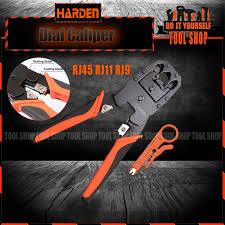
RJ45/RJ11 crimpers: For ethernet and phone plugs.
-
Coax crimpers: For F-type and BNC connectors.
-
Ferrule crimpers: For stranded wire ferrules to prevent fraying.
How to Choose the Right Crimping Tool
-
Match connector type: Ensure the tool supports the terminals you use (insulated, non-insulated, ferrules, RJ45, etc.).
-
Check wire gauge range: Tools list supported AWG sizes — pick one that covers your common cables.
-
Consider volume: For occasional work, hand crimpers suffice; for daily installs, consider ratchet or powered models.
-
Ergonomics matter: Comfortable grips and jaw design reduce fatigue during long jobs.
-
Calibration & quality: Look for build quality, replaceable dies, and manufacturer specs for crimp force to ensure reliable crimps.
Step-by-Step: Making a Reliable Crimp
-
Strip the wire to the correct length — avoid nicking conductors.
-
Select the right connector for gauge and application.
-
Insert the wire fully into the tool crimping connector barrel.
-
Place connector in the crimper aligned to the correct die.
-
Complete the crimp — with ratchet crimpers, wait for release to ensure full compression.
-
Inspect: the barrel should be uniformly compressed with no visible gaps or loose strands. Optionally, perform a pull test.
Maintenance & Care
-
Keep jaws clean and free of debris.
-
Periodically check calibration and replace worn dies.
-
Store in a protective case to prevent jaw damage.
-
For powered tools, follow battery and hydraulic maintenance schedules.
Common Mistakes to Avoid
-
Using the wrong die for the connector — leads to weak crimps.
-
Over-stripping or under-stripping wire.
-
Reusing single-use connectors.
-
Skipping a pull test on critical connections.
Real-World Use Cases
-
Network installations: RJ45 termination for reliable Ethernet links.
-
Automotive wiring: Battery terminals, ground straps, and sensor leads.
-
Audio installations: Speaker terminals and XLR connections.
-
Industrial control panels: Ferrules and heavy-gauge conductor terminations.
Quick Buying Checklist
-
Connector compatibility (RJ45, ferrules, insulated terminals)
-
AWG/gauge coverage
-
Crimping method (ratchet vs manual vs hydraulic)
-
Warranty and replaceable parts
-
Comfort and weight for field use
Conclusion
A crimping tool is more than a convenience — it’s a foundational tool for safe, professional wiring. Choose the correct type for your connectors and wire sizes, maintain the tool, and follow best practices for crimps that last. Whether you’re wiring a network, building a speaker system, or installing industrial controls, the right crimper turns a fragile splice into a dependable connection.
Check Out More Latest Articles: Click Here

 English
 Arabic
 French
 Spanish
 Portuguese
 Deutsch
 Turkish
 Dutch
Dutch
 Italiano
 Russian
 Romaian
 Greek
Greek