


Omega-3 Market: Expanding Beyond Traditional Fish Oil into Functional Nutrition and Preventive Healthcare
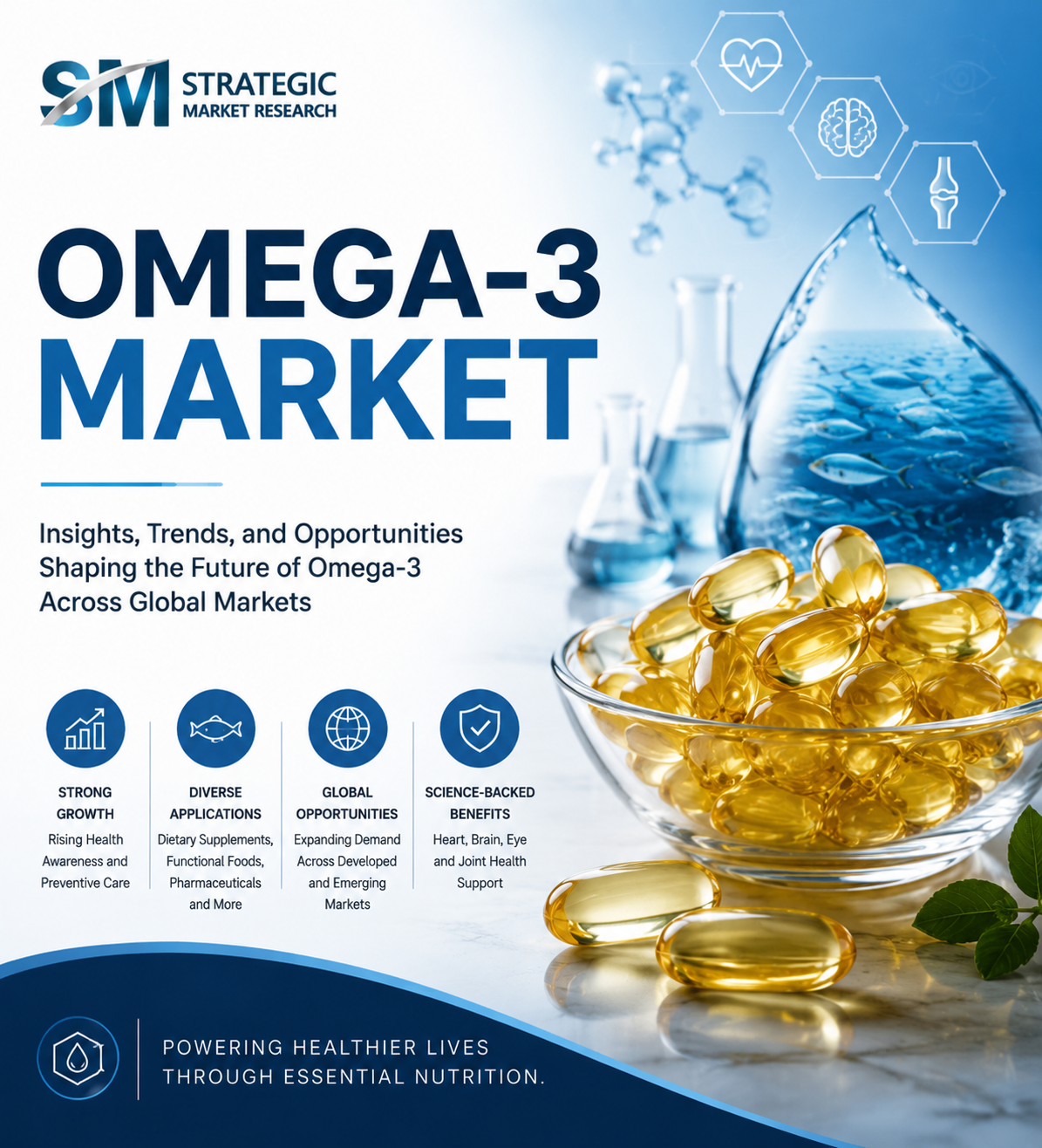
The Global Omega-3 Market is undergoing a major transformation as consumers increasingly prioritize preventive healthcare, cognitive wellness, cardiovascular protection, immunity enhancement, sports nutrition, and healthy aging. Omega-3 fatty acids — primarily EPA (Eicosapentaenoic Acid), DHA (Docosahexaenoic Acid), and ALA (Alpha-Linolenic Acid) — are no longer limited to conventional fish oil capsules. They are now widely incorporated into pharmaceuticals, infant nutrition, functional foods, beverages, medical nutrition, pet nutrition, aquaculture feed, and personalized wellness products.
Industry momentum is being driven by rising awareness of lifestyle diseases, growing supplement consumption, aging populations, and increasing adoption of plant-based nutrition. In parallel, technological improvements in algae cultivation, purification, encapsulation, and bioavailability enhancement are reshaping product innovation across the industry. Multiple market studies indicate strong long-term expansion potential, with several forecasts projecting the broader omega-3 ecosystem to surpass multi-billion-dollar valuations by the end of the decade.
Market Overview
Omega-3 fatty acids are essential nutrients that support heart health, brain development, inflammation management, eye health, and metabolic functions. Since the human body cannot produce sufficient quantities naturally, omega-3 must be obtained through dietary intake or supplementation.
Traditionally, fish oil and krill oil have dominated the market. However, sustainability concerns, marine contamination risks, and growing vegan preferences are accelerating the shift toward algae-based and fermentation-derived omega-3 ingredients. The emergence of fish-free omega-3 production is becoming one of the industry’s most disruptive trends.
Today, omega-3 products are available in multiple formats including:
-
Softgel capsules
-
Gummies
-
Powders
-
Functional beverages
-
Fortified dairy products
-
Clinical nutrition formulas
-
Prenatal supplements
-
Sports nutrition blends
-
Pharmaceutical concentrates
The market is evolving from a supplement-centric industry into a broader functional wellness ecosystem.
Key Market Drivers
1. Rising Consumer Focus on Preventive Healthcare
Consumers worldwide are increasingly investing in long-term wellness and disease prevention. Omega-3 fatty acids are strongly associated with cardiovascular support, cognitive performance, inflammation reduction, and healthy aging, making them highly attractive in preventive healthcare routines.
The increase in chronic diseases such as cardiovascular disorders, obesity, arthritis, diabetes, and cognitive decline is significantly boosting supplement demand across both developed and emerging markets.
2. Growth in Functional Foods and Nutraceuticals
The integration of omega-3 into mainstream foods and beverages is accelerating rapidly. Manufacturers are fortifying dairy products, protein bars, infant formulas, juices, cereals, and nutritional beverages with omega-3 ingredients to address consumer demand for “health-enhancing everyday nutrition.”
Functional nutrition is becoming a major revenue engine for omega-3 manufacturers globally.
3. Expansion of Vegan and Plant-Based Nutrition
One of the strongest structural growth trends is the expansion of algae-based omega-3 products. Consumers increasingly prefer sustainable, plant-based alternatives to fish-derived oils due to ethical, environmental, and dietary considerations.
Algae-derived DHA and EPA are gaining popularity because they provide direct omega-3 nutrition without dependence on marine fisheries.
4. Aging Population and Cognitive Health Demand
Global aging demographics are increasing demand for products associated with memory support, cognitive performance, vision health, and joint mobility. DHA-based formulations are particularly benefiting from rising interest in brain health and healthy aging supplements.
5. Growth in Infant and Prenatal Nutrition
DHA plays a critical role in infant brain and eye development. This has strengthened omega-3 penetration in prenatal supplements, infant formulas, pediatric nutrition, and maternal wellness products.
Market Restraints
1. Volatility in Marine Raw Material Supply
Traditional omega-3 production remains highly dependent on fish oil supply chains. Fluctuations in fish harvests, climate conditions, marine regulations, and overfishing concerns can create pricing instability and supply shortages.
2. High Production Costs for Algae-Based Omega-3
Although algae-derived omega-3 is expanding rapidly, production remains relatively expensive due to advanced cultivation systems, fermentation infrastructure, and purification requirements.
This cost gap still limits adoption in price-sensitive markets.
3. Oxidation and Shelf Stability Challenges
Omega-3 fatty acids are highly sensitive to oxidation, which affects product stability, taste, odor, and nutritional value. Manufacturers must invest heavily in encapsulation technologies, antioxidants, and specialized packaging solutions.
4. Regulatory and Health Claim Complexities
Regulations regarding nutritional claims, pharmaceutical approvals, labeling requirements, and dosage recommendations vary significantly across countries. This creates commercialization challenges for global brands.
Emerging Opportunities
1. Algae-Based Omega-3 Expansion
The strongest long-term opportunity lies in sustainable omega-3 production systems based on algae fermentation and controlled cultivation. Algae-based omega-3 markets are witnessing double-digit growth due to rising vegan adoption and sustainability concerns.
Manufacturers investing early in scalable algae infrastructure are expected to gain competitive advantages over traditional fish oil suppliers.
2. Personalized Nutrition
Consumers increasingly seek customized nutritional solutions tailored to age, fitness goals, cardiovascular risk, cognitive performance, pregnancy, or athletic recovery. Omega-3 formulations are becoming central to personalized wellness programs.
3. Pharmaceutical-Grade Omega-3
Highly purified prescription omega-3 products for cardiovascular and triglyceride management represent an important high-margin opportunity. Clinical validation is strengthening pharmaceutical adoption.
4. Pet Nutrition and Aquaculture
Omega-3 integration into premium pet food and aquaculture feed is growing steadily as manufacturers focus on animal health, immunity, and nutrition optimization.
5. Emerging Market Penetration
Asia-Pacific, Latin America, and Middle Eastern markets are witnessing rising supplement adoption due to urbanization, expanding middle classes, and increasing health awareness.
Competitive Landscape
The Omega-3 market remains highly competitive, with multinational ingredient suppliers, nutraceutical brands, pharmaceutical companies, and biotechnology firms competing across multiple product categories.
Major industry participants include:
-
BASF SE
-
DSM-Firmenich
-
Corbion
-
Croda International
-
Nordic Naturals
-
ADM
-
KD Pharma Group
-
GC Rieber VivoMega
-
Epax
Competition is increasingly centered around:
-
Sustainability credentials
-
Purity and concentration levels
-
Bioavailability enhancement
-
Clinical validation
-
Vegan omega-3 innovation
-
Supply chain transparency
-
Advanced encapsulation technologies
Strategic acquisitions, biotechnology partnerships, and algae production investments are becoming increasingly common.
Market Forecast and Growth Trends
The long-term outlook for the omega-3 market remains highly positive. Several industry analyses forecast strong double-digit expansion in premium segments such as algae-derived omega-3, vegan supplements, pharmaceutical-grade formulations, and fortified functional foods.
Key growth trends shaping the next decade include:
-
Rapid expansion of plant-based omega-3 production
-
Increasing demand for clean-label supplements
-
Integration into functional foods and beverages
-
Personalized nutrition ecosystems
-
AI-driven health and nutrition platforms
-
Sustainable marine ingredient sourcing
-
Pharmaceutical adoption for cardiovascular care
-
Growth of subscription-based wellness products
Asia-Pacific is expected to emerge as one of the fastest-growing regions due to expanding middle-class populations and rising health consciousness.
Latest Impact Analysis
Impact of Sustainability and ESG Priorities
Environmental concerns surrounding overfishing and marine ecosystem depletion are accelerating investment in alternative omega-3 production systems. Algae cultivation and precision fermentation are increasingly viewed as sustainable long-term solutions.
Influence of Preventive Healthcare Trends
The post-pandemic healthcare environment has strengthened consumer focus on immunity, wellness, and nutritional resilience. Omega-3 supplements have benefited from this preventive health movement globally.
Technological Advancements in Bioavailability
Manufacturers are investing in microencapsulation, emulsification, and advanced lipid delivery technologies to improve absorption, shelf life, and sensory performance.
Digital Commerce Expansion
E-commerce platforms, wellness apps, and subscription-based supplement models are significantly expanding product accessibility and direct-to-consumer engagement.
Future Outlook
The Omega-3 market is evolving from a mature supplement category into a highly diversified global wellness industry. The future of the sector will likely be defined by sustainability, biotechnology innovation, plant-based nutrition, precision health, and pharmaceutical-grade applications.
Companies capable of delivering high-purity, clinically supported, environmentally sustainable omega-3 solutions are expected to capture significant long-term growth opportunities as consumer demand for preventive and functional nutrition continues to rise worldwide.

 English
 Arabic
 French
 Spanish
 Portuguese
 Turkish
 Dutch
Dutch
 Italiano
 Russian
 Romaian
 Portuguese (Brazil)
 Greek
Greek