


Maximizing Revenue and Compliance: Choosing the Right Urgent Care Billing Services Provider in the USA
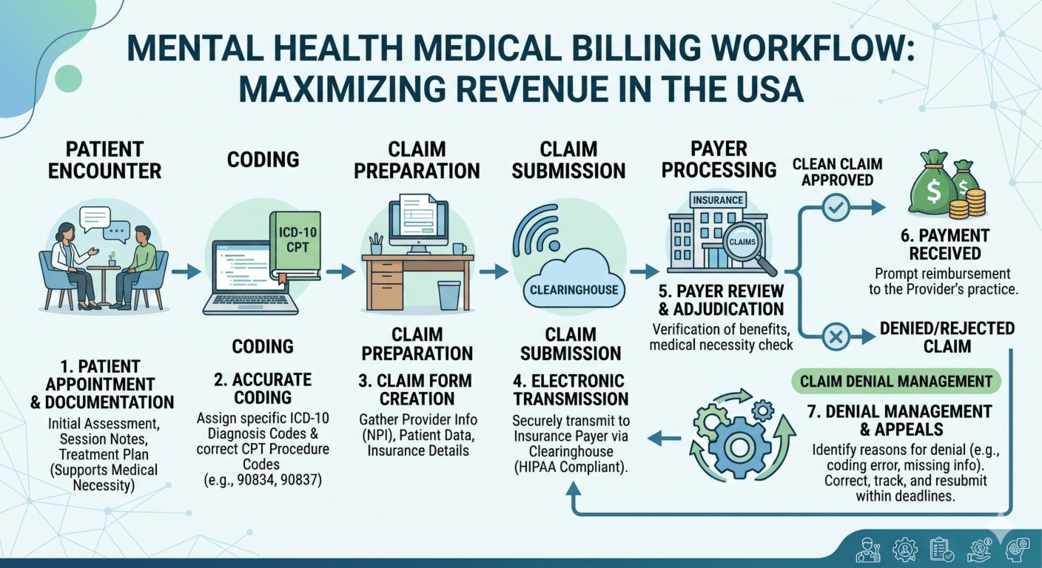
The healthcare landscape in the USA is shifting rapidly, and urgent care centers find themselves at the center of this transformation. Positioned as a crucial bridge between primary care physicians and overcrowded hospital emergency rooms, urgent care clinics offer patients fast, accessible, and affordable medical attention. However, behind the seamless patient experience lies a highly complex financial operation. For these clinics to remain sustainable and profitable, partnering with a specialized urgent care billing services provider has evolved from an optional luxury to an absolute operational necessity.
Managing the financial health of an immediate care facility requires navigating a unique set of challenges. Unlike traditional practices with scheduled appointments, urgent care centers handle unpredictable patient volumes, a vast array of medical conditions, and a constant influx of diverse insurance plans. This chaos makes the front-desk and back-office operations incredibly vulnerable to errors. Without streamlined processes, claims get delayed, denials skyrocket, and hard-earned revenue slips through the cracks. To combat this, smart healthcare executives are outsourcing their financial workflows to experienced partners who can handle everything from patient registration to final payment collection.
The Complexities of Urgent Care Billing
Urgent care billing is uniquely intricate compared to other medical specialties. The "walk-in" nature of the business means that eligibility verification must happen in real-time, often under tight time constraints. A single mistake during the intake process can trigger a domino effect of rejections down the line.
Furthermore, urgent care centers utilize specific place of service (POS) codes and frequently handle evaluation and management (E/M) codes alongside surgical modifiers, lab codes, and x-ray claims all in a single visit. Keeping up with these rapidly changing regulations requires dedicated expertise. When a clinic partners with a proficient urgent care billing services provider, they gain access to a team that understands these nuances intimately, ensuring that every service rendered is captured and reimbursed accurately.
The Strategic Importance of Dedicated Medical Coding Services
Accurate documentation is the foundation of any successful healthcare revenue cycle. This is where professional medical coding services become invaluable. In an urgent care setting, coders must translate complex clinical charts into standardized ICD-10, CPT, and HCPCS codes within hours of the patient’s visit to maintain a healthy cash flow.
Incorrect modifier usage—such as failing to apply modifier 25 for a significant, separately identifiable E/M service on the same day as a procedure—is a leading cause of claim audits and denials in immediate care. Specialized coding teams ensure that:
-
Up-to-date code sets are applied immediately.
-
Overcoding and undercoding are actively prevented to mitigate compliance risks.
-
Documentation clearly supports the level of care provided.
By insulating the practice from coding errors, these services protect the clinic’s reputation while optimizing legitimate reimbursement.
Why Comprehensive Medical Billing Services Are Essential
Beyond coding, the administrative burden of tracking claims, managing patient statements, and following up with payers can overwhelm an in-house administrative team. Utilizing comprehensive medical billing services allows urgent care clinicians to redirect their focus entirely toward patient care.
An external billing partner manages the entire lifecycle of a claim. They scrub claims for errors before submission, track them through clearinghouses, and handle the tedious process of appealing wrongful denials. This level of meticulous oversight significantly reduces Days in Accounts Receivable (AR) and ensures that the clinic is compensated fairly and promptly by commercial insurers, Medicare, and Medicaid alike.
The Synergy of Integrated Medical Billing and Coding Services
When administrative workflows are fragmented, communication breakdowns occur. Integrating medical billing and coding services under a single, unified team eliminates the friction between the coding specialists who interpret the charts and the billing specialists who submit the claims.
[Clinical Documentation] ➔ [Expert Medical Coding] ➔ [Claim Scrubbing & Submission] ➔ [Reimbursement]
                                    ▲                                 │
                                    └───────── Denial Analysis ───────┘
This integrated approach creates a continuous feedback loop. If a payer denies a claim due to a specific coding nuance, the billing team can immediately coordinate with the coding department to correct and resubmit the claim without missing timely filing deadlines. This synergy drastically reduces the clean claim rate variance and ensures a predictable stream of revenue.
Driving Financial Growth with Revenue Cycle Management Services
To truly thrive in the competitive USA healthcare market, urgent care practices must look beyond basic billing and adopt holistic revenue cycle management services (RCM). RCM encompasses the entire financial journey of a patient, starting from the moment they check in at the front desk to the collection of their final self-pay balance.
An advanced RCM strategy focuses on:
-
Front-End Optimization: Training staff or deploying software for real-time insurance eligibility verification and accurate copay collection at the point of care.
-
Middle-Cycle Efficiency: Ensuring seamless clinical documentation and charge capture.
-
Back-End Excellence: Managing denials, analyzing payer contracts to ensure compliance with agreed-upon fee schedules, and utilizing predictive analytics to identify revenue leakage.
By optimizing every touchpoint of the revenue cycle, urgent care centers can maximize their net collections and maintain the capital needed for expansion and technology upgrades.
The Foundation of Payer Enrollment: Credentialing Services
An often-overlooked aspect of urgent care success is provider enrollment. Because urgent care centers experience higher staff turnover and frequently utilize locum tenens physicians, keeping providers properly credentialed with insurance networks is a monumental task. This is where dedicated credentialing services become critical.
If a provider renders care before their credentialing is finalized by an insurance payer, the resulting claims will be completely uncollectible. Professional credentialing management involves:
-
Meticulously maintaining CAQH profiles.
-
Tracking expiration dates for medical licenses, DEA certifications, and board approvals.
-
Expediting the enrollment process for new physicians, nurse practitioners, and physician assistants to prevent scheduling bottlenecks.
Ensuring that every practitioner on the floor is fully compliant and credentialed protects the clinic from catastrophic revenue losses.
Elevating Operations with 247 Medical Billing Services
Choosing the right partner to manage these complex operational pillars can make or break an urgent care facility. For clinics seeking a reliable, end-to-end financial partner, 247 Medical Billing Services offers a robust, scalable solution. By combining industry-leading expertise with advanced automation, they seamlessly deliver specialized medical billing services, precise medical coding services, and cohesive medical billing and coding services.
Furthermore, their comprehensive approach integrates proactive revenue cycle management services alongside meticulous credentialing services to ensure your practice remains fully compliant and highly profitable. Partnering with an industry leader allows urgent care operators in the USA to eliminate administrative headaches, reduce overhead costs, and focus on delivering top-tier, immediate medical care to their communities.
Frequently Asked Questions (FAQs)
1. Why does urgent care billing require a specialized provider rather than a general medical biller?
Urgent care facilities operate under a unique model that combines aspects of primary care, emergency medicine, and outpatient clinics. They deal with specific place-of-service codes, complex E/M code configurations, and a high volume of same-day walk-in patients. A specialized provider understands these nuances, preventing frequent coding errors and claim denials that general billers might miss.
2. How do integrated medical billing and coding services improve a clinic's clean claim rate?
When billing and coding services are integrated, the teams work in tandem using a unified system. This eliminates communication gaps. Coders can instantly clarify documentation ambiguities, and billers can quickly route payer-specific rejection patterns back to the coding team for immediate correction, resulting in a significantly higher percentage of claims paid on the first submission.
3. What role do credentialing services play in preventing revenue loss for new urgent care providers?
In the USA, insurance payers will not reimburse claims for services rendered by a provider who is not fully credentialed within their network. Dedicated credentialing services manage the extensive paperwork, follow-ups, and compliance checks required to enroll new clinicians quickly, ensuring they can see patients and generate revenue immediately upon hire without risking uncollectible claims.
4. Can outsourcing revenue cycle management services help reduce patient collection issues?
Yes. Modern revenue cycle management services focus heavily on front-end collections. They provide tools and strategies for real-time eligibility verification and accurate calculation of patient deductibles and copays at the time of service. This reduces the reliance on back-end patient billing, which is traditionally harder and more expensive to collect.
5. What are the key performance indicators (KPIs) that an urgent care billing provider should improve?
A professional billing partner should noticeably optimize several key metrics, including reducing Days in AR (ideally keeping them below 30–35 days), increasing the clean claim rate to above 95%, and significantly lowering the overall denial rate through proactive claim scrubbing and continuous audits.

 English
 Arabic
 French
 Spanish
 Portuguese
 Deutsch
 Turkish
 Dutch
 Italiano
 Romaian
 Portuguese (Brazil)
 Greek