


From Sensors to App Integration: What Sichuan Locust Smart Water Bottle Manufacturer Tests
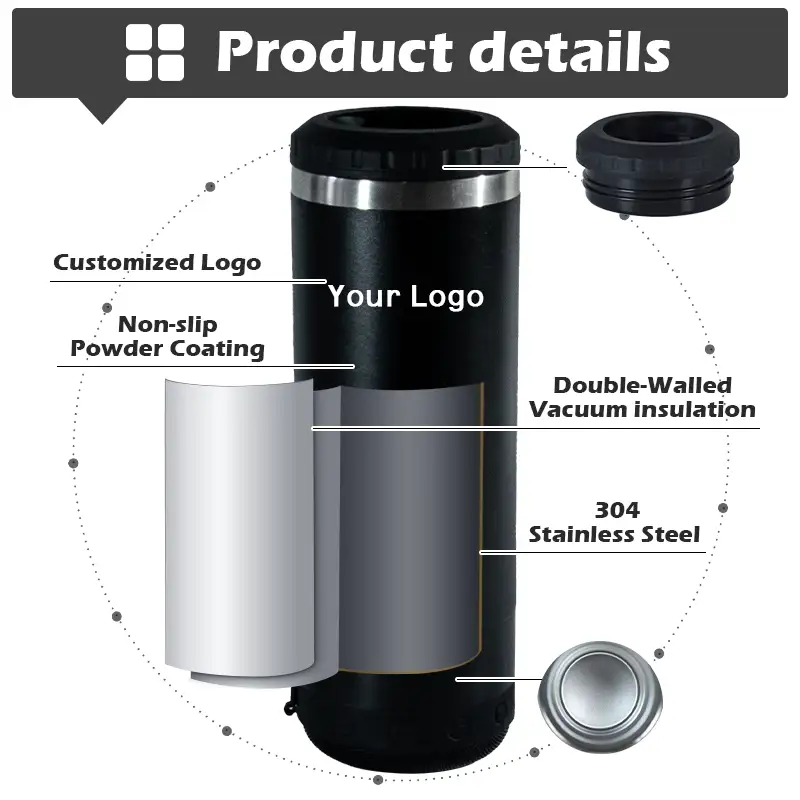
Testing a smart water bottle before it goes to market is a significantly more complex undertaking than testing conventional drinkware. A conventional bottle passes or fails on a relatively short list of criteria: does it leak, are the materials food-safe, is the insulation performing to spec, is the surface finish consistent? A smart bottle has all of those requirements plus a full layer of electronic, firmware, and connectivity testing that must be completed before the product is ready for market. As a smart water bottle manufacturer with deep experience in connected drinkware, Sichuan Locust has developed a testing protocol that covers every relevant dimension of smart bottle performance — here is what that testing actually looks like.
Hydration Tracking Accuracy Testing
The fundamental promise of a smart water bottle's hydration tracking feature is accuracy. If the bottle tells a user they've drunk 400ml when they've actually consumed 300ml, the health data it generates is misleading and the product undermines trust with the user. Sichuan Locust tests hydration tracking accuracy using controlled measurement protocols — filling the bottle with precisely measured volumes, having the test consume the liquid through normal drinking behavior, and comparing the app-reported intake against the actual measured volume. This testing is conducted across the full range of the bottle's volume, across different drinking speeds and patterns, and across temperature ranges from ice-cold beverages to hot ones. The acceptable accuracy tolerance is defined as part of the product specification and tested against before production approval is granted.
Temperature Sensor Calibration and Display Accuracy
Temperature display is another core smart bottle feature that users rely on for practical decision-making — knowing whether their coffee is still hot enough to drink or whether their iced water has warmed to room temperature. Sichuan Locust calibrates the temperature sensors in its smart bottles against reference thermometers across the full range of temperatures the product is designed to measure, ensuring that the display reading accurately reflects the actual beverage temperature. Calibration data is stored in the device firmware for each unit, accounting for any manufacturing variation in the sensor components. Users who check a Sichuan Locust smart bottle's temperature display can trust what they're reading.
Bluetooth Connectivity and Pairing Reliability
Bluetooth connectivity issues are one of the most common and frustrating complaints users raise about connected products of all kinds — the device doesn't pair, the connection drops, the data doesn't sync, the app doesn't recognize the device. Sichuan Locust tests BLE connectivity extensively, covering initial pairing on a range of smartphone models and operating system versions, connection stability over extended periods, data sync reliability, reconnection behavior after the connection is interrupted, and performance in environments with significant Bluetooth interference. The goal is a product that pairs easily the first time, stays connected reliably, and handles connection interruptions gracefully rather than requiring the user to troubleshoot.
Battery Life Under Real-World Use Conditions
Battery life specifications that are tested under ideal laboratory conditions — display always off, no active connectivity, minimal sensor polling — bear little resemblance to what users actually experience. Sichuan Locust tests battery life under realistic use profiles that reflect how the product is actually intended to be used: display activations at a realistic frequency, Bluetooth sync at appropriate intervals, reminder notifications at the cadence specified in the product design. This testing produces battery life estimates that users can actually count on, rather than specifications that look impressive on a product page but disappoint in practice. For each product design, a minimum acceptable battery life under realistic use is defined as part of the performance specification.
Water Resistance Validated to IPX Rating
Water resistance is not a binary property — it exists on a spectrum, and the degree of protection provided determines what conditions the product can safely survive. Sichuan Locust validates the water resistance of its smart bottle designs against the IPX rating specified for each product, using standardized test methods that match the conditions described by the rating. A product rated IPX7 is tested by submersion in water to one meter for thirty minutes; a product rated IPX5 is tested against directional water jet. Every unit in a production batch is checked for water intrusion before shipment, not just samples from the design validation phase. Buyers and their customers can rely on the stated water resistance rating being genuine rather than aspirational.

 Arabic
 French
 Spanish
 Portuguese
 Deutsch
 Turkish
 Dutch
 Italiano
 Russian
 Romaian
 Portuguese (Brazil)
 Greek