


The Role of Blockchain in Securing Transactions for Modern Travel Apps
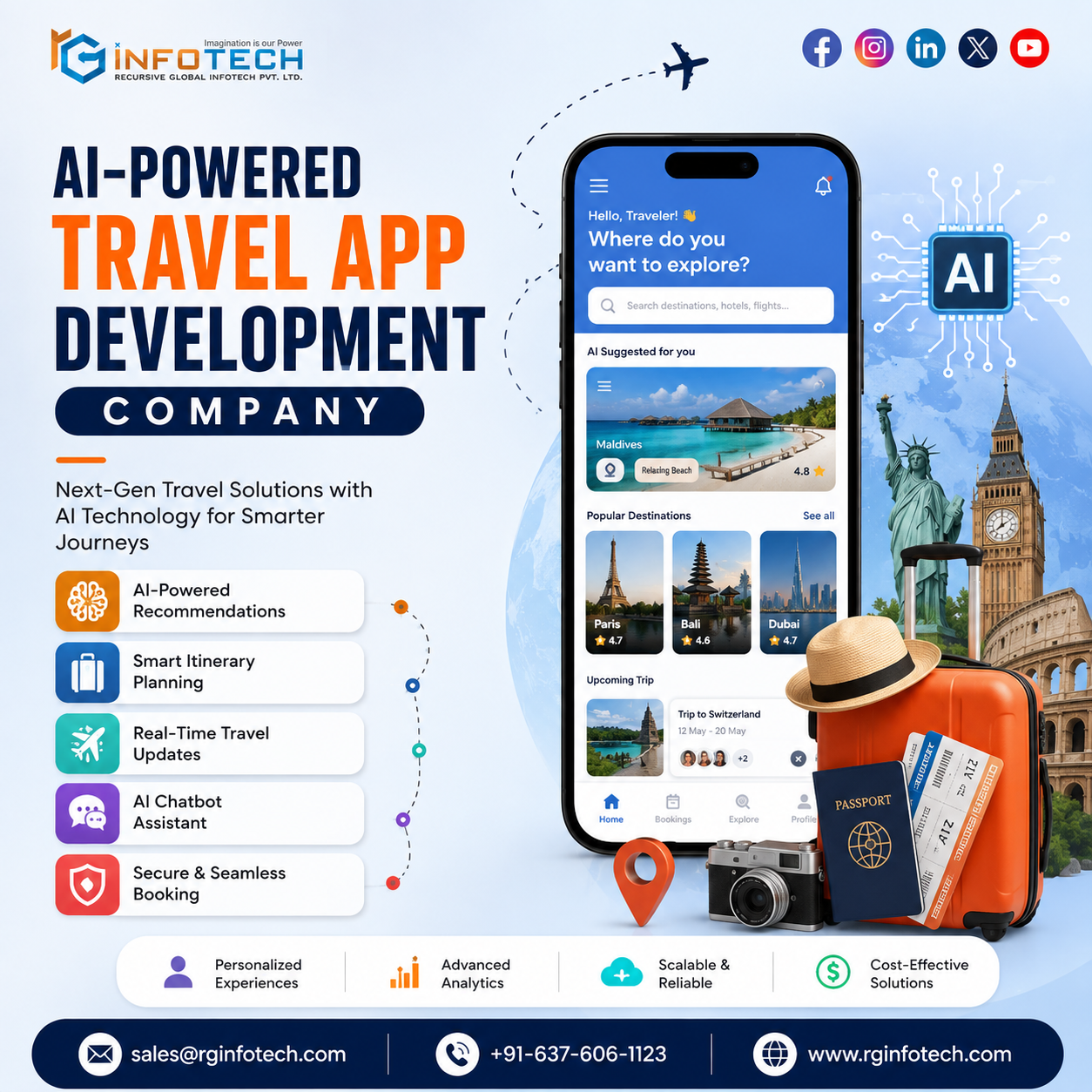
The travel industry has rapidly embraced mobile technology, allowing users to search destinations, book flights, reserve hotels, arrange transportation, and purchase experiences from their smartphones. As travel apps handle increasing amounts of personal and financial information, security has become a major concern for businesses and travelers alike.
Blockchain technology offers a promising approach to improving transaction security in modern travel applications. By providing decentralized data management, tamper-resistant records, smart contracts, and transparent transactions, blockchain can help travel businesses build greater trust while reducing certain risks associated with traditional digital payment systems.
But how exactly can blockchain improve travel app security? Let's explore its role, benefits, applications, and implementation considerations.
What Is Blockchain in Travel Apps?
Blockchain is a distributed digital ledger that records transactions across a network. Instead of relying entirely on one centralized database, blockchain can distribute transaction records across multiple participating nodes.
Once information is recorded and validated, altering it becomes significantly more difficult because subsequent records depend on the integrity of previous ones.
In a travel application, blockchain can potentially be used to secure payment transactions, booking records, loyalty programs, identity verification, refunds, and agreements between different parties.
This makes blockchain particularly relevant to an industry where multiple participants—including travelers, airlines, hotels, travel agencies, transportation providers, and payment services—need to exchange information securely.
1. Enhancing Payment Security
Travel apps process numerous financial transactions, including flight bookings, hotel reservations, car rentals, tour packages, and travel insurance purchases. Protecting these transactions is essential for maintaining customer trust.
Blockchain can provide a verifiable record of transactions and reduce dependence on centralized systems. Depending on the implementation, blockchain-based payment systems can support secure peer-to-peer transactions and provide greater visibility into transaction history.
Smart contracts can also automate predefined payment conditions, reducing the need for manual intervention.
2. Protecting Booking Records
Booking information is another important area where blockchain can provide value. A travel reservation involves multiple parties, and discrepancies can sometimes occur when different systems maintain separate records.
Blockchain can create a shared, verifiable record of booking information. Authorized participants can access relevant transaction details without relying on inconsistent copies stored across disconnected systems.
For example, a hotel reservation could be recorded on a blockchain, allowing authorized parties to verify whether a booking exists and whether payment conditions have been fulfilled.
3. Using Smart Contracts for Automated Transactions
Smart contracts are programs stored on a blockchain that automatically execute predefined conditions.
They can be useful in travel applications where transactions involve multiple conditions. For example, a travel app could use a smart contract to release a payment to a service provider after a booking is successfully confirmed.
Similarly, predefined refund conditions could trigger an automated transaction when cancellation requirements are met.
This automation can reduce administrative work, improve transaction transparency, and minimize disputes caused by unclear payment conditions.
4. Improving Identity Verification
Travel applications often require users to provide personal information during account registration and booking. Identity verification is therefore an important security consideration.
Blockchain-based identity solutions can potentially allow users to maintain verifiable digital credentials that can be shared with authorized service providers when necessary.
Instead of repeatedly submitting the same information to different organizations, travelers could use a verified digital identity system where appropriate.
However, businesses must carefully design these systems to comply with applicable privacy and data protection requirements.
5. Preventing Transaction Tampering
One of blockchain's major characteristics is its resistance to unauthorized modification. Once transactions are properly recorded and validated, changing historical information becomes difficult.
This characteristic can help travel businesses maintain reliable transaction records and detect suspicious activity.
For example, payment records, booking confirmations, or loyalty transactions can be logged in a way that provides a traceable history for authorized users.
Blockchain does not eliminate all forms of fraud, but it can add another layer of accountability to a travel application's transaction infrastructure.
6. Securing Loyalty and Reward Programs
Travel companies frequently operate loyalty programs that award points for bookings, stays, flights, or other activities. Managing these programs across different providers can be complicated.
Blockchain can support tokenized loyalty points that can be tracked transparently. Depending on the business model, users could potentially redeem rewards across participating airlines, hotels, restaurants, or travel service providers.
A shared ledger can also help reduce problems such as duplicate points, unauthorized changes, and inaccurate reward balances.
7. Improving Transparency Between Travel Partners
The travel ecosystem includes numerous independent businesses. Airlines, hotels, travel agencies, tour operators, payment providers, and transportation companies may need to exchange information.
Blockchain can create a shared source of transaction records for authorized participants. This can improve transparency when several organizations are involved in a booking or payment.
For example, different travel partners could verify booking status, payment information, or settlement records without depending entirely on separate databases.
8. Supporting Secure Cross-Border Transactions
International travel often involves multiple currencies, payment providers, and financial institutions. Cross-border transactions can sometimes involve additional processing steps and fees.
Blockchain-based payment infrastructure may offer alternative ways to facilitate international transactions, depending on local regulations and the specific technology used.
Travel businesses must, however, carefully consider regulatory requirements, currency risks, payment compliance, and consumer protection before implementing blockchain-based financial services.
Blockchain and Travel App Development
Blockchain should not be added to a travel application simply because it is a popular technology. Businesses first need to identify a genuine problem that blockchain can solve more effectively than traditional technologies.
An experienced Travel App Development Company in India can evaluate the application's requirements and determine where blockchain can provide meaningful value. Developers can integrate blockchain with conventional databases, payment gateways, APIs, cloud infrastructure, and mobile application components.
A hybrid architecture is often practical because not every piece of travel data needs to be stored on a blockchain. Sensitive or frequently changing information may be better handled through secure conventional systems, while blockchain can be used for selected transactions requiring verification and traceability.
Challenges of Blockchain in Travel Apps
Despite its potential, blockchain comes with several challenges.
Implementation complexity: Blockchain integration requires specialized technical knowledge and careful architecture planning.
Scalability: High-volume travel platforms need systems capable of processing large numbers of transactions efficiently.
Regulatory compliance: Financial transactions and personal data are subject to different regulations depending on the country and application.
Integration: Travel apps often depend on airlines, hotel APIs, payment gateways, maps, and third-party services. Blockchain must work effectively with these systems.
User experience: Blockchain technology should operate behind a simple interface. Travelers should not need to understand blockchain to use the application.
Working with an experienced Travel App Development Company in India can help businesses evaluate these challenges and select an appropriate implementation strategy.
Best Practices for Blockchain Integration
Businesses considering blockchain should begin with a clear use case. Identify whether the primary goal is improving transaction transparency, automating payments, strengthening booking records, or managing loyalty programs.
Start with a limited proof of concept or MVP before introducing blockchain throughout the entire application.
Security testing should also be performed regularly. Smart contracts require careful auditing because coding errors can create financial and operational risks.
Businesses should additionally implement strong authentication, encryption, secure APIs, access controls, monitoring, and appropriate data protection practices.
Conclusion
Blockchain can play an important role in securing transactions for modern travel applications. From payment verification and smart contracts to booking records, loyalty programs, identity management, and cross-border transactions, the technology offers several potential benefits.
However, blockchain is not a universal solution. Its value depends on the specific business problem, technical architecture, regulatory environment, and user requirements.
For travel businesses, the goal should be to use blockchain strategically rather than treating it as a replacement for every existing technology. With the right implementation, blockchain can become a valuable component of a secure, transparent, and trustworthy travel ecosystem.

 English
 Arabic
 Spanish
 Portuguese
 Deutsch
 Turkish
 Dutch
 Italiano
 Russian
 Romaian
 Portuguese (Brazil)
 Greek