


Choosing the Right Welding Equipment for Reliable Production
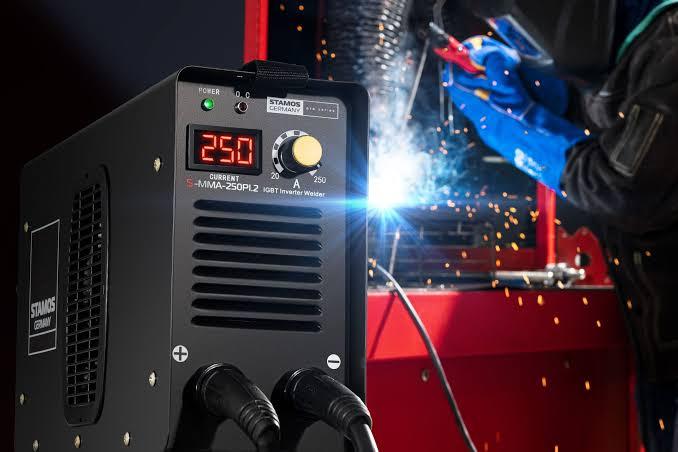
Selecting the right welding equipment is an important decision for manufacturers that depend on strong joints, consistent quality, and efficient production. A suitable inverter welder can provide precise welding performance while helping businesses improve productivity and maintain dependable results across different applications. However, choosing the right model requires careful consideration of several technical and operational factors.
Understand Your Welding Requirements
Before purchasing equipment, manufacturers should clearly define their welding requirements. The material type, thickness, joint design, production volume, and required welding method all influence equipment selection. Different industrial applications may require different current ranges, duty cycles, control systems, and welding capabilities.
It is also important to consider whether the equipment will be used for occasional repairs, small-batch manufacturing, or continuous industrial production. Understanding these requirements helps prevent businesses from selecting equipment that is either insufficient for the workload or unnecessarily expensive.
Evaluate Power and Welding Performance
Power output is one of the most important factors when comparing welding machines. The equipment should provide enough welding current for the materials and thicknesses involved while maintaining stable performance during operation.
A high-quality machine should offer reliable current control and consistent welding results. Stable output can help reduce defects, minimize material waste, and improve the overall quality of finished components. Manufacturers should also examine duty cycle ratings, as equipment used for demanding production environments needs to withstand extended operating periods without excessive interruptions.
Consider Control and Automation Features
Modern welding equipment increasingly incorporates advanced control technology to improve accuracy and repeatability. Digital controls, programmable parameters, monitoring functions, and automated adjustment capabilities can make production easier to manage.
For manufacturers operating high-volume production lines, compatibility with automated systems can be especially valuable. Equipment that integrates smoothly into an automated workflow can reduce manual intervention and help maintain consistent welding quality from one component to another.
Heron-Welder focuses on developing welding solutions designed around practical industrial requirements. Its equipment can support manufacturers seeking dependable performance, efficient operation, and improved control across demanding production environments.
Check Equipment Reliability and Maintenance
Durability should also be a major consideration. Welding equipment used in industrial environments may face continuous operation, vibration, heat, dust, and demanding production schedules. A robust machine can help reduce unexpected downtime and support long-term productivity.
Manufacturers should also investigate maintenance requirements before making a purchase. Easy access to important components, straightforward parameter adjustment, and dependable technical support can make equipment easier to maintain throughout its service life.
Another important consideration is safety. Proper protection systems, stable electrical performance, and appropriate operating controls can help create a safer workplace while supporting reliable production.
Choose Equipment That Supports Long-Term Growth
The best welding equipment should not only meet today's requirements but also provide value as production needs develop. Businesses should consider whether a machine can handle future material requirements, increased production volumes, or integration with additional manufacturing systems.
Working with an experienced welding equipment provider can make the selection process more effective. Heron-Welder offers solutions for manufacturers looking to balance performance, durability, efficiency, and production requirements when upgrading their welding capabilities.
When evaluating an inverter welder, buyers should therefore look beyond the initial purchase price and consider welding performance, control capabilities, durability, maintenance, safety, and future production needs. A well-selected machine can contribute to more stable operations, higher productivity, and better-quality results over the long term.
Conclusion
Choosing suitable welding equipment requires a practical understanding of production demands and technical requirements. By evaluating power output, welding stability, automation compatibility, durability, maintenance, safety, and future scalability, manufacturers can make a more informed investment. With the right equipment and dependable engineering support, businesses can strengthen production efficiency while maintaining consistent welding quality.

 English
 Arabic
 French
 Spanish
 Deutsch
 Turkish
 Dutch
 Italiano
 Russian
 Romaian
 Portuguese (Brazil)
 Greek