


Managed SOC Services in India: Smarter Threat Management for Healthcare
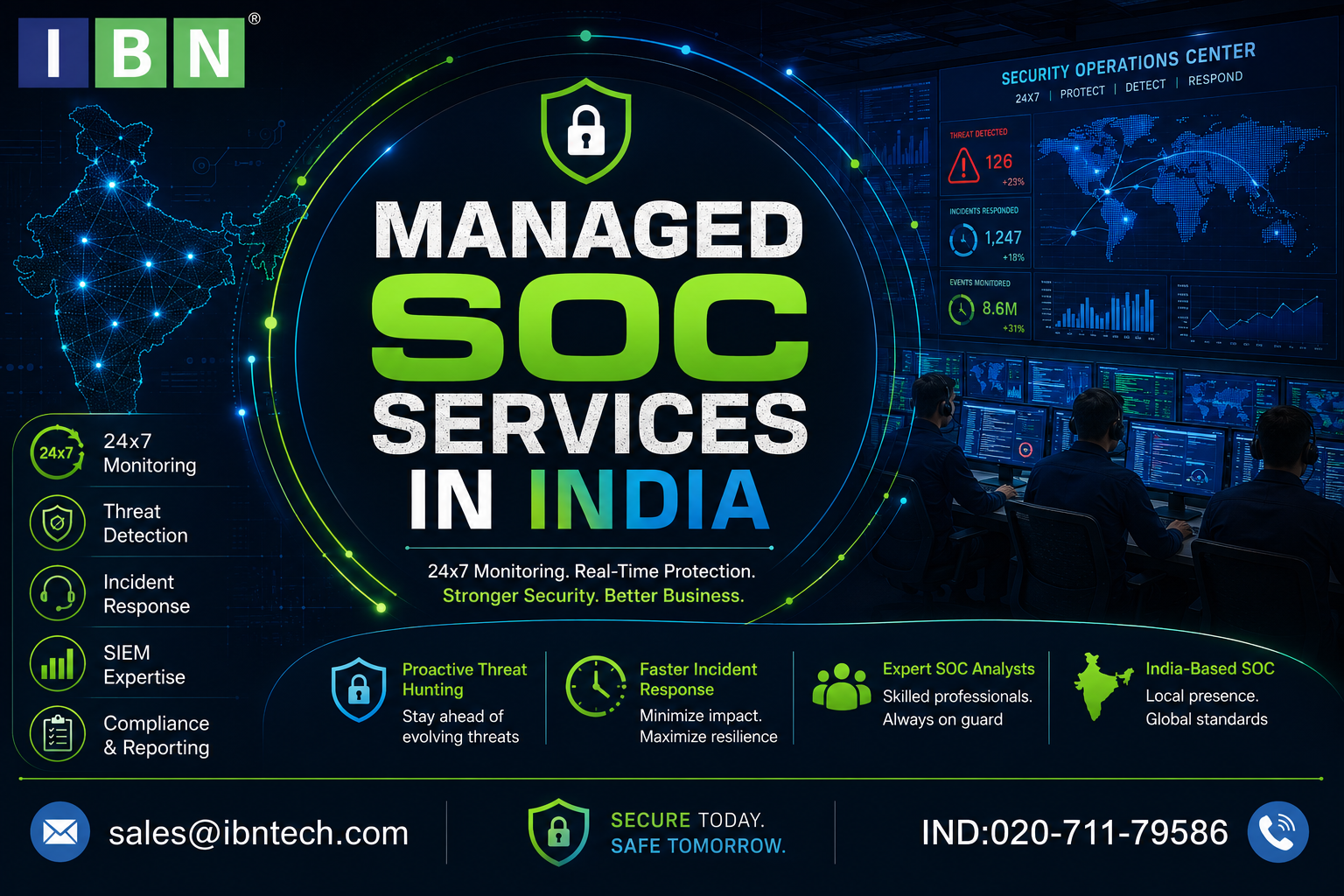
Managed SOC Services in India: Building an Integrated Security Operation for Healthcare
Healthcare organizations rely on interconnected digital systems to support administrative, operational, and patient-facing activities. As these environments become more distributed, security teams need to see suspicious activity across multiple technology layers rather than investigate each alert in isolation. managed soc services in india can provide continuous monitoring and specialist security analysis, helping healthcare organizations create a more coordinated approach to threat detection and response.
Why Healthcare Security Needs More Than Individual Tools
A healthcare organization's security environment can contain endpoints, servers, networks, applications, cloud services, identity systems, and security devices. Each component may generate its own security information.
Individual security tools can be valuable, but isolated alerts can make investigation difficult. A suspicious login may not mean much by itself. A network event may appear routine without additional context. An endpoint alert could become more significant when related activity is discovered elsewhere.
The challenge is therefore one of coordination.
A SOC can provide a centralized operational function that reviews security events across the monitored environment. SIEM technology can help aggregate and correlate relevant information, while analysts provide the human judgment required to investigate potentially significant activity.
How Integrated Threat Management Services Connect the Dots
Integrated threat management services are valuable when security monitoring needs to connect different sources of information instead of treating every alert as an independent event.
For healthcare organizations, an integrated approach can bring together monitoring, threat detection, investigation, incident handling, and reporting within a more coordinated workflow.
This can help analysts understand the relationship between different security events. Rather than asking only whether an individual alert is suspicious, they can consider what other activity may be associated with it and whether the overall pattern indicates a potential incident.
For internal teams, this creates a clearer security workflow. Technology generates information, monitoring identifies events requiring attention, analysts investigate, and appropriate stakeholders are involved when escalation becomes necessary.
Why Fragmented Security Operations Create Problems
A healthcare organization may have multiple security technologies deployed for different purposes. However, having multiple tools does not automatically mean having an integrated security operation.
When alerts remain separated between different platforms, analysts may need to manually gather information before they can understand what is happening.
This can slow investigations and make it harder to establish a complete picture of an event.
Another challenge is ownership. If different systems are managed by different teams, a security issue can move between departments before someone takes responsibility for the investigation.
A managed SOC can provide a dedicated security-monitoring function that coordinates relevant alerts and follows defined investigation and escalation procedures.
The goal is not to replace every existing security technology. It is to make the overall security process more connected.
What a Managed SOC Should Bring Together
Healthcare leaders evaluating a managed SOC should look at the entire operating model.
Relevant capabilities can include:
- Continuous security monitoring.
- SIEM-based event collection and correlation.
- Threat detection and analysis.
- Human-led alert investigation.
- Incident response support.
- Threat intelligence.
- Security-device monitoring.
- Security dashboards.
- Compliance-oriented reporting.
IBN Technologies offers managed SIEM and SOC services incorporating these capabilities and supports cloud, hybrid, and on-premises environments.
The specific monitoring scope should be established according to the organization's technology environment, security priorities, and operational requirements.
The Operational Benefits of an Integrated Model
An integrated security operation can provide healthcare organizations with greater visibility across their technology environment.
Instead of reviewing isolated alerts, security analysts can investigate relationships between events. This can provide additional context when determining whether activity is routine, suspicious, or potentially malicious.
Continuous monitoring can also reduce dependence on office-hour security reviews. Healthcare technology environments can remain active outside conventional working schedules, making continuous security oversight useful for maintaining awareness.
Another advantage is reduced pressure on internal IT personnel. A managed SOC can take responsibility for monitoring and initial investigation while internal teams remain responsible for their technology and business functions.
The model can also improve consistency. Defined procedures for alert assessment, incident escalation, and reporting create a repeatable framework for managing security events.
A Healthcare Threat Scenario
Consider a healthcare organization using cloud applications alongside internal systems and employee endpoints.
An employee account generates unusual authentication activity. Around the same time, another monitored system records an unexpected security event.
Neither alert necessarily proves that an incident has occurred.
An integrated SOC operation can examine the events together. SIEM correlation can help bring related information into view, while analysts investigate the circumstances and determine whether the activity warrants escalation.
If the investigation indicates a potential security incident, the appropriate internal stakeholders can be notified according to the established response process.
The benefit comes from connecting events that might otherwise have remained separate.
How to Evaluate an Integrated SOC Provider
Healthcare organizations should assess more than the number of technologies a provider can monitor.
- Integration: Determine whether relevant security sources can feed into the monitoring environment.
- Detection: Understand how potentially suspicious behavior is identified.
- Investigation: Ask how analysts establish context around alerts.
- Escalation: Confirm how serious findings reach the organization's responsible teams.
- Incident response: Establish what support is available once an event becomes an incident.
- Reporting: Review whether dashboards and reports provide useful operational visibility.
- Threat intelligence: Understand how intelligence contributes to security analysis.
- Coverage: Determine whether cloud, hybrid, and on-premises systems can be accommodated.
- Scalability: Consider how monitoring will adapt as the organization changes.
An effective provider should help create a coherent security process rather than simply add another stream of notifications.
Mistakes That Can Undermine Threat Management
Healthcare organizations can weaken an integrated security strategy by collecting too much information without prioritization.
Security monitoring should focus on meaningful events and provide analysts with enough context to determine what deserves attention.
Another mistake is failing to define internal responsibilities. A managed SOC may identify an important incident, but the organization still needs clear ownership for decisions and remediation.
Ignoring recurring events is another missed opportunity. Repeated alerts may point to configuration issues, access problems, or weaknesses that deserve broader investigation.
Finally, organizations should regularly reassess monitoring coverage. Technology environments evolve, and security operations should evolve with them.
A Practical Threat-Management Checklist
Healthcare IT and security leaders can review the following areas:
- Identify the most important technology environments requiring monitoring.
- Map relevant security sources into the monitoring architecture.
- Establish alert-priority criteria.
- Define internal incident owners.
- Create clear escalation paths.
- Review recurring alerts for underlying problems.
- Evaluate detection quality periodically.
- Maintain appropriate security records.
- Review security dashboards and reports with relevant stakeholders.
- Reassess monitoring coverage when infrastructure changes.
This creates a foundation for continuous improvement rather than a static security setup.
Compliance and Security Governance
Healthcare security operations may need to support privacy, security, contractual, and regulatory obligations.
Continuous monitoring can contribute to governance by providing security visibility, incident information, monitoring records, and compliance-oriented reporting.
IBN Technologies states that its managed SIEM and SOC capabilities support compliance-oriented reporting aligned with requirements and frameworks including HIPAA, ISO 27001, PCI-DSS, GDPR, and applicable Indian sector regulations.
Organizations should still determine which obligations apply to their own operations. A managed SOC can support compliance processes, but it does not replace an organization's responsibility for its complete security and compliance program.
Moving Toward a Connected Security Model
Healthcare organizations do not necessarily need more isolated security tools. They need those tools and their resulting security information to work within a coordinated operational process.
A managed SOC can provide that coordination by combining continuous monitoring with SIEM-based visibility, analyst investigation, threat intelligence, incident response, and reporting.
For Indian healthcare organizations, this model can be particularly useful when internal technology teams need to maintain critical systems while dedicated security professionals monitor the environment continuously.
The goal is a security operation where events are connected, investigated, prioritized, and escalated according to clear procedures.
When monitoring becomes integrated rather than fragmented, managed soc services in india can help healthcare organizations build a more responsive security function. Instead of relying on isolated alerts or periodic reviews, organizations can establish an ongoing process that brings security information together and turns it into practical decisions about investigation, response, and risk.
Contact Us:
IND- 02067680404
IBN Technologies Ltd.
E-mail: - sales@ibntech.com

 English
 French
 Spanish
 Portuguese
 Deutsch
 Turkish
 Dutch
 Italiano
 Russian
 Romaian
 Portuguese (Brazil)
 Greek