


SOC Providers: Essential SOC Audit Services for Indian Healthcare Teams
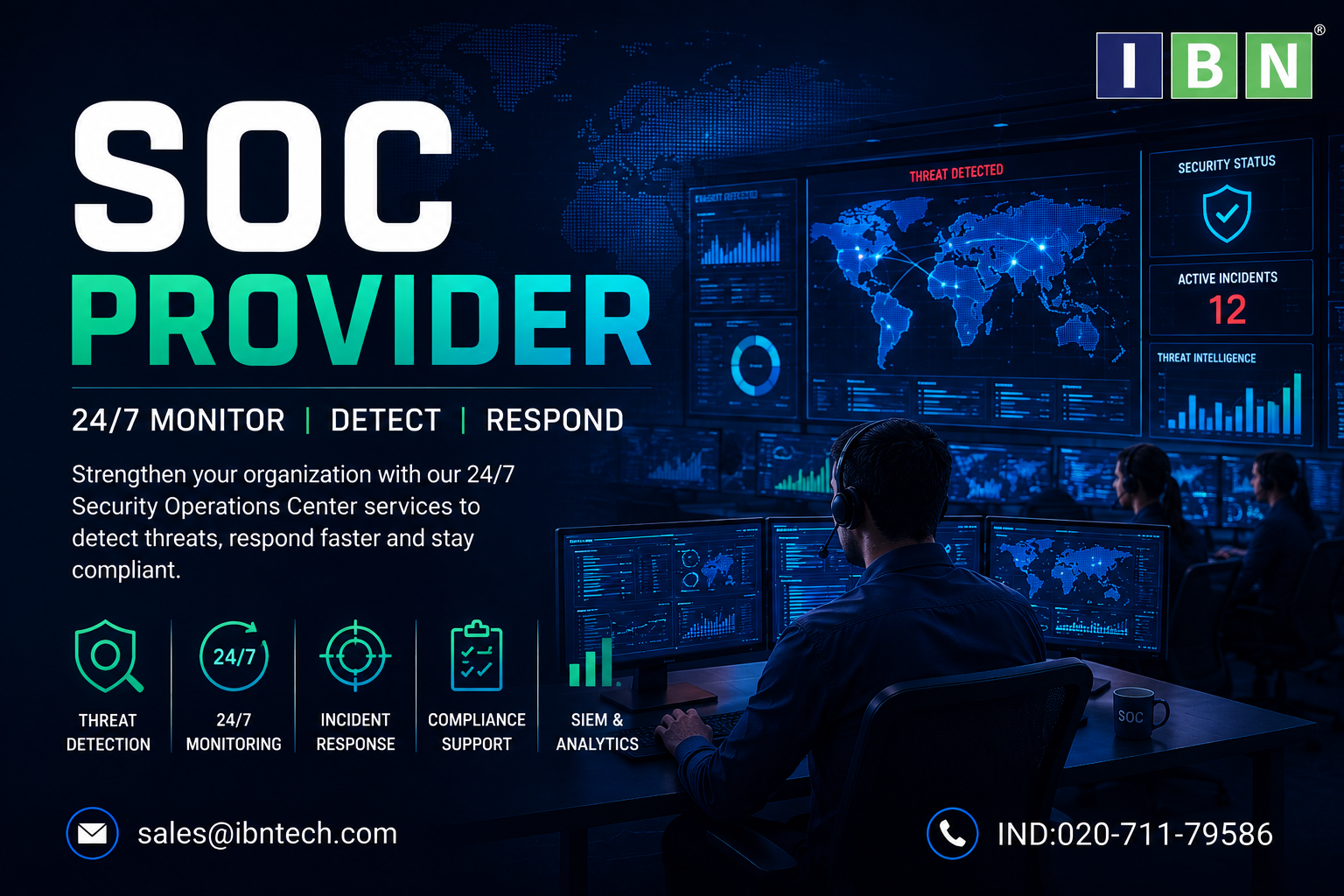
Before the Audit: How Healthcare Leaders Should Evaluate soc providers
Healthcare organizations rely on digital systems for administrative processes, patient-facing services, business operations, and internal workflows. That dependence makes security monitoring an ongoing management responsibility rather than something that can be addressed immediately before an assessment. For healthcare organizations evaluating soc providers, audit readiness should therefore be considered alongside detection, investigation, reporting, and incident-response capabilities.
A Security Operations Center can provide a structured process for monitoring security events, investigating suspicious activity, escalating significant findings, and maintaining operational visibility. When these activities are consistently managed and documented, they can also support a healthcare organization's broader governance and audit preparation.
Why SOC Audit Readiness Matters in Indian Healthcare
SOC audit readiness refers to an organization's ability to demonstrate that its security-monitoring and response processes are defined, assigned, operated, and appropriately documented.
The purpose is not simply to produce paperwork for an auditor. A well-managed SOC should help healthcare organizations understand what is happening within their monitored technology environment and establish repeatable procedures for dealing with relevant security events.
For healthcare leaders, this distinction matters. A security control that exists only as a written policy provides less operational confidence than a process that is regularly followed and supported by appropriate records.
What to Look for in SOC Audit Services
Healthcare organizations considering soc audit services should look beyond the promise of an assessment or checklist.
The more useful question is whether the service can help identify gaps between documented security procedures and actual operational practices.
An audit-oriented review may examine areas such as security monitoring, alert handling, access management, incident escalation, reporting, documentation, and governance.
The exact scope will depend on the organization's requirements and the assessment being performed.
For healthcare management, the outcome should be a clearer understanding of where security operations are working effectively and where improvements may be necessary.
Why Healthcare Security Processes Can Become Difficult to Demonstrate
Healthcare technology environments can involve numerous systems, applications, users, endpoints, and other technology components.
Security responsibilities may also be distributed between IT teams, security personnel, business stakeholders, and external service providers.
Without clearly defined ownership, questions can arise during an audit.
Who reviews important alerts? Who decides when an incident should be escalated? Who maintains relevant records? Who is authorized to take response actions?
These questions should have clear answers before an assessment begins.
A managed SOC can help establish operational responsibilities, but the healthcare organization should remain clear about its own governance and decision-making obligations.
How soc providers Can Support Audit-Ready Security Operations
When comparing soc providers, healthcare organizations should assess how monitoring activities are performed and documented.
IBN Technologies provides SOC & SIEM and Managed Detection and Response capabilities. These services can support structured security monitoring, detection, investigation, and response operations.
A healthcare organization should establish which systems are monitored, how alerts are prioritized, how suspicious activity is investigated, and how significant findings are escalated.
It should also determine what information needs to be retained for internal management, security reviews, or other applicable requirements.
The goal is to create an operating model where security activity can be understood throughout the year rather than reconstructed when an audit date approaches.
Evidence Is Part of Operational Discipline
Audit preparation often exposes a simple problem: an organization may have security procedures but limited evidence showing how consistently they operate.
For example, an incident-response procedure may define escalation responsibilities. However, management may also need visibility into whether those procedures are actually used when relevant security events occur.
Appropriate monitoring records, investigation information, escalation details, and reporting can help establish operational visibility.
The specific evidence required will vary according to the assessment and applicable requirements.
Healthcare organizations should therefore identify documentation expectations early and ensure that security operations are capable of producing useful records as part of normal activity.
From Monitoring to Governance
A SOC should not operate as an isolated technical function.
Security findings may need to reach IT management, security leadership, business stakeholders, or other authorized personnel depending on their significance.
That makes escalation design an important part of audit readiness.
A useful operating model establishes:
- Which events require investigation
- How security alerts are prioritized
- When escalation is mandatory
- Who receives significant findings
- Which actions require internal approval
- How investigations are documented
- What information management receives
- How monitoring coverage is reviewed
These practices can help connect technical monitoring with organizational governance.
Healthcare Use Case: Preparing Before an Assessment
Consider a healthcare organization preparing for an internal security assessment.
Its technology environment has expanded, but monitoring responsibilities have developed gradually. Different teams handle different security activities, and management does not have a single view of how alerts are investigated and escalated.
Rather than waiting for the assessment to identify the weaknesses, the organization reviews its SOC operating model.
It documents monitoring scope, identifies responsible personnel, reviews escalation procedures, and determines which security records should be maintained.
The organization then evaluates its external SOC support against those expectations.
This exercise gives management an opportunity to address operational gaps before they become audit findings.
A Practical Audit-Readiness Checklist
Healthcare leaders can use the following checklist when reviewing SOC operations:
- Confirm that monitored systems and environments are clearly defined.
- Document security-monitoring responsibilities.
- Establish alert-priority criteria.
- Define investigation procedures.
- Maintain clear escalation paths.
- Keep internal contact information current.
- Document responsibilities between the healthcare organization and provider.
- Review access to security-monitoring platforms.
- Establish appropriate security reporting.
- Identify records relevant to the applicable assessment.
- Review monitoring coverage when technology changes.
- Periodically evaluate whether SOC processes remain effective.
The checklist should be adapted to the organization's security environment and specific assessment requirements.
Compliance Should Be Treated as an Ongoing Responsibility
Healthcare organizations may face obligations related to applicable laws, contractual commitments, privacy, information security, internal policies, and other governance requirements.
Security monitoring can support these responsibilities by improving visibility and creating a structured approach to detecting, investigating, and escalating security events.
However, engaging a SOC provider does not automatically make an organization compliant.
The healthcare organization remains responsible for determining which requirements apply to its operations and for maintaining appropriate governance and controls.
A managed SOC should therefore be treated as one component of a wider security program.
Selecting a Provider for Long-Term Readiness
The right provider should contribute to everyday security operations while also supporting a disciplined governance environment.
Healthcare leaders should assess whether a provider can explain its monitoring processes clearly, establish appropriate responsibilities, investigate relevant events, communicate significant findings, and support useful security reporting.
Price alone should not determine the decision. Nor should the number of security technologies associated with the service.
For healthcare organizations comparing soc providers, operational transparency is more valuable than a long feature list. The provider should fit the organization's technology environment, internal responsibilities, security priorities, and governance structure.
When monitoring, investigation, escalation, and documentation are built into normal operations, audit preparation becomes less disruptive.
Instead of treating an audit as a one-time event, healthcare organizations can use the process to strengthen the consistency and accountability of their security operations throughout the year.
Contact Us:
IND- 02067680404
IBN Technologies Ltd.
E-mail: - sales@ibntech.com

 English
 Arabic
 French
 Spanish
 Portuguese
 Deutsch
 Dutch
 Italiano
 Russian
 Romaian
 Portuguese (Brazil)
 Greek