


SOC Services Companies in India: Smarter ICT Monitoring for Growth
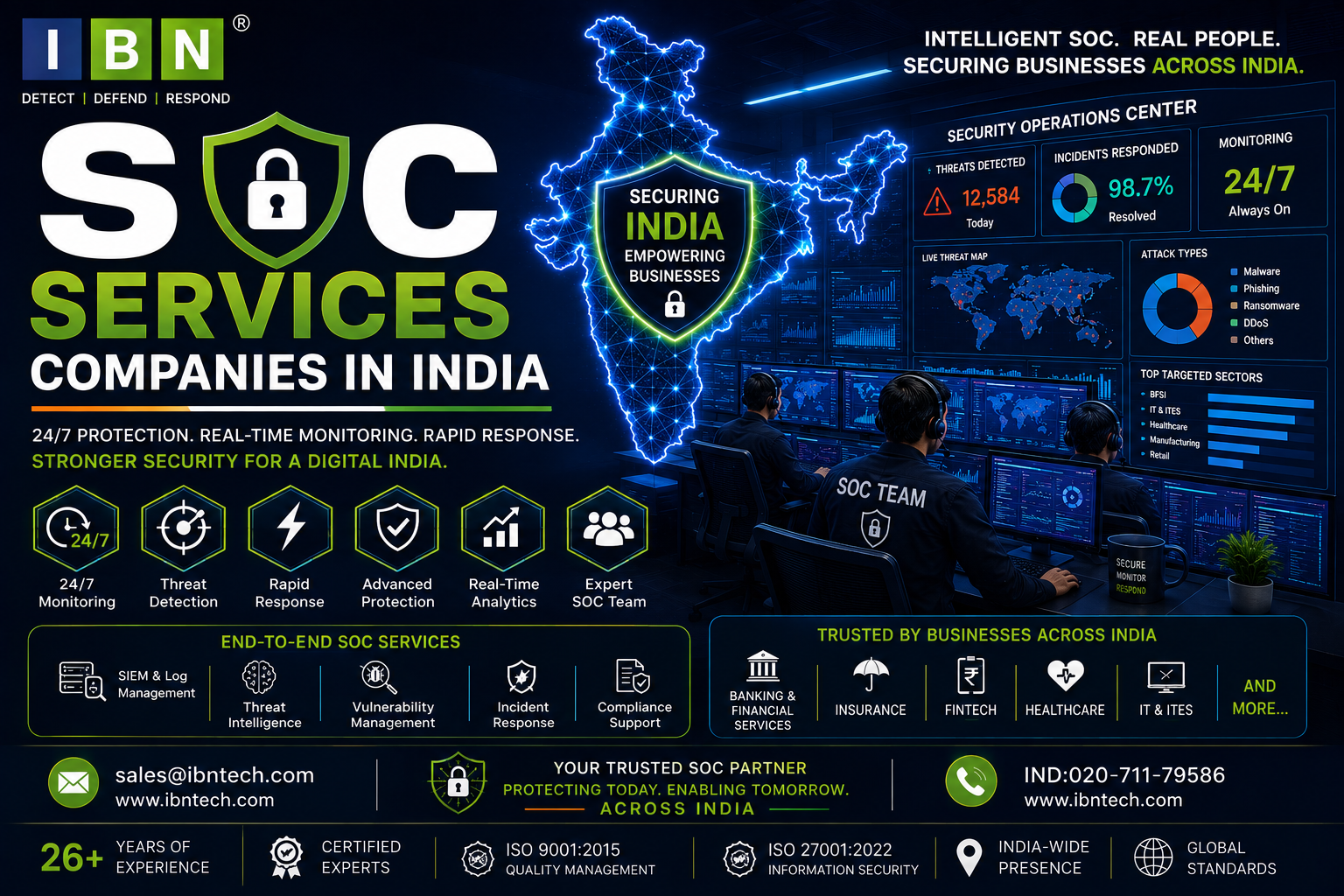
A Smarter Security Playbook With SOC Services Companies in India
India's ICT sector supports an increasingly connected business environment. Communication infrastructure, digital platforms, enterprise applications, cloud environments, and network services all depend on reliable technology operations. As these environments expand, security teams need more than isolated security tools. soc services companies in india can help ICT organizations create a structured model for monitoring, analyzing, and escalating security events.
Why ICT Organizations Need Continuous Security Visibility
A Security Operations Center is an organized security function responsible for monitoring activity, identifying suspicious events, investigating alerts, and supporting incident escalation.
For ICT organizations, visibility is especially important because technology environments can be distributed across infrastructure, networks, applications, endpoints, and other connected systems.
A security event in one area may provide little context by itself. When related events are analyzed together, however, the organization may gain a clearer understanding of whether unusual behavior requires investigation.
This makes security operations an important part of maintaining dependable digital infrastructure.
How Managed SIEM and SOC Can Strengthen ICT Operations
managed siem and soc combines security event-management capabilities with operational monitoring and investigation processes.
SIEM capabilities can help organizations gather and correlate relevant security information from supported environments. SOC operations add human analysis, alert prioritization, investigation, escalation, and defined response workflows.
For an ICT organization, this combination can help reduce the gap between collecting security information and acting on it.
A managed approach can also provide additional operational support when an organization does not want every monitoring responsibility to depend solely on its internal teams. The objective should be a clear operating model where the service provider and internal stakeholders understand their respective responsibilities.
Where Conventional Monitoring Approaches Can Break Down
ICT environments can produce large amounts of technical information. Network activity, system events, authentication records, application behavior, endpoint signals, and other records can all contribute to the security picture.
Reviewing this information manually can become difficult as the environment expands.
A second problem is prioritization. Security teams need to determine which events deserve immediate attention and which can be handled through routine processes.
A third issue is fragmented response. If different teams own different parts of the infrastructure, security incidents may require coordination across several groups.
Without a defined workflow, an organization can detect suspicious activity without having an equally mature process for investigating and escalating it.
External SOC support can help address this operational gap while allowing internal ICT teams to retain ownership of business and infrastructure decisions.
Selecting a SOC Service for an ICT Environment
Provider selection should start with the organization's operational requirements.
ICT leaders should identify the environments that need monitoring, determine which events are most important, and establish how incidents should move from detection to internal decision-making.
A useful evaluation framework includes:
- Security monitoring coverage
- Event collection and correlation
- Alert analysis and prioritization
- Investigation procedures
- Escalation and communication
- Reporting capabilities
- Integration with existing security processes
- Internal versus provider responsibilities
- Service governance
- Ability to adapt as infrastructure changes
The provider should be able to explain how these elements work together rather than focusing exclusively on individual technologies.
Questions ICT Leaders Should Ask Before Engagement
An ICT organization should be able to answer several practical questions before signing a managed SOC agreement.
Which environments will be monitored? What constitutes a significant security event? Who investigates alerts? Who decides when an incident needs escalation? What information is shared with internal teams? How will monitoring requirements change when new systems are introduced?
These questions reveal whether the proposed service is designed around the organization's actual operating environment.
They also help prevent a common mistake: purchasing a monitoring service without establishing how its output will be used.
Operational Advantages of a Managed Model
A structured SOC service can improve security visibility by bringing relevant event information into a consistent monitoring workflow.
It can also help organizations make better use of internal expertise. ICT teams can continue focusing on infrastructure, applications, network operations, and business-specific requirements while security monitoring receives dedicated operational attention.
Another advantage is process standardization. When alert handling and escalation follow established procedures, security operations become less dependent on informal communication.
Managed siem and soc services can therefore support organizations seeking a balance between internal ownership and external security operations.
The service should complement internal teams rather than create uncertainty about who is responsible for security decisions.
ICT Scenario: Responding to an Unusual Network Event
Consider an ICT organization managing a distributed technology environment.
A security monitoring system identifies unusual activity involving part of the network infrastructure. The initial event may not be enough to establish whether a serious security issue exists.
The SOC process can examine related security information, assess the activity against available context, and determine whether further investigation is warranted.
If escalation is required, the established communication process can bring the issue to the appropriate internal team.
This approach creates a clear path from detection to decision. It also reduces the risk of treating every technical anomaly as equally urgent.
Managed SOC Implementation Checklist
Before moving forward with a service, ICT organizations should review:
- Technology assets and environments requiring monitoring
- Security events that deserve priority
- Existing security tools and processes
- Internal incident-response responsibilities
- Provider escalation responsibilities
- Required technical and management reporting
- Communication channels for important incidents
- Information-access requirements
- Procedures for adding or removing monitored environments
- Regular service-performance review processes
The checklist should be tailored to the organization's infrastructure rather than applied as a generic procurement template.
Security Governance in ICT
Security monitoring should form part of the wider governance framework.
ICT organizations may have obligations arising from applicable Indian regulations, customer agreements, internal policies, information-security requirements, and contractual commitments. The exact requirements differ according to the organization's activities and relationships.
A SOC provider can support monitoring and incident-management activities, but organizations should retain clear accountability for their own governance responsibilities.
Before implementation, ICT leaders should establish how security information will be accessed and managed, which stakeholders receive reports, and who is authorized to make decisions during security incidents.
This clarity can become particularly valuable when multiple operational teams participate in incident response.
Creating a Security Operation That Can Scale
Technology environments rarely remain static. New systems are introduced, existing platforms change, and security requirements evolve with business priorities.
That makes adaptability an important consideration when evaluating SOC services.
The right soc services companies in india should be able to support a practical security operating model rather than simply provide another source of alerts. ICT organizations should assess monitoring coverage, investigation processes, escalation workflows, reporting, governance, and responsibility boundaries as a connected system.
A well-designed managed SOC relationship can help create stronger security visibility while allowing internal technology teams to remain focused on their core operational responsibilities. For India's ICT organizations, that balance can provide a more sustainable foundation for managing security as digital environments continue to evolve.
Contact Us:
IND- 02067680404
IBN Technologies Ltd.
E-mail: - sales@ibntech.com

 English
 Arabic
 French
 Spanish
 Portuguese
 Deutsch
 Turkish
 Dutch
 Italiano
 Russian
 Romaian
 Portuguese (Brazil)