


How Do Medical Device Packaging Machines Ensure Sterility?
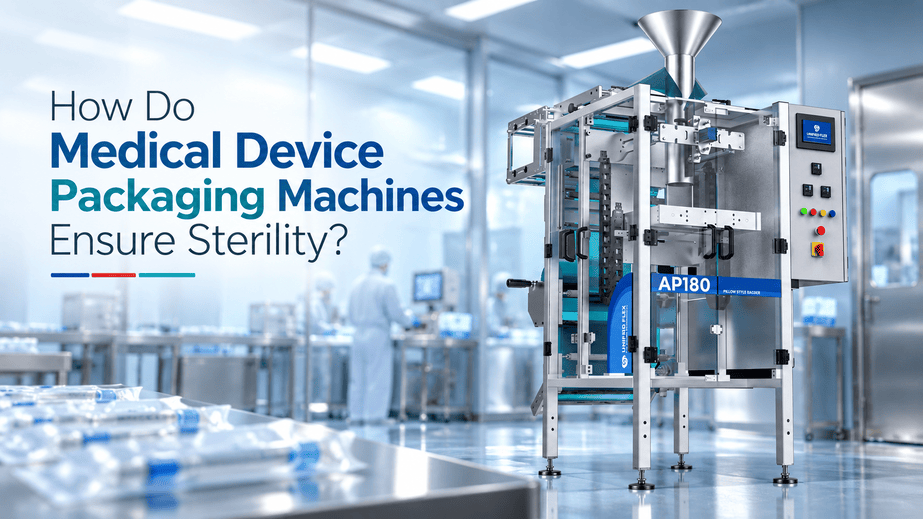
Automated packaging of medical devices must do more than place a product into a pouch or tray. For many devices the package itself forms part of the protective system that helps maintain the intended condition of the contents until the point of use. Any gap in sealing, contamination of the seal area, or damage after packaging can affect that protection.
Medical device packaging machines address these requirements through controlled product handling, consistent sealing processes, suitable packaging materials, and in-process checks. The equipment operates within defined environmental conditions and follows process parameters selected for the specific product, material, and sterilization method where applicable. When these elements work together, the packaging process supports package integrity across production runs.
Sterile integrity is not created at a single step. It is the result of consistent materials, controlled processes, and careful handling from start to finish.
Industry Snapshot
Industry analyses describe ongoing demand for packaging systems that support sterile barrier approaches and process consistency for medical devices. Equipment designed for these applications typically emphasizes controlled sealing, clean handling, and features that aid monitoring and documentation.
Why Sterile Integrity Matters in Automated Medical Packaging
Sterile integrity refers to the ability of the packaging system to maintain the intended protective barrier until the package is opened under controlled conditions. For products supplied sterile, this barrier helps protect the contents from microbial contamination during storage, handling, and distribution.
Automated packaging introduces both opportunities and risks. Consistent machine parameters can reduce variation compared with manual processes. At the same time, any deviation in sealing conditions, product placement, or material handling can create weak points. Packaging engineers observe that maintaining integrity depends on the interaction between packaging materials, sealing process, environmental controls, and downstream handling. A single weak link in that chain can affect the finished package.
The packaging machine is one component of a larger system. Material selection, package design, process validation, inspection, storage, and transportation all contribute to the final result. Understanding these relationships helps manufacturers design processes that support reliable package performance.
How Controlled Environments Support Sterile Integrity
Automated packaging of medical devices often takes place in controlled environments designed to limit particle and microbial contamination. These environments help protect both the product and the open package during critical steps such as loading and sealing.
The packaging equipment itself is typically designed with smooth surfaces, accessible cleaning points, and minimal areas where residue can accumulate. Operators follow gowning and procedural controls appropriate to the classified area. Material transfer into and out of the packaging zone is managed to reduce the introduction of contaminants.
Key supporting elements include:
- Environmental Classification and Monitoring: Production areas are maintained and monitored according to the applicable cleanliness requirements for the process.
- Equipment Design for Cleanability: Smooth surfaces, rounded corners, and accessible components support effective cleaning and reduce particle generation.
- Controlled Material Flow: Procedures for bringing packaging materials and products into the area help limit external contamination.
- Personnel Practices: Gowning, training, and procedural discipline reduce the risk of introducing contaminants during operation.
- Air Handling and Pressure Cascades: Airflow patterns and pressure differentials help protect critical zones when designed and maintained correctly.
- Routine Environmental Checks: Regular monitoring provides data that supports ongoing control of the packaging environment.
These measures create the foundation on which consistent sealing and handling processes can operate.
What Role Do Packaging Materials and Seal Design Play?
Packaging materials and seal design form the physical barrier that helps maintain sterile integrity. The choice of film, tray, or other structure must match the product, sterilization method, and distribution conditions.
Barrier Material Selection
Materials are selected for their ability to provide an appropriate microbial barrier while remaining compatible with sterilization processes such as ethylene oxide, radiation, or steam where used. Mechanical strength, puncture resistance, and long-term stability also influence material choice.
Seal Design and Peel Characteristics
Seal geometry, width, and peelability are designed to create a reliable closure that can still be opened cleanly at the point of use. Consistent seal formation across the production run is essential for package performance.
Compatibility with Sterilization and Storage
Materials and seals must withstand the chosen sterilization process without degradation that would compromise the barrier. They must also maintain performance during the expected shelf life under defined storage conditions.
Protection Against Physical Damage
The package structure should resist puncture, abrasion, and flex cracking during handling and transportation so that the barrier remains intact until use.
Material and seal decisions therefore directly affect the ability of the finished package to maintain integrity.
How Do Sealing Processes Contribute to Package Integrity?
Sealing is one of the most critical steps in maintaining sterile integrity. The process must create a continuous, reliable bond between packaging materials without damaging the product or leaving channels that could compromise the barrier.
Sealing parameters such as temperature, pressure, and dwell time are selected according to the specific materials and validated for the process. Automated systems apply these parameters consistently across successive packages. Any variation in material thickness, surface condition, or machine settings can affect seal quality.
Important process elements include:
- Validated Sealing Parameters: Temperature, pressure, and time settings are established and controlled for the chosen packaging materials.
- Consistent Application Across Cycles: Automated control helps reduce variation that can occur with manual sealing methods.
- Seal-Area Cleanliness: Product placement and handling methods are designed to keep fibers, particles, or product residue out of the seal zone.
- Monitoring of Critical Parameters: Sensors and process data help detect deviations that could affect seal quality.
- Material Lot Consistency: Changes in film or tray lots may require verification that sealing performance remains within acceptable limits.
- Post-Seal Handling: Gentle transfer after sealing reduces the risk of stressing or damaging the newly formed seal.
When these elements are controlled, the sealing process supports the protective function of the package.
How Does Product Handling Affect Sterile Integrity?
Product handling before and during packaging can influence sterile integrity even when sealing parameters are correct. Rough transfer, incorrect placement, or contamination of the seal area can create weaknesses that only become apparent later.
Gentle and controlled movement of syringes, swabs, gauze, or kit components reduces the chance of generating particles or damaging packaging materials. Accurate placement keeps products away from the seal zone so that the sealing surfaces remain clean. For multi-component kits, organized loading helps prevent items from shifting into the seal area during the sealing cycle.
Handling systems are therefore designed around the specific characteristics of each product. Soft materials need low-compression transfer. Rigid devices need secure orientation. In every case the goal is to present a clean, correctly positioned product to the sealing station so that the subsequent seal can form without interference. Downstream handling after sealing is equally important, because mechanical stress or poor secondary packaging can damage an otherwise sound primary package.
How Do Inspection and Process Monitoring Support Integrity?
Inspection and process monitoring provide feedback that helps maintain sterile integrity across production runs. Automated systems can check selected attributes before and after sealing so that deviations are detected early.
Vision systems or sensors may verify product presence, correct placement, and the absence of obvious seal defects. Process data such as sealing temperature, pressure, and cycle counts can be recorded for review. Reject mechanisms remove packages that do not meet defined criteria before they proceed further.
Supporting practices include:
- In-Process Checks: Verification of critical attributes such as component presence and seal appearance at appropriate points in the cycle.
- Parameter Recording: Capture of sealing and machine data that supports process review and troubleshooting.
- Defined Accept and Reject Criteria: Clear rules that determine when a package should be removed from the flow.
- Trend Monitoring: Review of data over time to identify gradual changes that may affect seal quality or handling performance.
- Integration with Quality Systems: Use of packaging data within broader documentation and review processes.
- Calibration and Maintenance of Sensors: Regular checks that inspection and monitoring devices remain accurate.
These activities help ensure that only packages meeting the defined requirements continue through the process.
How Is the Overall Packaging System Validated and Controlled?
Maintaining sterile integrity requires more than day-to-day machine operation. The packaging process itself is typically validated and then kept under control through ongoing monitoring and procedures.
Process Validation
Validation activities demonstrate that the packaging process consistently produces packages that meet defined requirements when operated within established parameters. This includes evaluation of materials, machine settings, environmental conditions, and handling methods.
Change Control and Material Management
Changes to packaging materials, machine components, or process settings are evaluated for their potential impact on package integrity. Material lot changes may trigger verification activities to confirm continued performance.
Ongoing Process Control
Routine monitoring of critical parameters, environmental conditions, and inspection results helps keep the process within the validated state. Deviations are investigated and addressed according to established procedures.
Documentation and Traceability
Records of process parameters, materials used, and inspection results support traceability and provide evidence that the process remains under control.
Validation and control activities therefore form the framework that allows automated packaging to support sterile integrity over time.
How Do Downstream Handling and Distribution Affect Integrity?
Even a well-formed package can lose integrity if it is damaged after sealing. Downstream conveyors, secondary packaging, palletizing, storage, and transportation all introduce opportunities for puncture, abrasion, or seal stress.
Equipment and procedures after the primary packaging step should be designed to protect the finished packages. Adequate cushioning, correct stacking methods, and controlled handling reduce mechanical risks. Storage conditions are maintained within the ranges specified for the packaging materials and product. Distribution packaging is selected to withstand the expected shipping stresses.
When downstream processes are aligned with the protection provided by the primary package, the sterile integrity achieved at the sealing station is more likely to be preserved until the point of use. Neglecting these later stages can undermine careful work performed during automated packaging.
What Practical Factors Influence Reliable Sterile Packaging?
Several practical factors determine whether an automated packaging process will consistently support sterile integrity. Addressing these factors during system design and operation improves long-term performance.
Key considerations include:
- Product and Material Compatibility: The packaging format, materials, and sealing process must suit the specific device and any sterilization method used.
- Environmental and Cleanliness Controls: The packaging area and equipment must support the required cleanliness level for the process.
- Sealing Process Stability: Validated parameters must be maintained and monitored so that seals remain consistent across material lots and production runs.
- Handling Methods Matched to the Product: Transfer and placement systems should minimize particle generation and keep products clear of the seal area.
- Inspection and Data Review: Appropriate checks and process data help detect issues before large numbers of packages are affected.
- Downstream Protection: Secondary packaging and distribution methods must preserve the integrity of the primary package.
Attention to these factors during both selection and daily operation helps the packaging system perform as intended.
What Should Manufacturers Consider When Establishing Automated Sterile Packaging Processes?
Establishing an automated packaging process that supports sterile integrity begins with a clear definition of product requirements, packaging materials, and process conditions. Manufacturers should identify the protection level needed, the sterilization method where applicable, and the expected storage and distribution stresses.
Equipment selection should consider the product’s physical characteristics, the chosen package format, required cleanliness, sealing needs, inspection capabilities, and integration with upstream and downstream operations. Process validation confirms that the system produces acceptable packages when operated within defined limits. Ongoing monitoring, change control, and documentation help keep the process in a controlled state.
Early trials with actual products and packaging materials under realistic conditions often reveal adjustments needed for consistent performance. A systematic approach that treats packaging as a complete system—materials, machine, environment, handling, and downstream protection—supports more reliable sterile integrity than focusing on any single element in isolation.
Illustrative Packaging Performance Example
A manufacturer packaging sterile syringes and multi-component procedure kits evaluated an automated tray and pouch system with controlled placement, validated sealing parameters, and in-process inspection. In this illustrative scenario, the focus was on keeping seal areas free of product interference, maintaining consistent sealing conditions across material lots, verifying component presence before sealing, and protecting finished packages during secondary packaging and handling. Early process trials helped refine placement tooling, sealing settings, and inspection criteria. The example illustrates how coordinated attention to materials, machine parameters, handling, and inspection can support more consistent package integrity throughout the packaging process.
Comparison Table of Factors Supporting Sterile Integrity
|
Factor |
Contribution to Integrity |
Key Control Point |
|
Packaging Materials |
Provide the physical barrier |
Material selection and lot consistency |
|
Sealing Process |
Creates the continuous closure |
Validated temperature, pressure, time |
|
Product Handling |
Keeps seal area clean and product undamaged |
Placement accuracy and gentle transfer |
|
Environmental Controls |
Limits contamination during open steps |
Cleanliness monitoring and procedures |
|
Inspection & Monitoring |
Detects deviations early |
In-process checks and parameter recording |
|
Downstream Handling |
Preserves the finished package |
Secondary packaging and distribution methods |
Frequently Asked Questions
How do packaging machines help maintain sterile integrity?
They support integrity through controlled handling, consistent sealing parameters, suitable materials, clean processing conditions, and inspection that helps detect issues before packages proceed further.
What is the role of sealing parameters?
Temperature, pressure, and dwell time must be appropriate for the packaging materials and maintained consistently so that seals form reliably across production runs.
Why is product placement important?
Accurate placement keeps products and loose material out of the seal area, reducing the risk of incomplete or weak seals.
Can one system handle different medical devices?
Many systems can be configured for different products when tooling, materials, and process settings are matched to each item’s requirements and changeover procedures are well defined.
What should manufacturers evaluate before implementing automated sterile packaging?
They should consider product characteristics, packaging materials, sterilization compatibility, environmental requirements, sealing needs, inspection capabilities, downstream handling, and the documentation required to keep the process under control.
Wrapping Up
Medical device packaging machines help maintain sterile integrity during automated packaging by combining controlled environments, appropriate barrier materials, consistent sealing processes, careful product handling, and inspection. Each element contributes to the protective function of the finished package.
Syringes, swabs, gauze, test kits, and other devices each present specific handling and protection needs, yet the underlying principles remain similar: keep the seal area clean, apply validated sealing parameters, monitor the process, and protect the package after sealing. When these principles are applied systematically and supported by validation and ongoing controls, automated packaging can deliver consistent results that support the intended performance of the sterile barrier system.
An automatic packaging machine configured for the specific product and process requirements becomes part of a larger system that includes materials, environment, procedures, and downstream protection. Treating packaging as this complete system offers the most reliable path to maintaining sterile integrity from production through to the point of use.
The strongest sterile barrier is the one supported by every step of the packaging process, not only the final seal.

 English
 Arabic
 French
 Spanish
 Portuguese
 Deutsch
 Dutch
 Italiano
 Russian
 Romaian
 Portuguese (Brazil)
 Greek