


Understanding No 57 Stone and Crusher Run Driveway Options
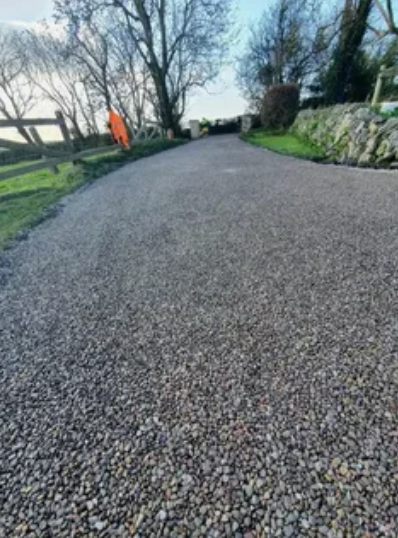
Choosing the right aggregate is important when building a durable driveway, walkway, drainage area, or other outdoor surface. Different types of crushed stone have different sizes, textures, and applications. Two materials commonly considered for residential and construction projects are no 57 stone and a crusher run driveway. Understanding how these materials differ can help property owners select an option that fits their project requirements.
What Is No 57 Stone?
no 57 stone is a commonly used crushed aggregate consisting of relatively small, clean pieces of stone. The material is typically produced by crushing larger rock into a controlled size range. Because the stones are generally clean and have limited fine material, water can move through the spaces between individual pieces more easily than it can through compacted stone containing substantial fines.
This characteristic makes No. 57 stone useful for drainage applications, landscaping, construction projects, and certain types of surface preparation.
The appearance can vary depending on the source rock, but the aggregate generally provides a clean, natural-looking surface.
Common Uses for No 57 Stone
One of the most common uses for no 57 stone is drainage. The gaps between the stones allow water to move through the aggregate rather than remaining trapped on the surface.
It can also be used around drainage systems, beneath certain construction elements, around foundations, and as part of landscaping projects. The specific suitability depends on local soil conditions, drainage requirements, and the design of the project.
Because it does not contain as many fine particles as some other aggregates, No. 57 stone may not compact into a solid, tightly bound surface by itself. For that reason, it is important to select the material based on how the finished area will be used.
What Is Crusher Run?
Crusher run is a blend of crushed stone and stone dust or fines. Because the material contains a range of particle sizes, the smaller particles fill spaces between the larger stones when the material is compacted.
This characteristic makes crusher run particularly useful when a firm, stable base is needed. Proper installation and compaction can create a dense surface suitable for driveways, paths, parking areas, and other applications.
A crusher run driveway can be an economical alternative to some paved driveway surfaces while still providing a durable and functional driving area.
Benefits of a Crusher Run Driveway
A crusher run driveway can offer several practical advantages. The mixture of different aggregate sizes allows the material to lock together during compaction. This can create a stable surface capable of supporting regular vehicle traffic.
Crusher run is also relatively straightforward to install compared with some more complex driveway materials. A properly prepared foundation, adequate grading, and appropriate drainage are important for long-term performance.
Over time, additional material may be needed in areas that experience heavy traffic, erosion, or significant weather exposure. Regular maintenance can help preserve the driveway's shape and usability.
No 57 Stone vs. Crusher Run
Although no 57 stone and crusher run are both crushed aggregate materials, they perform differently.
No. 57 stone is generally cleaner and more open, making it useful when drainage is a priority. Crusher run contains smaller particles and fines, allowing it to compact into a denser surface.
For a drainage layer, No. 57 stone may be a suitable choice depending on the project design. For a driveway where stability and compaction are priorities, crusher run is often considered.
The best choice depends on the intended application rather than simply the appearance or price of the material.
Preparing a Driveway Properly
A successful crusher run driveway begins with proper site preparation. Simply spreading aggregate over existing soil may not provide long-term stability.
The site should generally be cleared of vegetation and unsuitable material before the base is established. Proper grading helps direct water away from the driving surface and prevents standing water.
Depending on soil conditions and expected traffic, excavation and a suitable base layer may be necessary. The aggregate should then be spread evenly and compacted using appropriate equipment.
Professional installation can be particularly valuable for properties with drainage challenges, soft soils, slopes, or heavy vehicle traffic.
The Importance of Drainage
Water is one of the biggest concerns for any driveway or aggregate surface. Poor drainage can cause erosion, rutting, potholes, and movement of the stone.
While no 57 stone can be useful in drainage-related applications, the overall drainage system should be designed according to the property's conditions. Simply choosing a permeable stone does not automatically solve every water-management problem.
Proper slopes, ditches, culverts, edging, and other drainage features may be needed depending on the site.
Maintenance Considerations
Both aggregate surfaces and drainage areas benefit from periodic inspection. After heavy rain, check for erosion, standing water, or areas where material has shifted.
For a crusher run driveway, potholes and ruts should be repaired before they become larger problems. Adding and compacting additional material can restore areas that have worn down.
Vegetation should also be managed around the driveway. Keeping drainage paths clear helps prevent water from accumulating on the driving surface.
Selecting the Right Material
Before ordering aggregate, consider the project's purpose, soil conditions, expected traffic, drainage requirements, and budget. A contractor or aggregate supplier can help determine the appropriate material and quantity.
For projects requiring open drainage characteristics, no 57 stone may be considered. For a compacted driving surface, a crusher run driveway may provide the stability and affordability that many property owners want.
The correct material, however, is only one part of a successful project. Proper installation is equally important.
Conclusion
Understanding the differences between aggregate materials can make outdoor construction projects easier to plan. no 57 stone is commonly associated with applications where clean, open aggregate and drainage are useful, while crusher run contains a mixture of stone sizes and fines that can compact into a firm surface.
For homeowners considering a crusher run driveway, proper grading, drainage, preparation, and compaction are essential for creating a surface that performs well over time. By matching the aggregate to the project's specific requirements and installing it correctly, property owners can achieve a practical and durable result.

 English
 Arabic
 French
 Spanish
 Portuguese
 Deutsch
 Dutch
 Italiano
 Russian
 Romaian
 Portuguese (Brazil)
 Greek