


Global Aquaculture Market Major Developments and Future Trends
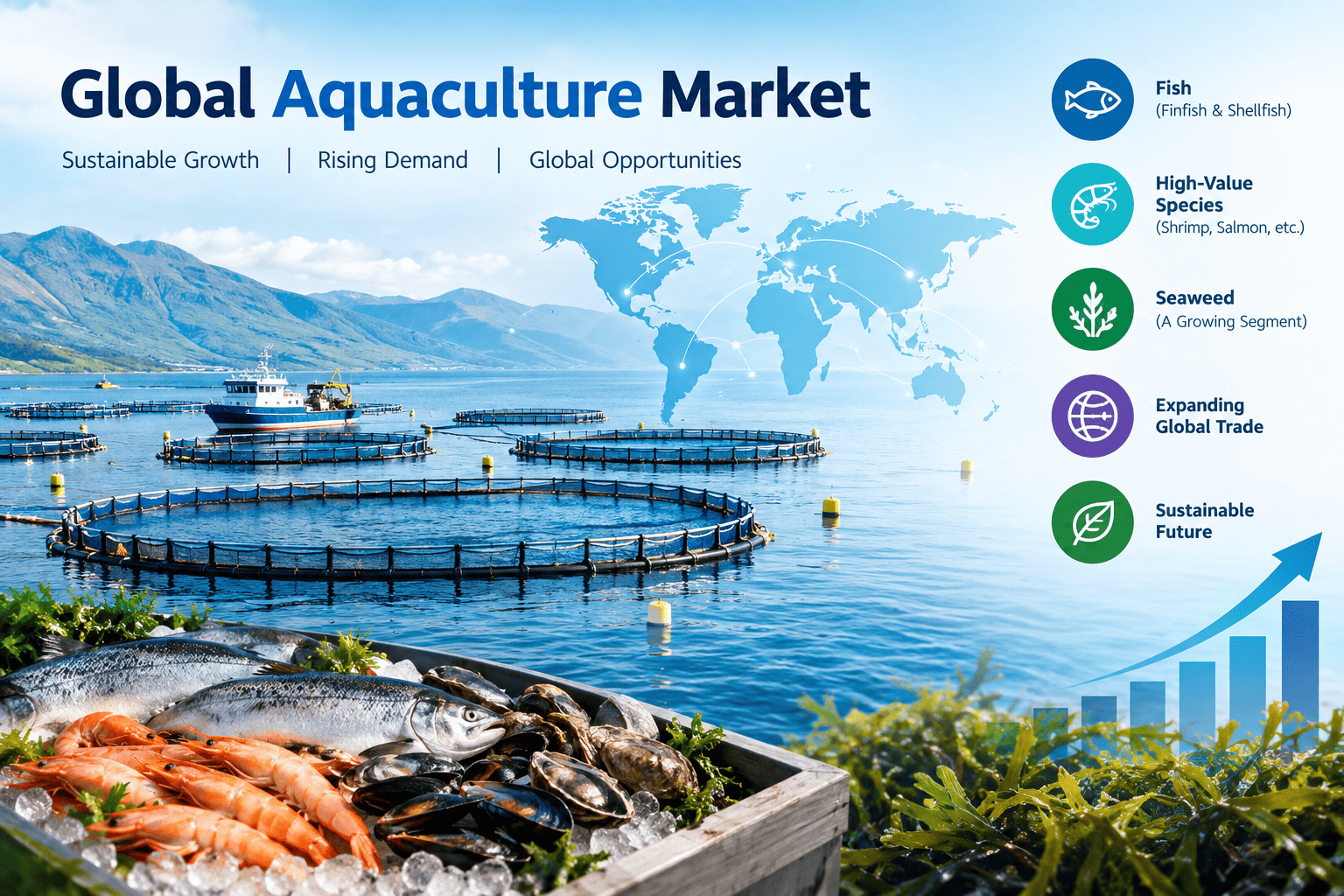
The Global aquaculture market is undergoing significant changes as producers, technology companies and investors respond to evolving seafood demand and the need for more efficient food production. Aquaculture is becoming an increasingly sophisticated industry, supported by advances in farm automation, breeding, nutrition, monitoring and resource management. At the same time, sustainability and traceability are becoming important considerations for producers and buyers, creating new opportunities across the seafood value chain.
Advantages of Investing in the Global Aquaculture Market
The development of modern aquaculture is creating opportunities for investors across several interconnected industries. Production facilities remain an important investment area, but opportunities are also emerging in aquafeed, hatchery operations, farm equipment, water-management technologies, processing and cold-chain logistics.
The global aquaculture market offers an attractive environment for businesses looking beyond conventional seafood production. Technological improvements can help farms increase operational control and manage production more efficiently. Companies providing automated feeding systems, monitoring equipment, data platforms and water-treatment solutions can benefit as producers seek to modernize their operations.
Investment opportunities can also emerge from the growing need to strengthen the infrastructure surrounding seafood production. Better processing, storage and transportation capabilities can help reduce losses and improve access to markets, making supporting infrastructure an important component of future industry development.
Why People Prefer Aquaculture for Future Growth
One major development to watch is the increasing preference for controlled seafood production. Aquaculture allows producers to manage important stages of the production cycle, including breeding, feeding and harvesting. This level of control can provide greater consistency while helping producers respond to changing seafood requirements.
The global aquaculture market is also evolving through the adoption of diverse farming systems. Producers are exploring approaches suited to different geographic, environmental and commercial conditions. Controlled and technology-supported systems can offer greater monitoring capabilities, while established coastal and inland operations continue to play an important role in seafood supply.
As production technologies improve, aquaculture can become increasingly adaptable. This flexibility is important for an industry expected to respond to changing consumption patterns, resource pressures and expectations around sustainable food production.
Search Visibility through the Global Aquaculture Market
The growing number of developments in aquaculture is generating wider interest among businesses, researchers, investors and consumers. Searches related to seafood farming technology, sustainable production, aquafeed, automation and farm-management solutions are becoming increasingly relevant to industry participants.
Companies operating within the global aquaculture market can benefit from communicating their innovations and capabilities through informative digital content. Explaining new farming systems, production technologies and sustainability practices can help businesses reach audiences researching future opportunities.
Digital visibility is particularly useful for technology providers and suppliers serving aquaculture businesses. As farms become more connected and data-driven, online research can increasingly influence decisions about equipment, software, production systems and supply-chain services.
Demand and Benefits Driving Industry Development
Another major development is the changing nature of seafood demand. Consumers increasingly consider nutritional value, convenience, quality and production practices when choosing food products. This is encouraging aquaculture businesses to focus not only on production volumes but also on product consistency, processing and traceability.
The global aquaculture market can provide economic benefits across multiple stages of the supply chain. Farming activities generate demand for feed, equipment, transportation, processing, packaging and storage services. The development of these connected industries can strengthen local economies while creating broader commercial opportunities.
Aquaculture also offers producers the ability to respond to specific market preferences. Different species, production methods and product formats can serve different consumer and commercial requirements, supporting continued diversification throughout the industry.
Enhance User Experience with Smart Aquaculture Technology
Smart farming is one of the most important developments to watch. Sensors, connected monitoring devices, automated feeding systems and analytical platforms are changing how producers manage aquaculture facilities. These tools can provide real-time or frequent information about production conditions, helping farmers identify changes and respond more effectively.
For participants in the global aquaculture market, digitalization can improve the user experience by making farm information easier to access and interpret. Instead of depending entirely on manual observation, producers can use technology to monitor key operational conditions and identify potential inefficiencies.
Automation can also reduce the burden of repetitive tasks. As technology becomes more accessible, smaller and larger operations may increasingly adopt digital tools according to their specific production needs. This trend could make smart aquaculture a major contributor to future industry efficiency.
Lifestyle Benefits from Modern Aquaculture
Modern aquaculture is also connected to changing lifestyles. Consumers are increasingly interested in convenient foods that fit busy schedules while providing nutritional value. Seafood products available in fresh, frozen, prepared and processed formats can respond to these preferences.
The global aquaculture market can support this shift by providing a more consistent foundation for seafood supply. Improvements in processing, packaging and distribution can make seafood easier to purchase, store and prepare. These developments can help aquaculture remain relevant as consumer expectations around convenience continue to evolve.
Greater awareness of food origins is another lifestyle-related development. Consumers may increasingly want information about where seafood comes from and how it was produced, encouraging producers and supply-chain participants to strengthen transparency and traceability.
Infrastructure Development Opens New Possibilities
Infrastructure development will remain essential to the future of aquaculture. Production facilities need dependable access to water, energy, feed and equipment, while harvested seafood requires efficient processing, refrigeration and transportation.
The global aquaculture market can expand more effectively when supporting infrastructure develops alongside production capacity. Modern cold-chain systems can help maintain seafood quality during transportation, while advanced processing facilities can increase product value and support a wider range of seafood formats.
Ports, roads, warehouses and distribution networks also influence the ability of producers to reach distant customers. As infrastructure improves, aquaculture businesses can potentially access broader domestic and international markets, creating opportunities throughout the supply chain.
Sustainability Becomes a Major Development to Watch
Sustainability is another defining development for the global aquaculture market. Producers are increasingly focused on resource efficiency, responsible feed use, water management and waste reduction. These priorities are influencing both production practices and technology investment.
New solutions can help producers monitor resource consumption and improve operational efficiency. Better feed management can reduce unnecessary consumption, while improved water-management systems can support more controlled production environments.
Traceability is also becoming increasingly relevant. Greater transparency across the seafood supply chain can help buyers understand production practices and product origins. As sustainability expectations continue to develop, businesses that integrate responsible practices into their operations may gain stronger positioning.
Innovation and Automation Transform the Global Aquaculture Market
Innovation is bringing together several major developments, including automation, artificial intelligence, advanced analytics and connected farm systems. These technologies can support better decision-making by transforming production data into useful operational insights.
The global aquaculture market is likely to see continued experimentation with technologies designed to improve productivity, monitoring and resource utilization. Businesses that successfully integrate technology with practical farming requirements can help shape the next generation of aquaculture operations.
This development also creates opportunities for technology providers outside the traditional seafood industry. Software companies, equipment manufacturers, data specialists and engineering firms can increasingly participate in aquaculture's modernization.
Regional Expansion Creates New Growth Areas
Regional development is another important trend to monitor. Aquaculture opportunities vary according to local seafood demand, environmental conditions, infrastructure, regulations and production capabilities. Some markets may prioritize expanding farm capacity, while others may focus on advanced technology, premium seafood or processing.
This diversity allows the global aquaculture market to develop through multiple pathways. Businesses can identify opportunities based on regional requirements rather than relying on a single global production model. Partnerships between producers, technology suppliers and infrastructure providers can further support regional expansion.
Wrapping Up
The major developments shaping the global aquaculture market point toward an industry becoming more technology-driven, diversified and sustainability-focused. Smart farming, automation, changing seafood preferences, improved infrastructure and stronger traceability are influencing how producers and supporting businesses prepare for future demand.
These developments create opportunities across the entire value chain, from farms and hatcheries to feed, equipment, software, processing, logistics and cold storage. For businesses and investors, entering the market now can be a smart decision because early participation provides an opportunity to benefit from technological adoption and infrastructure expansion as the industry evolves. With aquaculture becoming increasingly important to modern seafood supply, its long-term potential makes the sector worthy of close attention today.
FAQs
1. What are the major developments in the global aquaculture market?
Major developments include smart farming, automation, improved aquafeed, advanced monitoring, sustainability initiatives and stronger seafood traceability. The global aquaculture market is moving toward more controlled and technology-supported production as businesses seek better efficiency, resource management and consistency across different farming environments.
2. How is technology changing aquaculture production?
Technology is improving how farms monitor water conditions, manage feeding and evaluate production performance. The global aquaculture market is increasingly adopting sensors, automation and analytical platforms that can help producers make informed decisions, reduce repetitive work and improve operational control throughout the farming cycle.
3. Why is sustainability important for the future of aquaculture?
Sustainability is important because aquaculture must balance production growth with responsible resource use. The global aquaculture market is adopting improved feed practices, water-management solutions, waste-reduction approaches and traceability systems to support more efficient production and respond to changing expectations from buyers and consumers.
4. What investment opportunities are emerging in aquaculture?
Investment opportunities extend beyond farming facilities into feed, hatcheries, automation, water treatment, monitoring technology, processing and cold-chain logistics. The global aquaculture market provides opportunities for businesses that can support producers with infrastructure, technology and services required for increasingly sophisticated seafood production.
5. How does changing seafood demand affect aquaculture?
Changing seafood demand encourages producers to focus on quality, availability, convenience, nutrition and responsible production. The global aquaculture market can respond through diversified species, improved farming systems and expanded processing capabilities that help supply seafood products suited to different consumer and commercial preferences.
6. What role does automation play in the global aquaculture market?
Automation can simplify repetitive tasks such as feeding and monitoring while improving consistency. Within the global aquaculture market, automated systems can help producers collect operational information, identify changes in production conditions and manage farms more efficiently, particularly as technology becomes increasingly accessible.
7. How can infrastructure support aquaculture growth?
Infrastructure supports every stage of aquaculture, from farming and processing to storage and distribution. The global aquaculture market benefits from improved cold chains, transportation networks, processing facilities, energy systems and water infrastructure because these capabilities can improve product handling and expand market access.
8. Why is traceability becoming important in aquaculture?
Traceability can provide greater visibility into seafood origins and production practices. As the global aquaculture market develops, buyers and consumers may increasingly value information about sourcing and responsible production. Digital tracking systems can help businesses communicate supply-chain information and strengthen transparency across seafood distribution networks.
9. What future technologies could influence aquaculture?
Future technologies may include advanced sensors, artificial intelligence, automated equipment, predictive analytics and increasingly connected farm-management platforms. These innovations could influence the global aquaculture market by improving production monitoring, resource utilization and decision-making while helping producers manage increasingly complex farming operations.
10. Why should businesses consider the aquaculture market now?
The global aquaculture market is undergoing developments across technology, infrastructure, sustainability and seafood production. Businesses that enter during this period can explore opportunities in emerging solutions and supporting services. Early investment may also help companies establish capabilities before competition increases across rapidly developing areas of the aquaculture value chain.
Read More..
Global ammonium nitrate market

 English
 Arabic
 French
 Spanish
 Portuguese
 Deutsch
 Turkish
 Dutch
 Italiano
 Romaian
 Portuguese (Brazil)
 Greek