


Handheld Laser Rust Remover: A Modern Approach to Metal Restoration
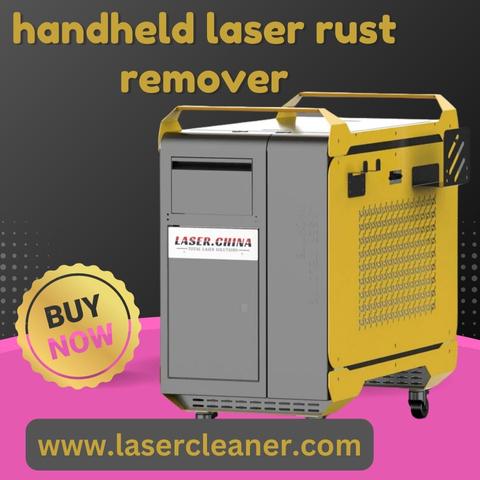
Rust can gradually damage metal surfaces, affect their appearance, and create difficulties during manufacturing, maintenance, and restoration work. Removing rust effectively is therefore an important part of keeping metal components ready for further processing or use. Traditional cleaning methods often involve abrasive materials, chemicals, grinding, or manual scraping. Today, laser technology provides another approach through equipment designed specifically for controlled surface cleaning.
A handheld laser rust remover is a portable laser cleaning system designed to remove rust and unwanted surface contaminants from metal materials. Its handheld design allows operators to direct the laser toward specific areas, making it suitable for workshops, maintenance teams, manufacturing facilities, restoration projects, and various industrial applications.
What Is a Handheld Laser Rust Remover?
A handheld laser rust remover is a laser-based cleaning machine that uses concentrated laser energy to interact with rust and other contaminants on a metal surface. When the laser beam reaches the unwanted material, the absorbed energy causes the contamination to detach or vaporize, while the operator controls the cleaning process according to the material and application.
Unlike conventional cleaning approaches that rely on physical contact or chemical substances, laser cleaning is based on controlled light energy. This makes it possible to work on selected areas without using abrasive media directly against the surface.
The handheld configuration is particularly useful when the operator needs to move around large components or reach different sections of a workpiece. Instead of placing the entire component inside a fixed cleaning system, the operator can guide the laser head across the required surface.
How Does Laser Rust Removal Work?
The process begins by directing the laser beam toward a rust-covered metal surface. Rust generally absorbs the laser energy differently from the underlying material. With appropriate laser parameters, the energy interacts strongly with the rust layer and causes it to separate from the surface.
The operator moves the handheld laser head across the affected area in a controlled pattern. Laser power, scanning speed, frequency, and other settings can be adjusted depending on the type of contamination and substrate.
This controlled process is important because different metals and surface conditions require different treatment parameters. Steel, iron, aluminum, and other materials may respond differently to laser energy. Proper adjustment helps achieve consistent cleaning while maintaining the condition of the underlying surface.
Preparing the Metal Surface
Before using a handheld laser rust remover, the workpiece should be inspected carefully. Operators should identify the type of metal, the thickness of the rust, and any additional contaminants such as oil, paint, dirt, or oxidation.
The surface should also be accessible to the laser head. Loose debris may be removed beforehand if necessary so the laser can interact more consistently with the remaining contamination.
A test area is often useful when working with an unfamiliar material or surface. Testing allows the operator to determine suitable settings before cleaning the entire component.
Removing Rust from Different Metal Components
Rust can appear on many different industrial and commercial components. Metal frames, machinery parts, tools, automotive components, molds, pipes, structural parts, and fabricated equipment may all require rust removal during their service life.
A handheld laser rust remover can be used to target affected areas directly. For large structures, the operator can gradually move along the surface rather than transporting the entire component to a separate cleaning location.
For smaller parts, the handheld system can also be used to treat individual sections where rust has developed. The operator can control the movement of the laser head according to the shape and condition of the component.
Industrial Maintenance Applications
Industrial machinery can accumulate rust when exposed to moisture, humidity, chemicals, or unsuitable storage conditions. Regular maintenance helps keep metal components prepared for continued operation.
Laser rust removal can be incorporated into maintenance procedures for machinery components, production equipment, metal structures, and workshop tools. The portable nature of a handheld system can be particularly useful when equipment is too large or difficult to move.
Maintenance teams can inspect specific areas and treat surface corrosion as part of their scheduled cleaning activities. After the rust has been removed, the metal can be inspected and prepared for subsequent processes such as coating, painting, welding, or surface treatment.
Automotive and Mechanical Restoration
Rust removal is also an important part of automotive and mechanical restoration. Older vehicles, machinery, frames, brackets, engine components, and other metal parts may develop corrosion after prolonged exposure to moisture and environmental conditions.
A handheld laser system allows the operator to work on specific rusted areas while moving around complex components. This can be useful for restoration workshops where parts have different shapes, sizes, and surface conditions.
Before restoration work begins, the operator can assess the component and identify areas requiring cleaning. Laser treatment can then be applied progressively to the affected surfaces.
Surface Preparation Before Painting
Proper surface preparation is essential before applying paint or protective coatings. Rust, oxidation, and other contaminants can interfere with the preparation process and may affect the condition of the finished coating.
A handheld laser rust remover can be used as part of a surface preparation workflow. By cleaning unwanted corrosion from the metal, the operator can create a more suitable surface for subsequent treatment.
Rust Removal in Difficult-to-Reach Areas
One of the practical applications of handheld laser cleaning is working around irregular surfaces and components. Industrial equipment often contains corners, edges, joints, grooves, and other areas where manual cleaning can require considerable effort.
The handheld laser head can be guided across these sections according to the shape of the workpiece. Operators can change their position and approach different areas from suitable angles.
This makes handheld systems suitable for applications where flexibility is important and where the component cannot easily be placed inside a dedicated cleaning enclosure.
Choosing the Appropriate Laser System
Selecting a laser cleaning system requires consideration of the intended application. Important factors include the type of metal, level of corrosion, size of the workpiece, cleaning area, working environment, and expected workload.
Laser power is one consideration, but it should not be the only factor. The operator should also consider scanning control, cleaning modes, operating requirements, system configuration, and available safety equipment.
For occasional workshop use, a different configuration may be appropriate than for continuous industrial production. Understanding the application before purchasing helps ensure that the selected system matches the actual cleaning requirements.
Safe Operation and Workplace Practices
Laser cleaning equipment should always be operated according to the manufacturer's instructions and applicable workplace safety requirements. Industrial laser systems can present hazards to eyes and skin, particularly when the beam or reflected energy is not properly controlled.
Appropriate laser safety measures, protective equipment, controlled work areas, ventilation, and operator training should be established before operation. Workers should understand the equipment's operating procedures and follow the recommended safety requirements.
The work area should also be managed to prevent unauthorized people from entering during laser operation. Proper preparation is an essential part of using laser cleaning equipment responsibly.
Maintenance of Laser Cleaning Equipment
Regular equipment maintenance helps maintain reliable operation. Operators should inspect the laser head, cables, connectors, cooling system, controls, and other relevant components according to the manufacturer's maintenance schedule.
Keeping the equipment and work area clean can also help reduce unnecessary contamination. Any unusual operating behavior should be investigated before continuing intensive cleaning work.
Following the manufacturer's recommendations for maintenance, storage, transportation, and servicing can help keep the laser cleaning system ready for future applications.
The Growing Role of Laser Rust Removal
As industries look for more controlled approaches to metal surface preparation, laser cleaning continues to attract attention. The technology can be applied to manufacturing, maintenance, restoration, automotive work, fabrication, and other environments where metal surfaces require controlled cleaning.
The development of portable equipment has also made laser cleaning more practical for applications involving large or difficult-to-move components. A handheld system gives operators the ability to bring the cleaning tool directly to the workpiece.
Final Thoughts
A handheld laser rust remover provides a modern method for treating rust and unwanted contamination on metal surfaces. Its portable design allows operators to work across different components, structures, machinery, and restoration projects while controlling the cleaning process according to the material and application.

 English
 Arabic
 French
 Spanish
 Portuguese
 Deutsch
 Turkish
 Dutch
 Russian
 Romaian
 Portuguese (Brazil)
 Greek