


How Structural BIM Improves Coordination Across Modern Construction Projects
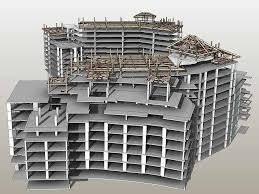
Structural design has a direct effect on how a building is constructed, coordinated, and maintained. Beams, columns, slabs, foundations, and structural walls must fit within the wider building design.
As projects become larger and more complicated, managing this information through disconnected drawings can create coordination challenges. Structural Building Information Modeling offers a more connected approach.
Through a digital model, engineers and construction teams can review structural components within the context of the entire building. This makes structural bim services useful for design development, coordination, documentation, and construction planning.
What Structural BIM Represents
Structural BIM creates a digital representation of a building's structural system.
The model can include elements such as:
-
Foundations
-
Columns
-
Beams
-
Slabs
-
Structural walls
-
Roof structures
-
Stairs
-
Openings
-
Structural connections
Depending on project requirements, these elements can also contain information about dimensions, materials, specifications, and other properties.
Therefore, the model becomes more than a three-dimensional representation. It becomes a structured source of project information.
Connecting Structural Design With Building Architecture
Structural systems must support architectural requirements.
A column may need to align with a wall. A beam may need to accommodate a ceiling arrangement. A foundation must work with the building footprint and site conditions.
These relationships can be difficult to understand from individual drawings.
A BIM model provides a clearer way to examine them.
Design teams can view structural components alongside architectural elements. This allows potential conflicts to be discussed while the design is still being developed.
Why Coordination Matters
Construction involves many separate disciplines.
Architects, structural engineers, MEP consultants, contractors, fabricators, and other specialists may all contribute information to the same project.
Without proper coordination, one team's work can interfere with another team's requirements.
For example, an HVAC duct may need to pass through an area occupied by a structural beam. A plumbing route may conflict with a column. An opening may also be positioned incorrectly.
Using bim structural services, these relationships can be reviewed within a coordinated digital environment.
Finding Problems Before Construction
One major advantage of BIM is the ability to identify potential problems before work reaches the site.
Model-based coordination can highlight conflicts between structural and non-structural elements.
Common issues include:
-
Beam and duct conflicts
-
Incorrect openings
-
Column alignment problems
-
Slab and wall intersections
-
Insufficient service clearances
-
Architectural and structural inconsistencies
Early identification gives project teams more time to evaluate possible solutions.
This can reduce the need for rushed decisions during construction.
Supporting Structural Design Reviews
Design reviews are an important part of structural development.
Engineers need to examine how individual elements relate to the complete structural system.
A three-dimensional model can provide another way to review these relationships.
For instance, a multi-level building can contain complex column grids and beam arrangements. A model makes it easier to trace these elements across different floors.
This can help teams understand the overall structure before documentation is finalized.
Improving Communication With Contractors
Contractors often need to interpret structural information before construction begins.
Detailed BIM models can provide a visual reference that complements traditional drawings.
Instead of examining each structural component separately, teams can view the elements within their surrounding context.
This can help clarify questions about locations, relationships, and construction sequencing.
However, the model should always be used according to the project's agreed information requirements.
Supporting Structural Documentation
A coordinated model can also support the production of structural documentation.
Depending on the project scope, this may include plans, sections, details, schedules, and model views.
Because these outputs are connected to the model, changes can be managed from a central source.
For example, if a structural element is revised, related views can be checked against the updated model.
This can help reduce inconsistencies between different documentation sets.
Using BIM for Construction Planning
Structural BIM can support planning before construction begins.
Teams can review the relationship between foundations, vertical elements, floor systems, and roof structures.
This provides useful information for discussing construction sequences.
For complex projects, teams can also use the model to examine areas where access, temporary works, or installation procedures may require additional planning.
The model does not replace construction expertise. Instead, it provides a structured visual reference for planning discussions.
Structural BIM and Material Information
Structural models can contain useful information about materials.
For example, concrete elements can be represented with appropriate material information. Steel members can include relevant properties. Other structural components can also be organized according to project requirements.
This information may support quantity reviews and material discussions.
However, quantities should be checked against the project's documentation and measurement requirements before being used for procurement.
Managing Revisions More Effectively
Design changes are common in construction projects.
A client may change the building layout. An engineer may revise a structural solution. Site conditions may also require modifications.
A structured BIM model provides a central environment for managing these changes.
Teams can review how a modification affects connected elements before updating project documentation.
This makes revision management more organized.
It also helps reduce the possibility of teams working with outdated information.
The Importance of Structural Model Standards
A BIM model is only useful when its information is reliable.
For this reason, teams should establish modeling standards before production begins.
These standards can define:
-
Naming conventions
-
File organization
-
Level structures
-
Grid systems
-
Element classification
-
Required detail
-
Information parameters
-
Coordination procedures
Clear standards help different contributors work consistently.
They also make the final model easier to review and maintain.
BIM for Different Project Scales
Structural BIM can be applied to many building types.
Small commercial buildings may require relatively straightforward structural models. Large hospitals, industrial facilities, residential towers, and mixed-use developments can require much more detailed coordination.
The modeling approach should therefore match the project's complexity.
There is little value in creating unnecessary detail if the information will never be used.
A defined modeling purpose helps teams focus on relevant information.
Structural BIM Beyond Design
Although structural BIM often begins during design, its value can continue through later project stages.
Construction teams may use coordinated information during installation and site planning.
After completion, selected model information may contribute to wider building information systems.
This makes structural BIM part of a broader digital workflow rather than a design-only activity.
A Note on Facility Information
Some building projects eventually connect design information with operational requirements. In such cases, facility management revit can be used as part of a broader workflow for organizing building information after construction. This is a separate operational application, but selected structural information may contribute to the wider building data environment.
The Role of Accuracy in Structural BIM
Accuracy remains essential throughout the modeling process.
A model with incorrect dimensions or outdated information can create problems rather than solve them.
Therefore, quality checks should be performed throughout production.
Teams should verify geometry, levels, element relationships, naming, and documentation before issuing model information.
Regular review is especially important when several disciplines are working together.
Conclusion
Structural BIM provides a structured way to represent, coordinate, and manage building systems.
By connecting structural elements with broader project information, structural bim services can support design reviews, clash coordination, documentation, construction planning, and revision management.
Similarly, bim structural services can help different project participants understand structural relationships before physical work begins.
Modulus Consulting supports BIM workflows that organize structural information and help project teams coordinate building requirements more effectively.
The real value of BIM comes from accurate modeling, clear standards, and consistent coordination. When these elements work together, structural information becomes easier to understand and manage throughout a project's lifecycle.

 English
 Arabic
 French
 Spanish
 Portuguese
 Deutsch
 Turkish
 Dutch
 Italiano
 Russian
 Romaian
 Portuguese (Brazil)