


Complete Guide to Gas Tight Doors in 2026
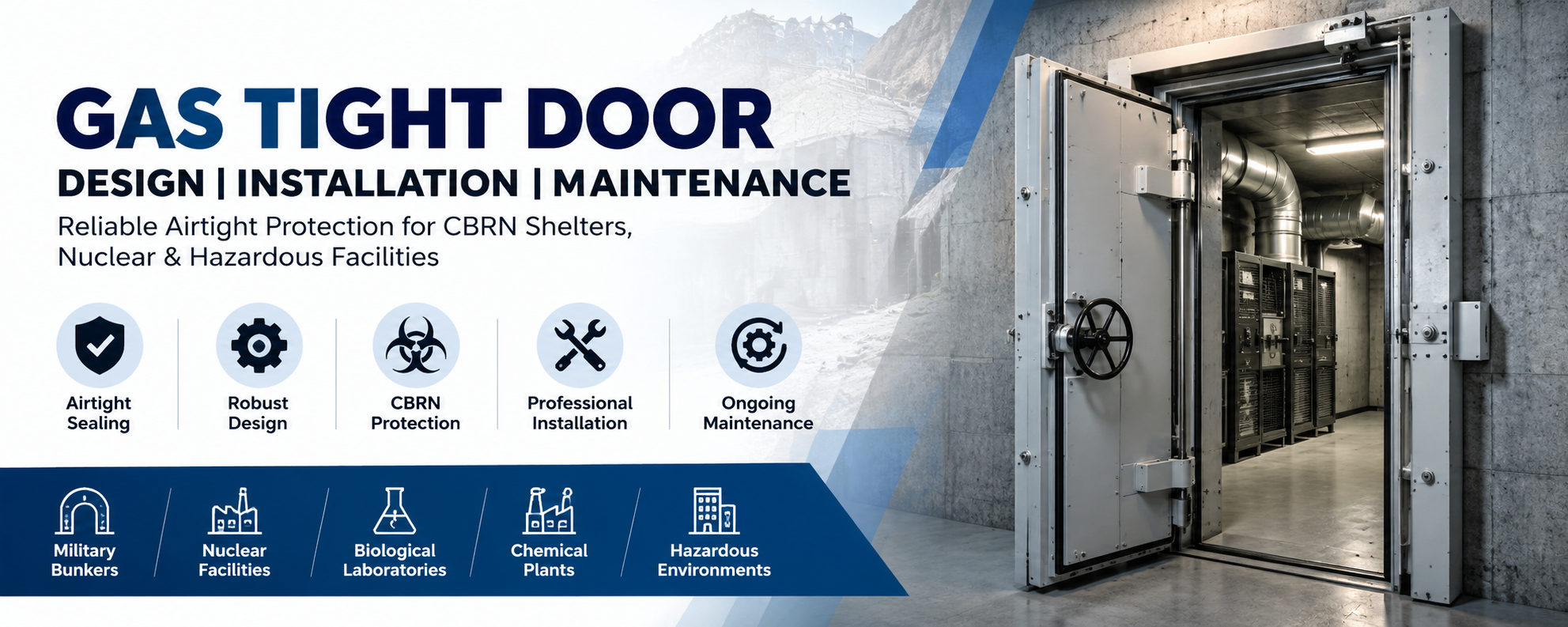
During the commissioning of a newly constructed CBRN shelter, engineers completed blast resistance testing without issue. However, when the facility underwent airtightness verification, a small leak around the entrance compromised the positive-pressure environment required to protect occupants from hazardous airborne contaminants. The problem was traced to an improperly engineered gas tight door. After replacing it with a certified system, the shelter successfully passed leakage testing and became operational. This illustrates why a gas tight door is one of the most critical safety components in defence, nuclear, and hazardous industrial facilities.
A gas tight door is a precision-engineered barrier designed to prevent hazardous gases, toxic chemicals, biological contaminants, and radioactive particles from entering or escaping controlled environments. Unlike standard industrial doors, it combines reinforced structural construction, compression sealing technology, and certified leakage performance to maintain airtight integrity. Whether installed in CBRN shelters, pharmaceutical laboratories, chemical plants, or nuclear facilities, selecting the right gas tight door requires careful consideration of engineering, certification, installation, and long-term maintenance.
What Is a Gas Tight Door?
A gas tight door is specifically designed to maintain airtight containment while operating under positive or negative pressure conditions.
Its engineering goes far beyond conventional steel doors. Precision manufacturing, reinforced construction, and continuous compression sealing ensure the door remains leak-resistant throughout years of operation.
Leading Gas tight door manufacturers in India develop customized solutions based on facility type, environmental conditions, structural requirements, and applicable safety standards.
Engineering Behind a Gas Tight Door
Reliable performance depends on several integrated engineering components.
A typical gas tight door includes:
- Reinforced steel door leaf
- Heavy-duty steel frame
- Continuous compression gasket seals
- Multi-point locking system
- Pressure-rated hinges
- Corrosion-resistant coatings
- Replaceable sealing components
An optimized Gas tight door design distributes sealing pressure evenly around the entire perimeter, ensuring dependable airtight performance without excessive wear on the gasket system.
Pressure Control and Leakage Performance
The primary purpose of a gas tight door is maintaining controlled pressure environments.
Positive-pressure facilities prevent contaminated outside air from entering protected spaces, while negative-pressure environments contain hazardous biological or chemical agents inside designated areas.
A Gas tight door for CBRN shelters must undergo leakage-rate testing and pressure verification to confirm compliance with project specifications. Proper frame anchoring and wall integration are equally important because installation inaccuracies can significantly reduce sealing performance.
Compatibility with Critical Safety Systems
Gas tight doors are designed to function as part of an integrated protection strategy.
They should be compatible with:
- Blast-resistant structures
- Fire-rated compartmentation
- CBRN filtration systems
- HVAC pressure management
- Emergency ventilation systems
- Electronic access control
- Security monitoring systems
The Sigma Power Tech gas tight door is engineered to integrate seamlessly with these systems, helping maintain both structural protection and airtight containment throughout the facility lifecycle.
Key Features of High-Performance Gas Tight Door Systems
When evaluating products, buyers should prioritize the following characteristics:
- Certified airtight sealing performance
- Reinforced structural strength
- Corrosion-resistant construction
- Reliable pressure differential capability
- Compatibility with blast and fire protection systems
- Security-grade locking mechanisms
- Heavy-duty durability
- Low maintenance requirements
- Compliance with recognized certification standards
These features contribute directly to long-term operational reliability and occupant safety.
Applications Across Critical Industries
Gas tight doors are installed wherever hazardous materials or controlled environments require dependable containment.
Common applications include:
- CBRN shelters and civil defence bunkers
- Military command centers
- Biological containment laboratories
- Pharmaceutical manufacturing facilities
- Chemical research laboratories
- Chemical and petrochemical plants
- Nuclear facilities
- Underground infrastructure
- Hazardous material storage units
An Airtight door for hazardous facilities should always be selected according to certified gas-tight performance rather than standard industrial air-sealing capabilities.
Cost and Investment Factors
The Gas tight door price varies according to engineering complexity and project requirements.
Primary cost factors include:
- Required sealing and leakage-rate classification
- Door size and opening configuration
- Material grade and steel plate thickness
- Reinforced frame engineering
- Factory testing and certification
- Integration with filtration and pressure systems
- Automation and electronic locking
- Installation complexity
- Site-specific engineering assessment
- Long-term maintenance planning
Although higher-performance systems require greater initial investment, they generally provide lower lifecycle costs through improved durability and reduced maintenance.
Buyer's Guide
Selecting the right manufacturer is one of the most important procurement decisions.
Before purchasing, evaluate suppliers based on:
- Industry experience in defence and critical infrastructure
- Engineering and testing capabilities
- Compliance with IS/BIS requirements and internationally recognized airtightness and CBRN standards
- Customization capability
- Precision manufacturing processes
- Technical documentation
- Professional installation expertise
- After-sales maintenance support
- Proven project references
Working with a Sigma Power Tech manufacturer and service provider ensures engineering continuity from design through installation, commissioning, and long-term service support.
Common Mistakes to Avoid
Several common procurement errors reduce long-term performance.
Avoid:
- Choosing products based only on purchase price
- Ignoring project-specific pressure and leakage requirements
- Incorrect frame anchoring and wall integration
- Underestimating corrosion or fire exposure
- Failing to verify testing and certification
- Neglecting gasket inspection and maintenance planning
- Overlooking compatibility with filtration and CBRN systems
Proper engineering decisions during procurement significantly improve lifecycle reliability.
Maintenance and Long-Term Operational Value
Routine maintenance preserves airtight performance throughout the service life of a gas tight door.
Preventive inspections should include gasket condition, hardware adjustment, corrosion protection, hinge lubrication, locking mechanism operation, and scheduled leakage testing. Replacing worn sealing components before failure helps maintain certified performance while reducing unexpected maintenance costs.
Properly maintained Gas tight door systems continue providing dependable containment for decades under demanding operating conditions.
Conclusion
A gas tight door is a specialized engineered safety system that plays a vital role in protecting defence facilities, CBRN shelters, pharmaceutical laboratories, nuclear installations, chemical plants, and other hazardous environments. Its performance depends on reinforced construction, precision sealing, certified leakage testing, proper installation, and ongoing maintenance. Rather than selecting products based solely on the Gas tight door price, organizations should prioritize certified engineering, correct sealing classifications, integration with blast and filtration systems, and proven manufacturing expertise. Investing in a professionally engineered gas tight door delivers long-term airtight reliability, regulatory compliance, and dependable protection for the most critical infrastructure projects in 2026 and beyond.

 English
 Arabic
 French
 Spanish
 Portuguese
 Deutsch
 Turkish
 Dutch
 Italiano
 Russian
 Portuguese (Brazil)
 Greek