


Common Traffic Management Issues That Can Disrupt Project Schedules

Common Traffic Management Issues That Can Disrupt Project Schedules
Construction and civil infrastructure projects depend on coordinated vehicle movements, reliable site access and well-planned work activities. When traffic arrangements are incomplete or poorly coordinated, contractors may face delays, disrupted deliveries and changes to the construction programme. Effective traffic control management helps project teams identify potential problems early, coordinate resources and maintain safer movements around active worksites.
1. Delays in Traffic Planning and Approvals
One common cause of schedule disruption is leaving traffic planning until construction is close to commencing. Projects involving public roads, temporary lane restrictions or changes to pedestrian access may require specific documentation and approval from the relevant authority.
If the required information is incomplete or submitted late, additional reviews and revisions may affect the planned start date. Requirements and processing times vary depending on the location, authority and nature of the work.
Contractors should identify documentation and approval requirements during project planning. Allowing sufficient time for preparation and review helps reduce the risk of traffic-related issues delaying mobilisation.
2. Poor Coordination Between Construction Stages
Large projects often involve several activities taking place across different work zones. Excavation, drainage installation, pavement repairs and utility works may each require different access arrangements.
When construction stages are not coordinated with traffic arrangements, contractors may need to relocate controls, revise work sequences or reschedule activities. These changes can affect labour allocation, equipment availability and subcontractor schedules.
Developing a coordinated programme helps align traffic requirements with the construction sequence. Project managers should review upcoming activities with site supervisors and relevant service providers to identify conflicts before they affect delivery.
3. Inadequate Site Access and Vehicle Routes
Restricted entrances, narrow access roads and poorly planned turning areas can slow deliveries and create congestion. Large vehicles may struggle to enter or exit safely when access arrangements do not account for their dimensions and manoeuvring requirements.
Before work begins, assess vehicle sizes, turning space, entry and exit points, loading areas and internal circulation routes. Where practical, separate delivery movements from pedestrian routes and areas used by construction personnel.
Clear access arrangements help reduce unnecessary waiting and allow vehicles to move through the site more efficiently. Contractors should also consider the effects of site access on surrounding public roads.
4. Shortages of Traffic Control Personnel or Equipment
Traffic arrangements depend on having suitable personnel and equipment available when required. If resources are not booked early enough, a project may be unable to establish the planned controls at the scheduled time.
Equipment requirements may include temporary signs, cones, barriers and other devices specified for the worksite. Staffing needs can vary according to traffic volumes, operating hours, work zones and the complexity of the arrangements.
A traffic management company should be given clear information about the project scope, schedule and expected resource requirements. Contractors should confirm availability, booking conditions and arrangements for extensions or changes before finalising the programme.
5. Unexpected Changes to Site Conditions
Construction conditions can change because of weather, underground services, restricted working space or unexpected findings during excavation. These developments may affect vehicle movements, work-zone boundaries and the suitability of existing traffic arrangements.
If the site differs from the original assessment, the project team may need to review the proposed controls before continuing. Depending on the change, updated documentation, further coordination or additional approvals may be necessary.
Establishing a process for reporting site changes helps contractors respond promptly. Supervisors should communicate changes to relevant personnel so that traffic arrangements remain aligned with actual working conditions.
6. Delivery Congestion and Scheduling Conflicts
Late deliveries, overlapping vehicle arrivals and limited unloading space can create queues around construction sites. Congestion may delay material handling, obstruct access routes and affect other activities scheduled for the same area.
Contractors can reduce these risks by coordinating delivery windows, allocating suitable unloading zones and communicating access instructions to suppliers. Larger projects may also benefit from planning vehicle movements around peak traffic periods where practical.
Traffic arrangements should account for delivery trucks, mobile plant, waste collection and other vehicle movements expected during each construction stage.
7. Poor Communication Between Project Stakeholders
Traffic management involves coordination between project managers, site supervisors, subcontractors, delivery operators and traffic personnel. If changes to work hours, access points or construction activities are not communicated clearly, different parties may work from outdated information.
This can lead to misplaced equipment, conflicting vehicle movements and unnecessary interruptions. Establishing clear communication channels and identifying responsible contacts helps ensure that updates reach the people who need them.
Regular coordination meetings and documented programme updates can help project teams identify potential conflicts before they affect site operations.
8. Inadequate Planning for Night Work and Restricted Hours
Some projects must operate during night shifts, weekends or limited road access windows. These constraints can reduce the time available to establish traffic controls, complete construction activities and restore normal access.
Night work may also introduce additional considerations involving visibility, lighting, noise restrictions and worker fatigue. If these requirements are overlooked, contractors may need to revise the schedule or arrange additional resources.
Confirm working hours, setup and removal requirements, and any applicable restrictions before work begins. Aligning traffic arrangements with the approved schedule helps project teams make better use of available working time.
How Contractors Can Reduce Traffic-Related Delays
Reducing schedule disruption starts with early planning and clear responsibilities. Contractors should:
-
Identify traffic documentation and approval requirements early.
-
Coordinate traffic arrangements with construction staging.
-
Assess site access, turning space and delivery requirements.
-
Confirm personnel and equipment availability in advance.
-
Establish a process for reviewing changes to site conditions.
-
Coordinate delivery schedules with site supervisors.
-
Communicate updates to all relevant project stakeholders.
-
Review traffic arrangements before each major work stage.
These measures help contractors address common issues before they develop into larger scheduling problems.
Traffic-related delays can result from late approvals, poor staging coordination, access restrictions, resource shortages and communication gaps. Effective traffic control management helps contractors identify these risks and align traffic arrangements with construction activities. Working with an experienced traffic management company and sharing accurate project information early can support better coordination, reduce avoidable interruptions and improve schedule reliability.
Frequently Asked Questions
1. What traffic management issues commonly delay construction projects?
Common issues include approval delays, unavailable personnel or equipment, restricted site access, delivery congestion, changing work conditions and poor communication between project stakeholders.
2. How can contractors prevent traffic planning delays?
Contractors should identify requirements early, provide accurate site information, allow time for necessary approvals and coordinate traffic planning with the construction programme.
3. Why is traffic management equipment availability important?
Missing or unsuitable equipment can prevent planned traffic arrangements from being established on time. Confirming equipment requirements and availability before mobilisation helps reduce this risk.
4. How do construction schedule changes affect traffic arrangements?
Changes to work locations, hours, staging or access points may require traffic arrangements to be reviewed. Some changes may also require updated documents or additional approvals.
5. When should a traffic management company be involved?
Ideally, a provider should be consulted during early project planning, particularly where work may affect public roads, pedestrian access or vehicle movements. Early involvement allows time to clarify requirements and coordinate resources before construction starts.
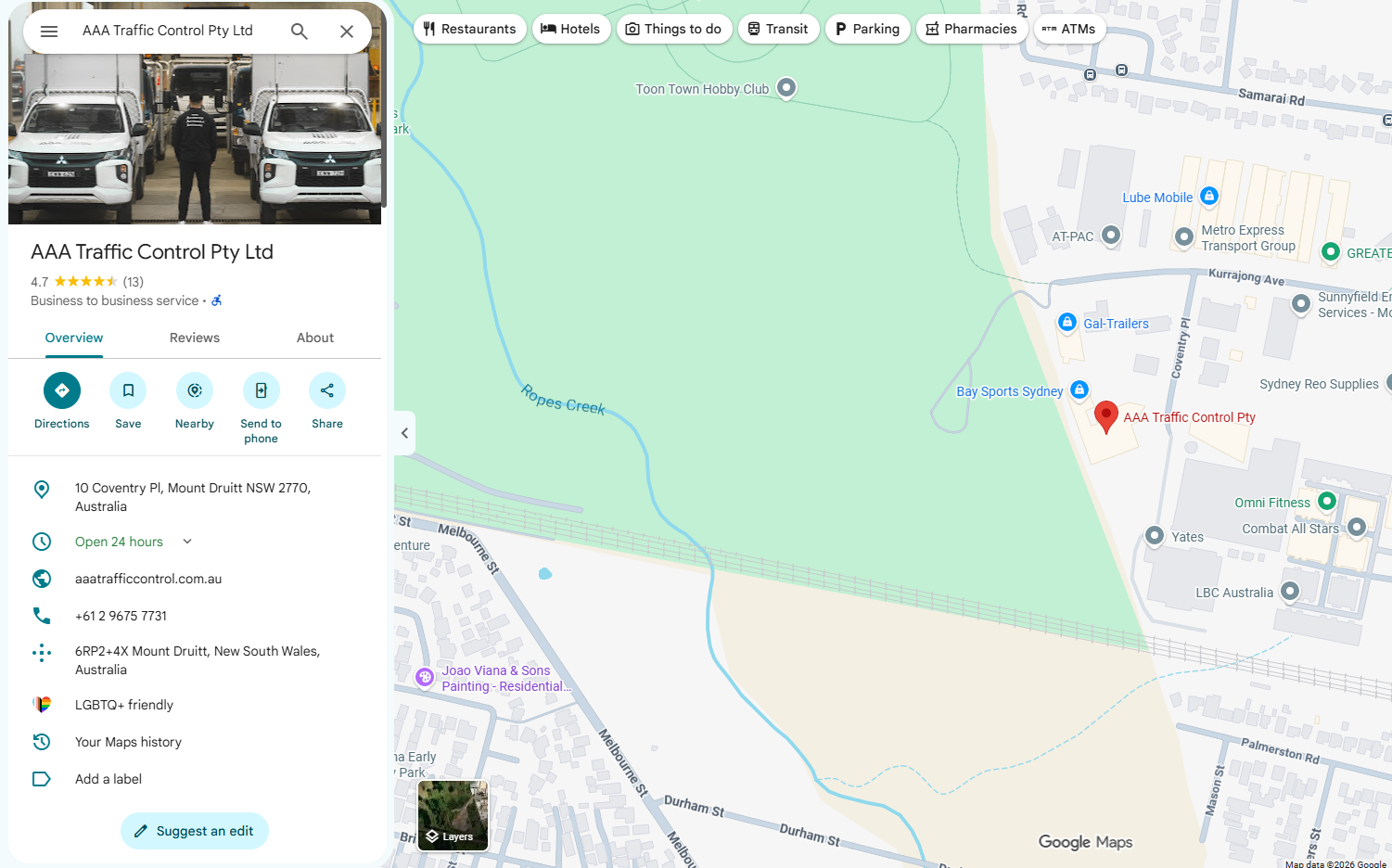
AAA Traffic Control Pty Ltd
10 Coventry Pl,
Mount Druitt NSW 2770,
Australia
(02) 9675 7731

 English
 Arabic
 French
 Spanish
 Portuguese
 Deutsch
 Turkish
 Italiano
 Russian
 Romaian
 Portuguese (Brazil)
 Greek