Logo Digitizing Services Buyer's Guide for Embroidery Brands
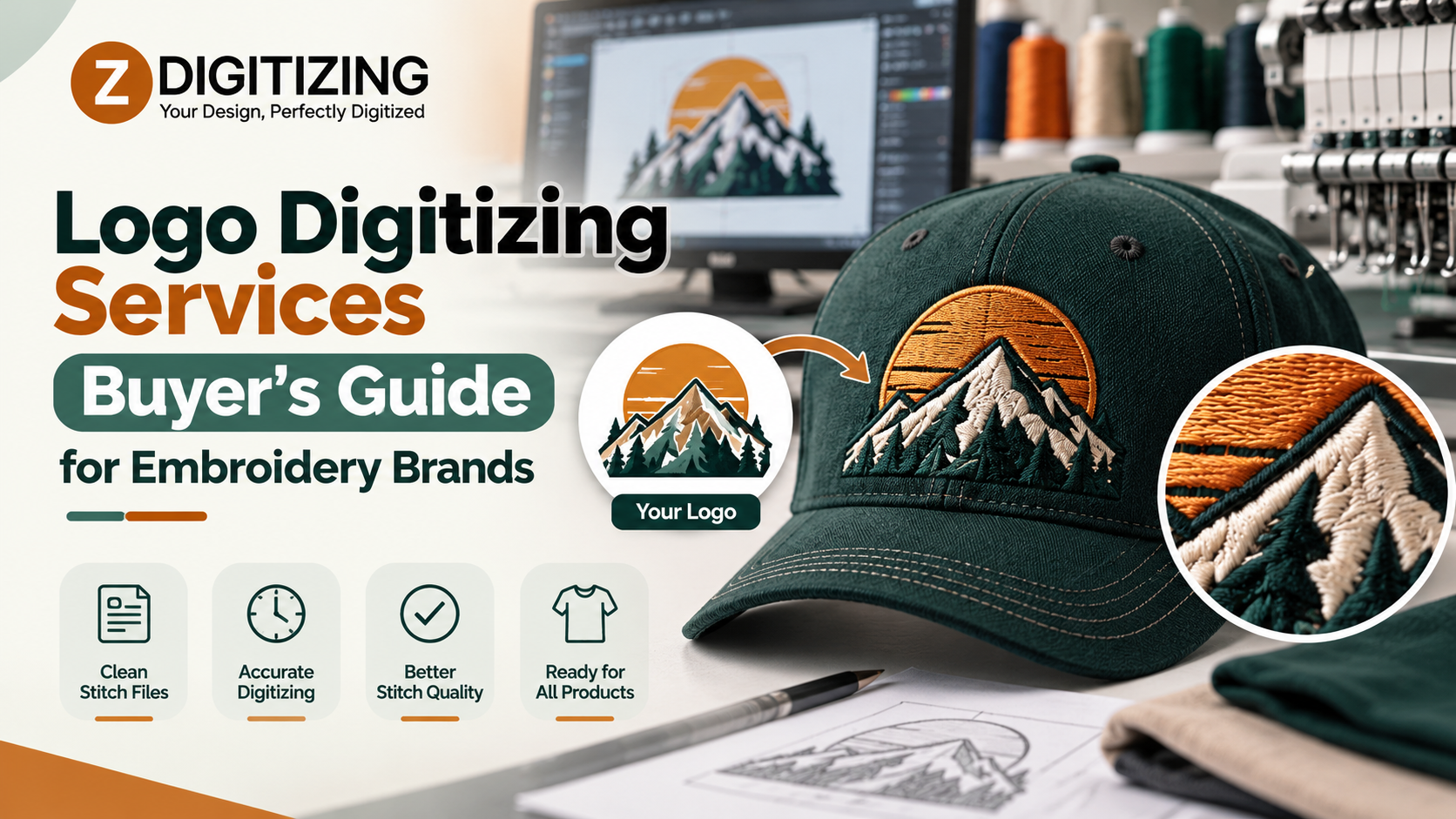
Logo Digitizing Services decide how your brand mark looks once thread replaces ink. A logo that is crisp on screen can stitch poorly if the embroidery file is built wrong, with gaps, puckering, and lettering that blurs. With our Logo Embroidery Digitizing Services, we rebuild your artwork for the garment, the size, and the fabric, so the stitched logo matches the design you approved.
This guide covers what to check before you order, what to send us, and which mistakes cause the most trouble. You will find direct answers to common questions at the end.
What Should You Look for in Logo Digitizing Services?
Look for a service that builds the file by hand for your garment, not one that auto-traces your image. A good digitizer sets stitch types, direction, density, underlay, and color order based on the fabric and the final size.
Ask these questions before you commit:
-
Does the file account for the garment and fabric, or is it one generic file?
-
Can the digitizer deliver the format your machine reads, such as DST, PES, or EXP?
-
Is there a plan for small text and fine details?
-
Can the digitizer rebuild low-resolution artwork if needed?
A clear yes to each one is a good sign. We cover these points in every project at ZDigitizing, from the first artwork review to the exported file.
Why Your Logo Cannot Stitch Straight From a JPG
An embroidery machine cannot read a JPG or PNG. It needs a stitch file that records where each stitch goes, which way it runs, how dense it is, and when each color sews.
A digitizer also makes choices that artwork never contains:
-
Which areas use satin stitches and which use fill
-
Where underlay goes to stabilize the fabric
-
How much pull compensation offsets fabric shift
-
How to order colors to limit trims and thread changes
Automatic conversion software only reads pixels, so it skips these decisions. That gap is why auto-converted logos so often look flat, thin, or distorted.
How We Prepare a Logo File
Here is the process we follow when we digitize a logo:
-
Review the artwork. We check clarity, color count, and details that may not survive stitching.
-
Confirm size and placement. We plan the stitched width and height and where the logo sits on the garment.
-
Map the stitches. We assign satin, fill, and run stitches and set the direction for each shape.
-
Add underlay and compensation. We stabilize the fabric and offset the pull that distorts outlines.
-
Sequence the colors. We order the stitching to reduce jumps and thread changes.
-
Export the file. We prepare the format your machine reads.
This is the practical difference between Logo Embroidery Digitizing Services and a quick conversion. The digitizer decides how thread should behave on a specific fabric at a specific size.
What to Send Us Before We Start
Better source files lead to better stitch files. When you send your artwork, include:
-
The cleanest version of your logo, ideally a vector file such as AI, EPS, or SVG
-
A high-resolution PNG or JPG if no vector file exists
-
The stitched width and height you want
-
The garment type and fabric, such as cotton, polyester, fleece, or twill
-
Thread colors or Pantone references if color matching matters
-
Your machine's file format
If your logo exists only as a low-resolution image, our Vector Art Service can rebuild it first. If you need a stitch-ready version of existing artwork, we can also convert your image to an embroidery file.
Match the File to the Placement
Size, fabric, and surface shape change how thread behaves, so each placement needs its own file. Quality logo digitizing services build them separately.
-
Left chest: Small designs need simplified detail and tight spacing. Our Left Chest Logo Digitizing service covers this placement.
-
Caps and hats: Curved crowns and center seams change stitch angles. Our Cap Logo Digitizing and Hat Digitizing services handle those settings.
-
Jacket backs: Large designs need balanced density and sturdy underlay. Our Jacket back Digitizing service prepares those files.
-
Sleeves and sides: Our Back & Sleeve Digitizing service keeps placement consistent across panels.
Reusing one chest file on a cap or jacket back is a common cause of rippled or thin logos.
Choose the Right Technique
Most logo projects use one of these approaches:
-
Flat embroidery suits detailed logos, lettering, and multi-color designs.
-
Applique stitches fabric shapes onto the garment and works well for large, bold areas. Our Applique digitizing service prepares the placement and edge stitching.
-
3D puff embroidery raises bold shapes and thick lettering with foam. Our 3D Puff Embroidery Digitizing service handles that setup.
-
Patches are stitched separately and applied to the garment. Our Patch Digitizing service prepares those files.
Thin lines and tiny text work poorly with puff, so bold, simple shapes suit that technique best.
How Your Logo Changes in Embroidery
Thread has physical width, so a faithful stitched logo is not a pixel-for-pixel copy. Expect changes like these:
-
Small text gets thicker or larger so letters stay readable.
-
Hairline details get simplified because very thin lines disappear into fabric.
-
Gradients become distinct color areas since embroidery uses solid thread colors.
-
Wide satin areas switch to fill because wide satin columns loosen and snag.
These adjustments protect the look of your brand mark. We explain which details need changes when we review your artwork.
Pre-Production Checks
A few checks keep garments from being wasted:
-
Confirm the stitched size against the garment placement.
-
Check that lettering is large enough to read.
-
Verify that thread colors match the approved artwork.
-
Confirm the file format matches your machine.
-
Run a test stitch-out on similar fabric before the full order.
Mistakes That Ruin Logo Embroidery
Most failed logos trace back to the file. Watch for these problems:
-
Tiny text. Small letters collapse after stitching.
-
Excess density. Heavy stitching causes puckering, stiffness, and thread breaks.
-
Weak underlay. Fills shift and ripple without a stable base.
-
No pull compensation. Outlines and lettering drift out of alignment.
-
Skipping the test stitch-out. Testing catches problems before production.
Fixing these during digitizing costs far less than finding them after a run of finished garments.
When Professional Digitizing Is Worth It
A simple, bold, one-color shape may need little help. Professional digitizing becomes more valuable when your project includes:
-
Multi-color logos with gradients or shading to simplify
-
Small text or fine detail
-
A brand mark that must look consistent across shirts, caps, and jackets
-
Specialty techniques such as applique or puff
-
A bulk order, where one file error repeats on every garment
In these cases, logo digitizing services reduce test stitching and wasted garments. For designs beyond logos, our Embroidery Digitizing Service covers broader needs. For brands that repeat one mark across many products, Logo Embroidery Digitizing Services keep every placement consistent.
Order With Confidence
Clean artwork, realistic sizing, the right technique, and a stitch plan built for the fabric make the biggest difference in embroidery quality. At ZDigitizing, we prepare each logo for the garment it will be sewn on, so your machine runs a file made for the job. Good Logo Digitizing Services settle those decisions before the first stitch.
If you have an embroidery project coming up, send us your artwork, the garment type, and your desired size. We will review it and prepare a file that stitches cleanly.
Frequently Asked Questions
What are logo digitizing services?
They convert a logo into an embroidery file that a machine can read. The file sets stitch types, density, direction, underlay, and color order, so the design stitches cleanly instead of puckering, gapping, or distorting.
What should I send for logo digitizing?
Send the cleanest version of your logo, ideally a vector file such as AI, EPS, or SVG. Also include the stitched size, garment and fabric, thread colors, and your machine's file format. A high-resolution PNG or JPG works if no vector file exists.
What file format do I need for logo embroidery?
It depends on your machine. Common formats include DST, PES, EXP, and JEF. Tell us which machine you use, and we will prepare the file in a format it reads.
Can you digitize a low-quality logo?
In many cases, yes. A low-resolution image may need cleanup or recreation first, because blurry edges lead to unclear stitching. We can rebuild it through our Vector Art Service, then digitize it for your garment.
Why does my embroidered logo look different from my artwork?
Thread has physical width, so fine details, tiny text, and gradients must be simplified. We thicken small lettering, simplify shading into distinct color areas, and adjust spacing. The result keeps the look of your design while staying stitchable.

 English
 Arabic
 Spanish
 Portuguese
 Deutsch
 Turkish
 Dutch
 Italiano
 Russian
 Romaian
 Portuguese (Brazil)
 Greek