


Compressed Biogas (CBG) Plant: Process, Benefits and Applications in India
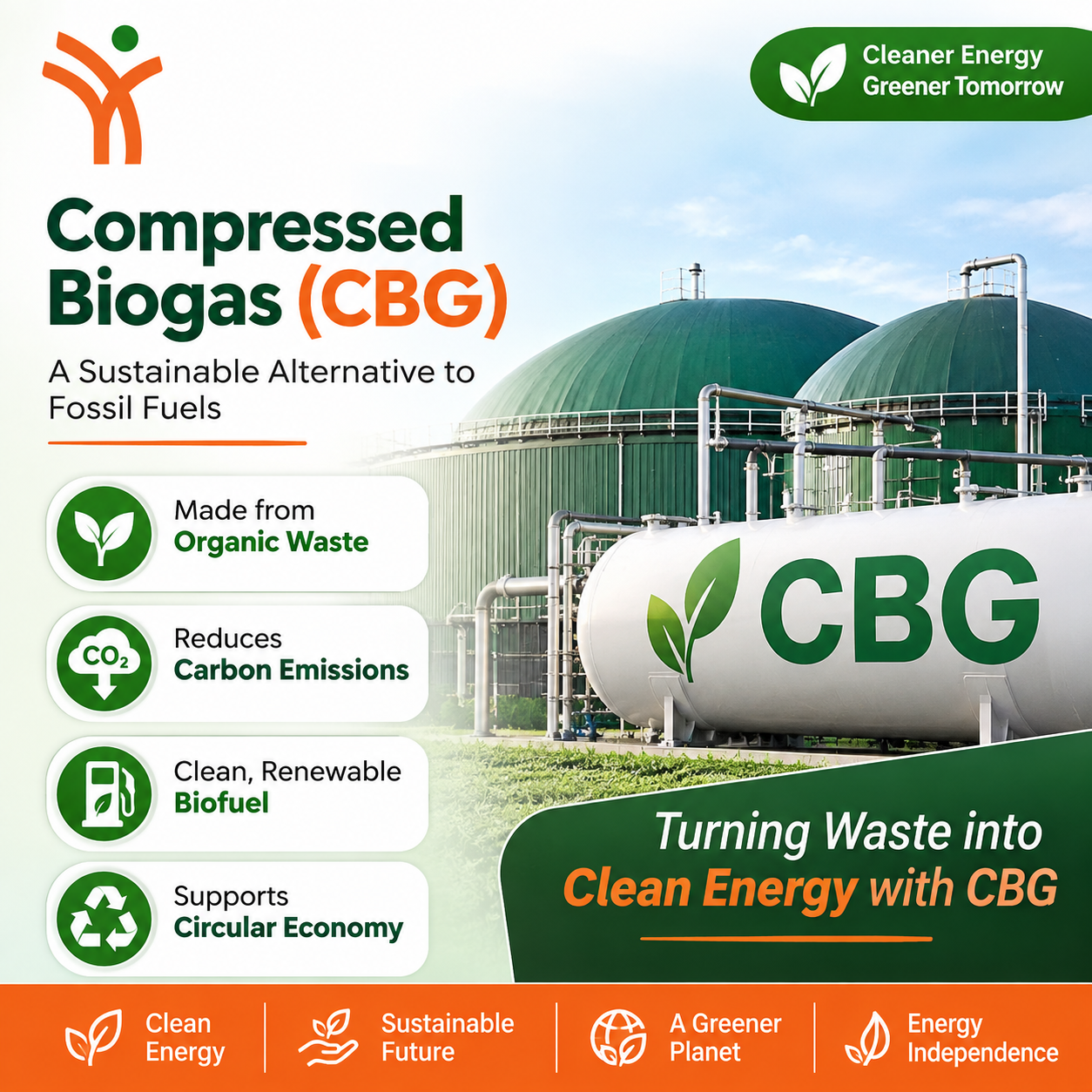
Compressed Biogas (CBG) is becoming an important renewable energy source in India. With increasing energy demand and growing concerns about pollution, businesses and industries are looking for cleaner alternatives to traditional fossil fuels. A CBG plant offers a practical solution by converting organic waste into a useful and sustainable fuel.
CBG is produced from agricultural waste, cow dung, poultry litter, food waste, and other biodegradable materials. After purification and compression, the biogas becomes a methane-rich fuel that can be used as an alternative to CNG, LPG, and other conventional fuels.
What Is a Compressed Biogas (CBG) Plant?
A Compressed Biogas Plant is a facility that converts organic waste into renewable fuel through a biological process called anaerobic digestion. During this process, microorganisms break down organic materials in the absence of oxygen and produce raw biogas.
Raw biogas mainly contains methane and carbon dioxide, along with small amounts of other impurities. It is purified to remove unwanted gases and moisture. The methane-rich gas is then compressed and stored for different applications.
CBG is similar to commercially available natural gas in terms of its main component, methane, making it a useful alternative for industrial and transportation purposes.
How Does a CBG Plant Work?
The CBG production process involves several important stages:
1. Waste Collection and Preparation: Organic waste such as cow dung, agricultural residue, poultry litter, and food waste is collected and prepared for processing.
2. Anaerobic Digestion: The prepared waste is fed into an airtight digester, where microorganisms break down organic matter and generate raw biogas.
3. Biogas Purification: Raw biogas contains carbon dioxide, hydrogen sulphide, and moisture. These impurities must be removed to improve gas quality.
4. Gas Upgradation: Technologies such as VPSA purification and water scrubbing are used to separate carbon dioxide and other unwanted gases from methane.
5. Compression and Storage: The purified methane-rich gas is compressed and stored for transportation and commercial use.
The remaining digestate can also be processed and used as an organic manure, depending on its quality and applicable standards.
Key Benefits of a CBG Plant
Installing a CBG plant offers several environmental and commercial benefits.
-
Renewable Energy Production: Converts organic waste into a valuable source of clean energy.
-
Better Waste Management: Helps manage agricultural, poultry, dairy, and food-processing waste.
-
Lower Fossil Fuel Dependence: Provides an alternative to conventional fuels such as CNG and LPG.
-
Reduced Environmental Impact: Supports waste treatment and can help reduce uncontrolled organic waste decomposition.
-
Additional Revenue Opportunities: Businesses can explore revenue from CBG and useful digestate.
-
Support for Sustainable Development: Encourages a circular economy by converting waste into useful resources.
Major Applications of Compressed Biogas
CBG can be used across different sectors because of its methane-rich composition.
-
Transportation Fuel: Used as an alternative to CNG in compatible vehicles, including cars, buses, autos, and trucks.
-
Industrial Fuel: Industries such as food processing, textiles, ceramics, and pharmaceuticals can use CBG in boilers and furnaces.
-
Cooking Fuel: Hotels, restaurants, and commercial kitchens can use it as an alternative to LPG.
-
Power Generation: CBG can be used in suitable gas engines to generate electricity.
-
Agriculture: It can support agricultural activities through compatible equipment and rural energy applications.
Which Raw Materials Are Used for CBG Production?
The success of a CBG project largely depends on the availability and quality of raw materials. Some commonly used feedstocks include:
-
Cow Dung: A widely available organic material suitable for biogas production.
-
Poultry Waste: Poultry litter can be converted into renewable gas through anaerobic digestion.
-
Press Mud: A by-product of sugar mills that can be used for biomethanation.
-
Bagasse: Sugarcane residue that can be processed for renewable energy production with suitable pre-treatment.
-
Napier Grass: An energy crop with good biomass potential for biogas production.
-
Piggery Waste: Organic waste from pig farms that can be used for biogas generation.
Selecting the right feedstock depends on its availability, organic composition, moisture content, and suitability for the digestion process.
Common CBG Purification Technologies
Purification is an important stage in the CBG production process because raw biogas contains impurities that affect gas quality and equipment performance.
Two commonly used purification methods are:
1. VPSA (Vacuum Pressure Swing Adsorption)
VPSA technology uses special adsorbent materials to separate carbon dioxide from biogas. The system works through pressurisation and vacuum-based regeneration, allowing methane-rich gas to be collected.
2. Water Scrubbing
In this method, pressurised water absorbs carbon dioxide and hydrogen sulphide from raw biogas. Methane remains largely in the gas phase and is collected for further drying and processing.
The choice of purification technology depends on plant capacity, feedstock characteristics, gas quality requirements, and operating conditions.
Why Choose a Professional CBG Plant Installation Company?
Setting up a CBG plant requires proper planning, technical knowledge, and suitable equipment. Choosing an experienced CBG plant installation company helps ensure that the project is designed according to feedstock availability, production capacity, and operational requirements.
Koshish India provides sustainable energy solutions, including CBG plant design and installation support. From initial consultation to project execution, proper technical planning can help businesses develop efficient waste-to-energy systems.
Frequently Asked Questions (FAQs)
1. What is the difference between biogas and CBG?
Biogas is produced through anaerobic digestion and contains methane, carbon dioxide, and other gases. CBG is purified and compressed biogas with a higher methane concentration, making it suitable for transportation and industrial applications.
2. Which raw materials are suitable for a CBG plant?
Cow dung, poultry waste, agricultural residue, press mud, food waste, and piggery waste are commonly used materials for CBG production.
3. Can CBG be used as a replacement for CNG?
Yes. Properly purified and compressed CBG can be used as an alternative to CNG in compatible vehicles and equipment.
4. What are the main benefits of installing a CBG plant?
A CBG plant helps convert organic waste into renewable fuel, improves waste management, reduces dependence on fossil fuels, and creates opportunities for additional revenue.
Conclusion
Compressed Biogas is a promising renewable energy solution for India's growing energy and waste management needs. By converting organic waste into useful fuel, CBG plants support cleaner energy production and sustainable business operations. With proper feedstock selection, suitable purification technology, and professional installation, businesses can make better use of available organic waste.
Looking to set up a CBG plant? Connect with Koshish India for professional guidance on CBG plant solutions and sustainable energy projects.
Domestic Biogas plant , Commercial Biogas plant , cbg plant , Sewage Water Treatment Plant , Effluent Water Treatment Plant , ZLD systems , Water Treatment Plant ,

 English
 French
 Spanish
 Portuguese
 Deutsch
 Turkish
 Dutch
 Italiano
 Russian
 Romaian
 Portuguese (Brazil)
 Greek