


Pilot Training After 12th: Complete Guide for Beginners
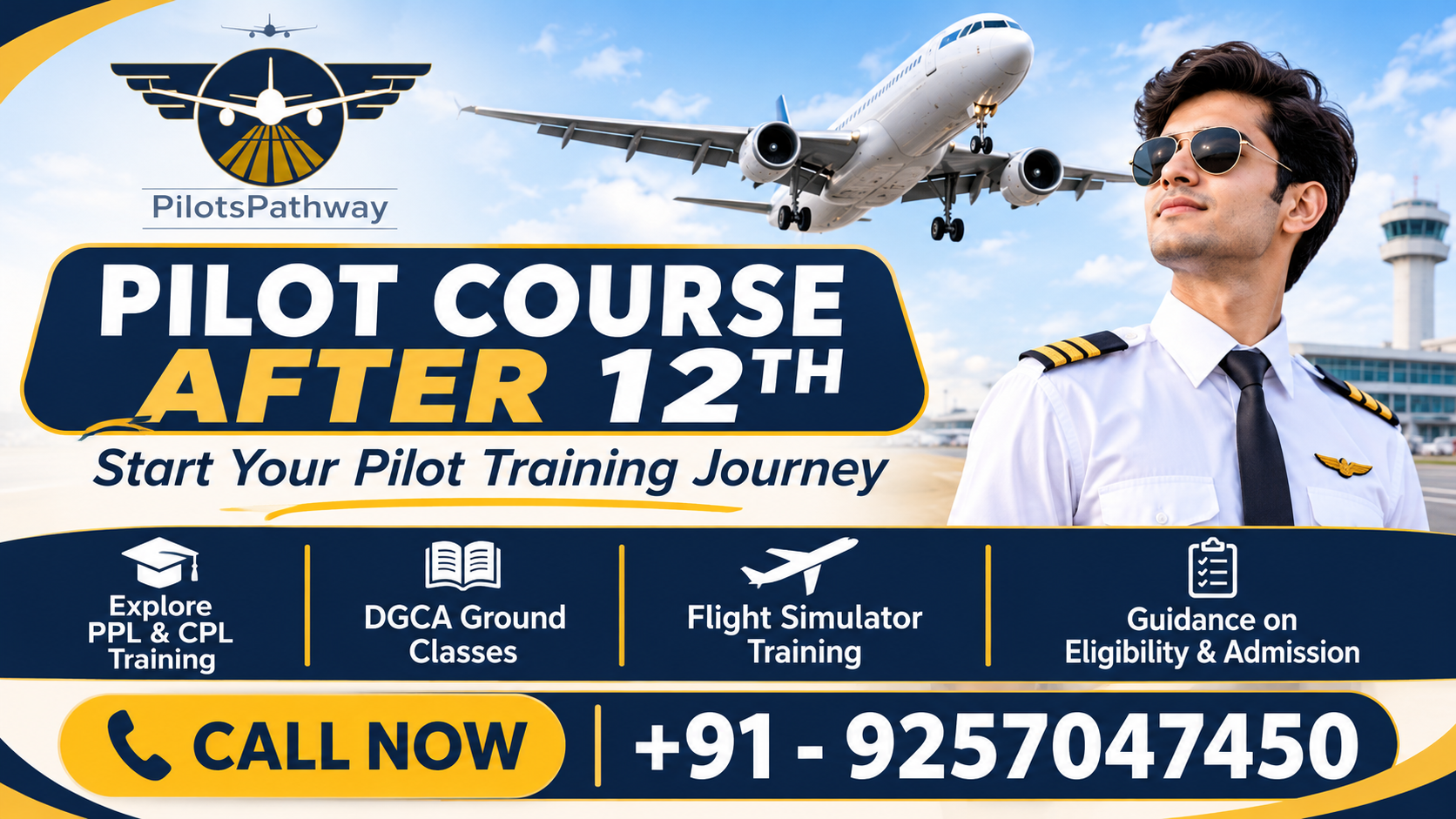
Completing Class 12 is an important stage in every student's life. After school, students start looking for career options that match their interests, skills, and future goals. Some students want to become engineers, doctors, or business professionals, while others dream of working in the aviation industry. If you are interested in aircraft and want to build a career as a pilot, choosing the right training path after school is an important first step.
A Pilot Course After 12th can help students understand the knowledge, training, and qualifications needed to enter the aviation field. Becoming a pilot is not only about learning how to fly an aircraft. It also involves studying aviation subjects, understanding safety procedures, completing medical assessments, passing examinations, and gaining practical flying experience. Students who want to become commercial pilots in India must follow the licensing requirements set by the Directorate General of Civil Aviation (DGCA).
Before taking admission, students should understand the different pilot training options, eligibility conditions, course fees, and career opportunities. They should also compare training institutes carefully and check which services are included in their courses. Pilots Pathway offers pilot training and preparation courses for students who want to develop their aviation knowledge and work towards their career goals.
What Is a Pilot Course After 12th?
A Pilot Course After 12th is a learning and training pathway for students who want to become pilots. It introduces students to important aviation subjects and helps them understand the different stages involved in pilot education. Depending on the selected programme, training may include classroom lessons, aviation theory, flight simulator sessions, and practical flying.
Students generally explore two main licence options when starting their pilot career journey. A Private Pilot Licence (PPL) is intended for private flying, while a Commercial Pilot Licence (CPL) is needed for professional commercial flying, subject to applicable regulations and operating requirements. Students who want to work towards an airline career usually plan their education around the commercial pilot route.
It is important to understand that joining a basic pilot preparation course does not automatically provide a pilot licence. Students must complete the required examinations, medical assessments, practical flight training, and other conditions applicable to the licence. Every student should understand these requirements before choosing a course.
Eligibility for Pilot Course After Class 12
Before applying to a pilot training institute, students should check whether they meet the required eligibility conditions. These conditions help determine whether they can enter the training pathway and eventually apply for the licence they want.
Educational Qualification
For the standard commercial pilot licensing route in India, students generally need to complete Class 12 with Physics and Mathematics from a recognised board or hold an accepted equivalent qualification. Students who have not studied these subjects should check the approved ways to complete the required qualification before applying.
Age Requirements
The minimum age for obtaining a Commercial Pilot Licence in India is 18 years. Some institutes may offer foundation or preparation courses to younger students, depending on their admission policies. However, students must meet the applicable age requirements before a licence can be issued.
Medical Fitness
Medical fitness is an important part of becoming a pilot. Students must meet the medical standards prescribed by the aviation authority. They should understand the medical assessment process and complete the required examinations at the appropriate stage. Checking medical eligibility early can help students plan their training more carefully.
English Communication Skills
English is important in aviation because pilots need to understand instructions, study technical subjects, and communicate clearly. Students should develop their reading, writing, listening, and speaking skills. Good communication also helps during ground classes, practical training, and airline selection procedures.
Interest and Learning Ability
Pilot training requires regular study, patience, discipline, and responsibility. Students need to understand technical information, follow instructions, and learn safety procedures. A genuine interest in aviation can make the learning process more enjoyable, but consistent effort is necessary to progress.
How To Become a Commercial Pilot in India
Students often want to understand How To Become a Commercial Pilot after completing their school education. The process involves several important stages, from meeting the educational requirements to completing practical flight training and obtaining the relevant licence.
1. Complete Class 12
The first step is to complete Class 12 with the required academic subjects. Physics and Mathematics are generally needed for the standard CPL pathway in India. Keep your educational certificates and other important documents ready for admission and future licensing procedures.
2. Check Your Medical Eligibility
Before spending money on training, understand the medical standards for pilots. Complete the prescribed medical assessments through the appropriate process. Medical fitness is essential for pilot licensing, so students should not leave this step until the final stage of their training.
3. Prepare for DGCA Examinations
Students pursuing a CPL must study the required aviation subjects and pass the applicable examinations. These subjects include Air Regulations, Air Navigation, Meteorology, and Aircraft and Engines, along with other applicable requirements. Ground training can help students understand the subjects, prepare for examinations, and improve their knowledge through regular revision.
4. Select a Suitable Flying Training Organisation
Choosing a flying school is an important decision. Students should check the organisation's approval status for the practical training they intend to complete. They should also ask about aircraft availability, instructor qualifications, training schedules, facilities, and total charges.
5. Complete Practical Flight Training
After the required preparation, students need to complete practical flying training. During this stage, they learn aircraft handling, take-offs, landings, navigation, communication, and other flying procedures. Qualified instructors supervise the training and help students develop the skills required for safe aircraft operation.
6. Complete the Licensing Requirements
Students must complete the required examinations, flying experience, medical assessments, and applicable skill tests before applying for a CPL. The licence is issued only after the relevant authority verifies that all required conditions have been fulfilled.
7. Prepare for Airline Recruitment
After obtaining a CPL, students can explore airline recruitment opportunities. Airlines have their own selection processes, which may include interviews, technical assessments, simulator checks, medical requirements, and additional aircraft-specific training. Completing a CPL is an important qualification, but it does not guarantee an airline job.
Flying Training In India: What Do Students Learn?
Flying Training In India gives students the practical experience needed to develop their aircraft operating skills. It is an important part of commercial pilot education because classroom learning alone cannot provide the practical experience required for a flying career.
During training, students learn how to operate aircraft under the supervision of qualified instructors. They become familiar with aircraft controls, cockpit procedures, take-off and landing techniques, navigation, weather conditions, and communication with air traffic control. They also learn how to follow aviation rules and respond appropriately to different situations.
Practical training requires patience and regular practice. Every student progresses at a different speed, depending on learning ability, instructor availability, weather, aircraft availability, and training schedules. Sometimes, delays can occur because of operational conditions. Students should therefore avoid believing that every person will complete training within exactly the same period.
Before selecting a flying school, students should ask about the number of available aircraft, instructor support, maintenance arrangements, flying schedules, and the process for recording completed flight hours. They should also request a written fee structure to understand the full cost of practical training.
How to Choose Top Pilot Training In India
Finding Top Pilot Training In India is an important part of planning a pilot career. Students should not select an institute only because of attractive advertisements or low course fees. They should compare the actual training facilities, course structure, approvals, and support available to students.
Here are some important factors to consider before taking admission.
DGCA Approval: Check whether the flying training organisation is approved for the specific practical training it offers. Verify the details through official aviation sources rather than relying only on promotional material.
Experienced Instructors: Ask about the qualifications and experience of instructors. Good instruction helps students understand aviation subjects and improve their practical flying skills.
Training Facilities: Check whether the institute has suitable classrooms, learning materials, simulator facilities, and access to the practical training arrangements required for the course.
Course Structure: Understand the complete syllabus before enrolling. Ask whether the programme includes ground classes, examination preparation, simulator sessions, or other learning services.
Fee Transparency: Request a written breakdown of all charges. Ask about tuition, flying hours, landing charges, examinations, medical assessments, accommodation, and additional training expenses.
Student Support: Check whether the institute provides guidance about admission, course progress, examinations, and the next steps in pilot training.
A suitable training institute should explain its services clearly and help students understand what they are paying for. Comparing these points can help students make a better decision for their future.
What Is the Air India Cadet Pilot Program?
The Air India Cadet Pilot Program is an option for students who want to follow a structured training route towards an airline pilot career. It is designed for selected candidates who meet the published eligibility requirements and successfully complete the programme's selection process.
Unlike independent CPL training, a cadet programme follows a specific selection and training structure. Applicants may need to complete different assessments, which can include technical tests, reasoning assessments, interviews, and medical examinations. Selected candidates then follow the training arrangements specified by the programme.
Students interested in applying should carefully understand the following points:
-
Check the latest educational and age requirements.
-
Understand the medical fitness conditions.
-
Prepare for the programme's selection assessments.
-
Review the complete training structure and locations.
-
Understand the total programme cost and payment conditions.
-
Read the official terms before accepting an admission offer.
The programme's eligibility conditions and selection arrangements may change. Students should therefore check the latest official Air India information before applying.
It is also important to compare the cadet route with independent CPL training. Both options require dedication and successful completion of the applicable training and licensing requirements. Students should select an option based on their eligibility, financial situation, and career plans.
Why Is DGCA Approved Flight Training Important?
DGCA Approved Flight Training is important because the commercial pilot licensing process in India is regulated by the Directorate General of Civil Aviation. Students need to complete their practical flying experience through an appropriately approved training organisation and meet the applicable licensing standards.
There is a difference between ground training and practical flight training. Ground classes help students understand theoretical aviation subjects, while practical training provides experience in operating an aircraft. Simulator learning is another useful training activity, but it does not automatically replace the practical flying hours required for a licence.
Before joining an institute, students should verify its approval for the specific training they need. They should also ask where practical flying will take place, which aircraft are used, how instructors are assigned, and how training hours are recorded.
A course certificate or advertisement should not be treated as proof of approval for practical flight training. Students should confirm the relevant details before paying fees or signing an admission agreement.
Importance of Flight Simulator Training
Flight simulators are useful learning tools for students who want to understand cockpit procedures and basic aircraft operations. They allow students to become familiar with cockpit instruments, controls, flight displays, and selected flying situations in a controlled environment.
Simulator sessions can help students understand navigation concepts, communication procedures, instrument indications, and decision-making. They also provide an opportunity to practise selected procedures before applying their knowledge during practical flying lessons.
However, students should remember that simulator training and actual flight training are not the same. Whether simulator time can count towards a particular licensing requirement depends on the applicable regulations and approved training arrangements.
At Pilots Pathway, students can explore simulator learning as part of their pilot preparation. They should check the course details to understand what type of simulator practice is provided and how it fits into their overall learning plan.
Pilot Course After 12th Fees in India
The fees for a Pilot Course After 12th depend on the selected training route, institute, location, and services included in the course. A ground training programme will have a different fee structure from a complete commercial pilot training pathway that includes practical flying.
Students should prepare a complete budget before taking admission. The total expenses may include ground training, practical flying hours, examination fees, medical assessments, accommodation, travel, study materials, and additional training.
Some students may also need extra flying hours or further preparation before meeting the required licensing standards. These expenses should be considered when comparing different institutes.
Before making a payment, ask for a written fee structure and check which services are included. Do not assume that an advertised package covers every expense. A clear understanding of the total cost can help students and their families plan their finances properly.
How Pilots Pathway Supports Pilot Training Preparation
Pilots Pathway provides pilot training courses and preparation options for students who want to build a career in aviation. Students can explore different learning areas according to their educational background, interests, and career goals.
The available training areas include Private Pilot Licence (PPL) preparation, CPL ground training, flight simulator learning, airline preparation, cadet pilot preparation, and foundation courses. These options cover different stages of pilot education and help students understand the knowledge and preparation needed for their chosen route.
Ground classes help students learn important aviation subjects and prepare for the relevant examinations. Flight simulator sessions introduce cockpit procedures and selected aircraft operations. Airline preparation helps students understand the knowledge and skills that may be needed during recruitment assessments.
Students should discuss their requirements before choosing a course. They should ask about the syllabus, duration, fees, training arrangements, and the services included. They should also understand that practical flying and licensing requirements must be completed separately through the appropriate approved arrangements.
The aim is to help students make informed decisions and develop their aviation knowledge through structured learning. Becoming a pilot requires consistent effort, so students should approach every stage with patience and a clear understanding of their responsibilities.
Common Mistakes to Avoid Before Joining Pilot Training
Students should avoid selecting a pilot training course without understanding the complete licensing process. One common mistake is assuming that a ground training certificate is enough to become a commercial pilot. In reality, students must complete the required practical flying experience, examinations, medical assessments, and other licensing conditions.
Another mistake is ignoring medical eligibility until after paying substantial fees. Students should understand the prescribed medical standards early in their planning process.
Some students also compare institutes only by their advertised prices. They may overlook additional charges for flying hours, examinations, accommodation, or other services. It is better to request a complete written fee breakdown before making a decision.
Students should also avoid trusting promises of guaranteed airline jobs or fixed training completion dates without checking the actual terms. Airline recruitment depends on individual eligibility and the airline's selection process. Careful research and realistic expectations are important throughout the journey.
Conclusion
Choosing a Pilot Course After 12th can be the beginning of an exciting professional journey for students who are interested in flying and aviation. However, becoming a commercial pilot requires proper academic preparation, medical fitness, theoretical knowledge, practical flying experience, and completion of the applicable licensing requirements.
Understanding How To Become a Commercial Pilot helps students plan their training in the right order. Exploring Flying Training In India, comparing Top Pilot Training In India, learning about the Air India Cadet Pilot Program, and checking DGCA Approved Flight Training can help students make informed decisions.
Pilots Pathway offers pilot training and preparation courses for students who want to develop their knowledge and work towards their aviation career goals. With regular study, proper preparation, and a clear understanding of the training process, students can take practical steps towards becoming professional pilots.

 Arabic
 French
 Spanish
 Portuguese
 Deutsch
 Turkish
 Dutch
 Italiano
 Russian
 Romaian
 Portuguese (Brazil)
 Greek