


Custom Heat Seal Paper: 7 Ways Food Brands Can Improve Freshness, Protection, and Packaging Appeal
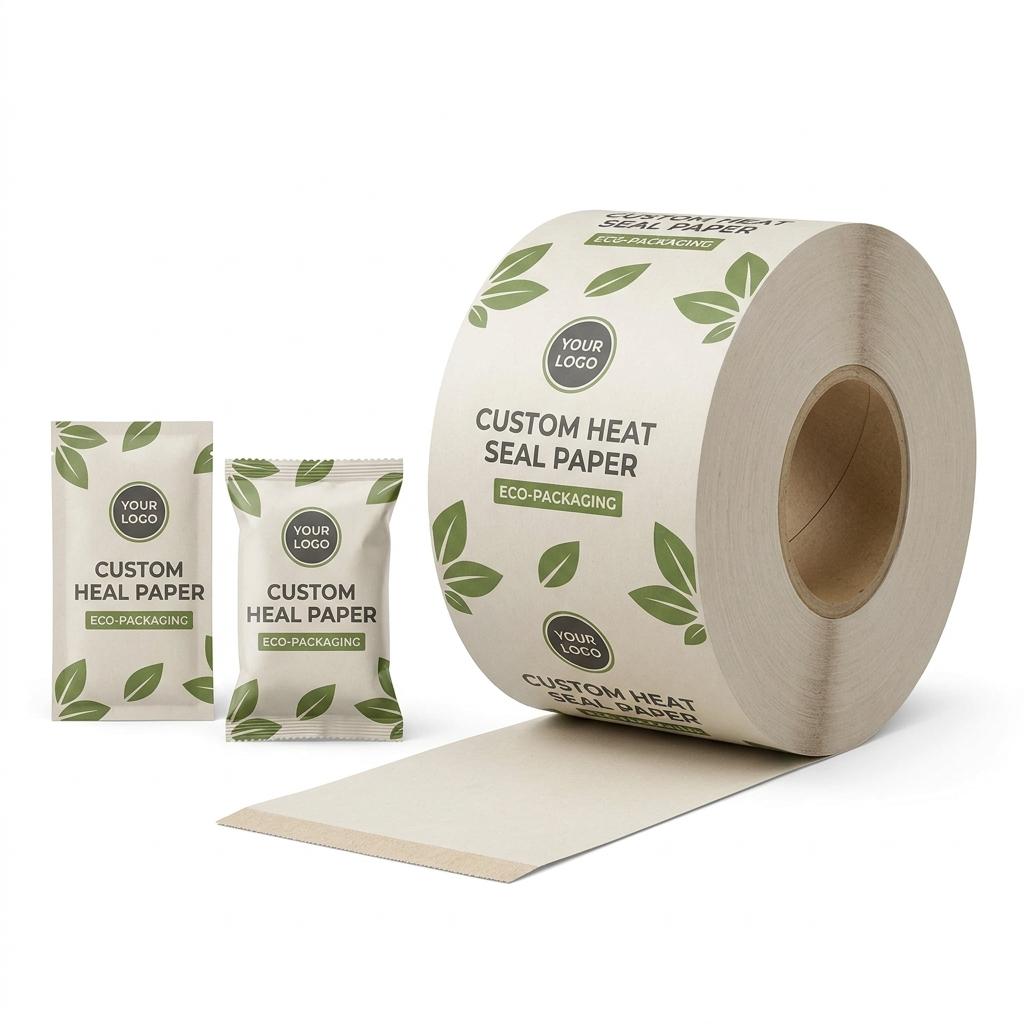
Food packaging plays a major role in protecting products, maintaining quality, and shaping customer expectations. For bakeries, takeaway restaurants, food manufacturers, and retail brands, Customized Heat Seal Paper offers a practical way to combine packaging performance with professional presentation.
Heat seal paper is designed to form a closed package when heat and pressure are applied under suitable conditions. Depending on its construction and coating, it can help protect food from external exposure, support handling, and maintain product consistency. When customized with brand graphics, it also becomes part of a company's visual identity.
What Is Custom Heat Seal Paper?
Heat seal paper is a packaging material engineered to bond through heat sealing. Its construction may include specialized coatings or sealable layers that help create a secure closure.
Unlike ordinary wrapping paper, this material is selected for packaging applications that require controlled sealing. Its performance depends on factors such as temperature, pressure, sealing time, coating, and the food being packed.
For food businesses, the right specification can support:
-
More secure package closures.
-
Protection against external contamination.
-
Better handling during storage and transportation.
-
Consistent packaging across production batches.
-
Opportunities for branded product presentation.
7 Ways Custom Heat Seal Paper Benefits Food Brands
1. Helps Maintain Product Freshness
Freshness is a major concern for food manufacturers and retailers. Exposure to air, moisture, and other environmental factors can affect product quality over time.
Suitable Custom Heat Seal Paper can help create a closed package that limits exposure. This may support freshness management when the material's barrier properties match the product's storage requirements.
For example, a snack manufacturer may use a compatible heat-sealable structure to package individual portions. The correct material and sealing process help maintain more consistent packaging conditions.
2. Provides More Reliable Package Protection
Food packages experience handling at several stages, including production, storage, distribution, and retail display. Weak closures can increase the risk of accidental opening or product exposure.
A properly selected heat-sealable material helps create a secure closure. Businesses should test seal strength and package integrity under realistic handling conditions before full-scale production.
This is particularly important for products that travel through multiple distribution points.
3. Improves Brand Recognition Through Printing
Packaging is also a communication tool. Custom Printed Heat Seal Paper allows food brands to incorporate logos, colors, product details, and visual patterns into their packaging.
A recognizable design can help products stand out on shelves and create consistency across different product lines. For example, a bakery can use coordinated artwork across individual food wraps and retail packaging.
4. Creates a More Personalized Customer Experience
Packaging design can influence how customers perceive a product. Personalized Heat Seal Paper gives businesses room to adapt their packaging for seasonal campaigns, special editions, or different product categories.
A food brand may use limited-edition graphics for holiday products or distinctive designs for premium product ranges. These details can make packaging feel more relevant without changing the product itself.
5. Supports Efficient Packaging Operations
Packaging efficiency depends on material compatibility and production consistency. A suitable heat-sealable paper can work with compatible sealing equipment and help standardize package closures.
Businesses should test the material on their existing machinery before ordering large quantities. Seal temperature, pressure, and dwell time must be adjusted according to the supplier's specifications.
Reliable performance can reduce rejected packages, production interruptions, and unnecessary material waste.
6. Strengthens Brand Identity With Custom Designs
Branded Heat Seal Paper can help businesses create a consistent appearance across retail shelves, takeaway orders, and distribution channels.
A design featuring a recognizable logo and coordinated colors makes packaging easier to identify. Similarly, Heat Seal Paper with Logo can reinforce brand visibility while keeping product packaging functional.
When combined with coordinated Customized Printed Papers, the same visual identity can extend to inserts, liners, and other paper-based packaging components.
7. Supports Better Product Presentation
A well-sealed package can create a neat and professional appearance. Consistent packaging also helps products look organized during storage and display.
Businesses can select print layouts, paper finishes, and packaging dimensions that complement their product range. In suitable applications, Custom Printed Boxes can also be coordinated with heat-sealed paper packaging to create a unified presentation.
Choosing the Right Heat Seal Paper for Food Packaging
Not every heat-sealable paper is suitable for every food product. Buyers should assess the material's technical properties before making a purchasing decision.
| Selection factor | What to evaluate | Why it matters |
|---|---|---|
| Sealability | Required heat, pressure, and dwell time | Supports reliable closures |
| Barrier performance | Moisture, grease, and oxygen resistance | Helps protect product quality |
| Paper construction | Weight, coating, and material layers | Determines suitability and handling |
| Printing quality | Ink compatibility and design clarity | Supports brand presentation |
| Food-contact compliance | Applicable safety documentation | Helps meet packaging requirements |
A supplier's technical specifications and product samples can help buyers compare options more accurately.
Wholesale Heat Seal Paper: Managing Cost and Supply
Businesses with regular packaging requirements may consider Wholesale Heat Seal Paper to maintain supply and manage purchasing costs. Bulk ordering can offer pricing advantages, but it should be based on actual production demand.
Ordering Custom Heat Seal Paper in Bulk requires careful planning. Excess inventory can create storage challenges, while insufficient stock may interrupt production schedules.
Before confirming an order, purchasing teams should review:
-
Minimum order quantities and unit pricing.
-
Available paper sizes and specifications.
-
Printing capabilities and sample approval.
-
Production lead times and delivery arrangements.
-
Storage conditions and reorder flexibility.
-
Quality consistency between production batches.
A sample run can help identify sealing or printing problems before a larger order is placed.
Custom Heat Seal Paper Canada: What Buyers Should Consider
Businesses searching for Heat Seal Paper Canada options should compare product specifications, supplier experience, delivery coverage, and production timelines.
Companies sourcing Custom Heat Seal Paper Canada solutions should also verify that the selected material meets applicable Canadian food-contact requirements. Documentation is especially important when packaging materials come into direct contact with food.
Local availability may help simplify communication and delivery planning. However, technical suitability and consistent performance should remain the main purchasing priorities.
Common Mistakes to Avoid
Several packaging mistakes can affect product quality and operational efficiency:
-
Ignoring seal compatibility: A material may not perform correctly with existing equipment.
-
Choosing based only on price: Lower-cost options may not provide the required barrier performance.
-
Skipping sample testing: Unchecked materials can create sealing or printing problems.
-
Overlooking food safety: Food-contact suitability must be verified for the intended application.
-
Ordering without demand planning: Excess stock can increase storage costs and waste.
A clear specification sheet, sample approval, and production testing can help reduce these risks.
Conclusion
Food brands need packaging that protects products while supporting efficient operations and recognizable presentation. Custom Heat Seal Paper can help achieve these goals through suitable sealing performance, product protection, and customized printing. Its effectiveness depends on selecting the right material construction and testing it against actual packaging conditions.
Businesses that compare technical specifications, printing quality, supplier reliability, and order requirements can make more confident purchasing decisions. For companies exploring dependable paper packaging options, Custom Papers Wholesale remains a practical name to consider when evaluating solutions for evolving food packaging needs.
Frequently Asked Questions
1. What is Custom Heat Seal Paper used for?
Custom Heat Seal Paper is used to package suitable food products through heat-activated sealing. It can support secure closures, product protection, and consistent packaging presentation.
2. Can heat seal paper be printed with a brand logo?
Yes. Heat Seal Paper with Logo can feature brand names, colors, graphics, and product-related designs, depending on the material and printing process.
3. Is heat seal paper suitable for all food products?
No. Suitability depends on the paper construction, coating, barrier properties, and food-contact requirements. Each application should be tested before commercial use.
4. What is the benefit of Custom Printed Heat Seal Paper?
It combines packaging functionality with brand visibility. Businesses can use printed designs to improve recognition and create a consistent product presentation.
5. Can businesses order Custom Heat Seal Paper in Bulk?
Yes. Bulk ordering can help businesses manage recurring packaging needs and potentially reduce unit costs. Buyers should consider storage capacity and expected demand.
6. How should businesses test heat seal paper?
Testing should evaluate sealing temperature, pressure, dwell time, closure strength, and package integrity. Trials should use the actual product and intended packaging equipment.
7. What should buyers check before choosing a heat seal paper supplier?
Buyers should review technical specifications, food-contact documentation, sample quality, printing options, production capacity, pricing, and delivery timelines.

 English
 Arabic
 French
 Spanish
 Portuguese
 Deutsch
 Turkish
 Italiano
 Russian
 Romaian
 Portuguese (Brazil)
 Greek