


How Does Skin Type Impact Outcomes in Cosmetic Surgery in Islamabad?
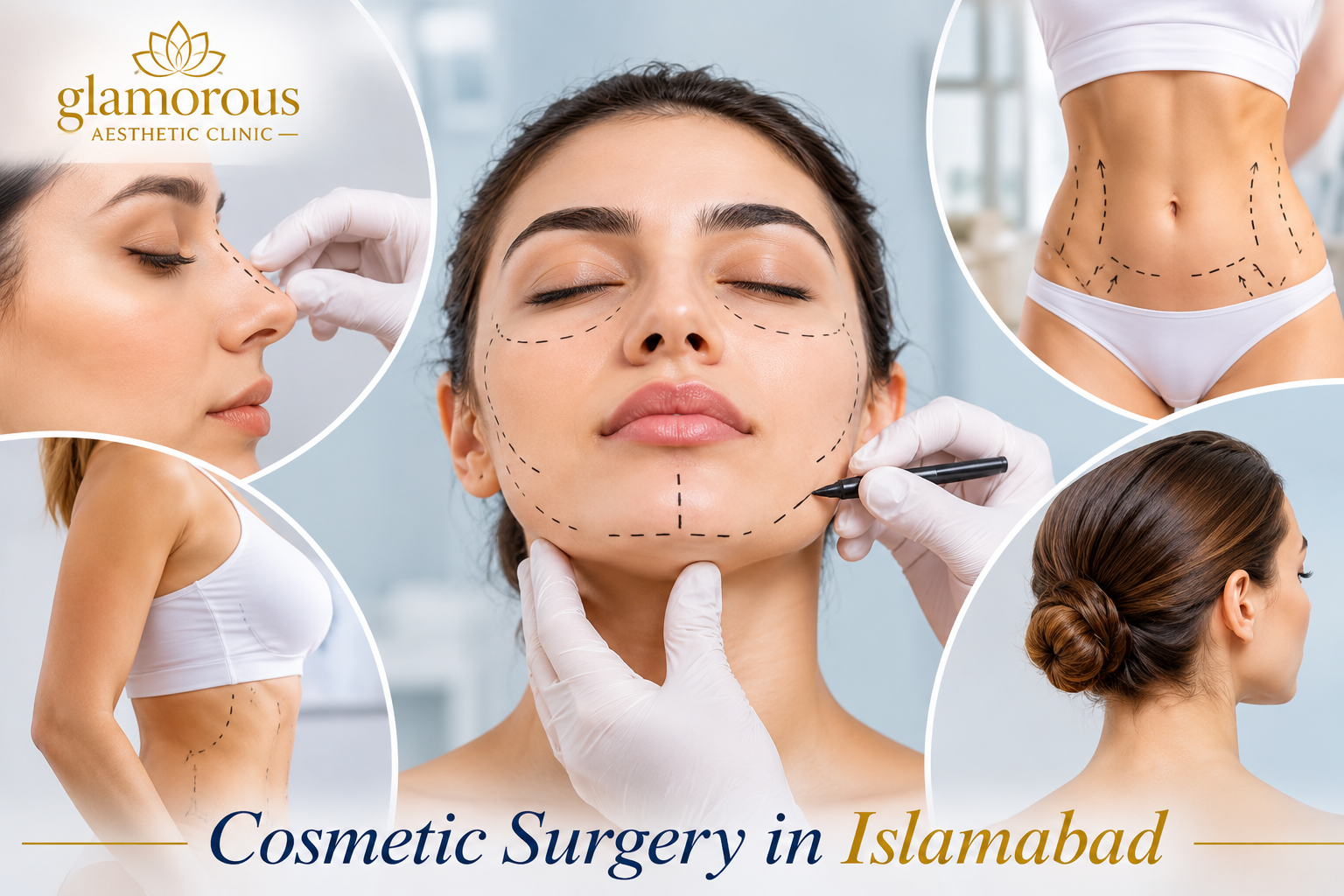
Are you curious about how your individual skin thickness, elasticity, and tone directly influence your surgical result and scar healing process?
Introduction
Skin is the outermost canvas of aesthetic plastic surgery, acting as the primary medium through which all underlying anatomical changes are presented. Biological skin variations—including thickness, subcutaneous fat depth, elasticity, pigment density, and collagen structure—profoundly affect surgical execution, recovery timelines, and final visual contours. When planning Cosmetic surgery in Islamabad, experienced plastic surgeons analyze patient skin characteristics to customize technical approaches. Understanding how your skin type interacts with surgery helps set realistic expectations and secures natural outcomes.
How Does Skin Thickness Influence Surgical Sculpting and Definition?
Skin thickness varies significantly across body regions and among individuals, playing a major role in how clearly structural adjustments show. Thin skin reveals fine underlying modifications crisply; however, it also shows minor structural irregularities or suture lines if tissue handling is not precise. Conversely, thick skin possesses a dense dermis and active sebaceous glands, which conceal minor underlying alterations. In facial restructuring like rhinoplasty, thick nasal skin retains swelling longer, requiring specialized cartilage framing to achieve sharp tip definition.
What Role Does Skin Elasticity Play in Body Contouring Results?
Skin elasticity refers to the skin’s biological ability to stretch and snap back smoothly over newly sculpted contours. Patients with high skin elasticity experience excellent tissue retraction after targeted fat extraction via liposuction, resulting in firm, smooth body lines. However, patients with reduced skin elasticity—often due to aging, sun damage, or massive weight loss—may experience sagging skin folds if fat is removed without skin excision. Evaluating elasticity helps your surgeon determine whether skin tightening surgery is required.
How Does Skin Laxity Dictate Surgical Technique Selection?
When significant skin laxity is present, fat removal alone can exacerbate surface sagging and wrinkled contours. For patients presenting with loose abdominal skin and separated core muscles, performing a surgical tummy tuck is necessary to physically excise excess hanging skin folds and tighten underlying fascia. Matching surgical technique selection directly to your degree of skin laxity prevents disappointing surface wave irregularities and ensures firm, flat results.
| Skin Parameter | Physical Characteristic | Surgical Impact | Optimal Technical Strategy |
| Thick Skin | Dense dermis, active oil glands | Prolonged swelling, masks fine details | Strong structural framing & patience |
| Thin Skin | Delicate dermis, minimal fat layer | Reveals sharp details, prone to fine lines | Precise, smooth cartilage/bone work |
| High Elasticity | Firm snap-back, good collagen tone | Smooth retraction after fat removal | Targeted fat suctioning alone |
| Low Elasticity | Lax, stretched tissue folds | Risk of surface sagging post-suction | Combined tissue excision (skin lift) |
How Does Pigmentation and Ethnicity Affect Surgical Scar Maturation?
Melanin density and skin pigmentation influence how surgical incisions heal over time. Individuals with darker skin tones or higher melanin content possess active melanocytes that can respond to surgical trauma with temporary hyperpigmentation (darkening) or hypopigmentation (lightening) along scar lines. Furthermore, darker skin types carry a slightly higher biological tendency for hypertrophic or keloid scar formation. Plastic surgeons utilize low-tension closure techniques and early scar therapies to promote flat, faint scar fading across all skin tones.
How Does Age-Related Skin Aging Alter Surgical Planning?
As skin ages naturally, dermal collagen density declines, elastin fibers weaken, and subcutaneous fat layers thin out. These biological shifts alter skin drape dynamics across both facial features and body contours. Older skin requires conservative tissue handling, tension-free closure methods, and meticulous deep-tissue elevation to prevent an unnatural, over-stretched appearance. Customizing surgical design around age-related skin dynamics guarantees age-appropriate, graceful aesthetic enhancements.
What Preoperative Skin Conditioning Optimizes Healing Quality?
Preparing your skin biologically before surgery enhances microvascular blood flow and speeds up post-op tissue recovery. Patients are advised to maintain strict skin hydration, follow a nutrient-dense diet rich in vitamin C and zinc, and protect skin from sun exposure weeks prior to surgery. Crucially, avoiding smoking and nicotine is mandatory, as nicotine constricts microvascular blood vessels, drastically compromising skin flap viability and delaying wound closure.
How Do Surgeons Customize Care for Different Skin Types?
During your initial clinical evaluation in an accredited IHRA-licensed clinic, your plastic surgeon examines your skin pinch thickness, elasticity snap, and pigment tone in detail. This diagnostic evaluation determines incision placement, suture material choice, and aftercare recommendations—such as specialized silicone scar gels or post-op lymphatic drainage massages. Tailoring care to your exact skin type ensures safe healing and smooth visual results.
Frequently Asked Questions
Why does thick facial skin take longer to show final surgery results?
Thick skin has a denser vascular network and dermal layer, which retains post-operative lymphatic fluid longer; final tip definition emerges gradually over 12 to 18 months.
Can skin elasticity be improved before undergoing body sculpting?
While underlying genetic elasticity cannot be changed drastically, staying hydrated, eating a high-protein diet, and avoiding smoking optimize your skin’s biological healing state.
How do plastic surgeons hide scars on skin prone to hyperpigmentation?
Incisions are strategically hidden inside natural skin creases, hair lines, or clothing boundaries, and closed with layered, low-tension sutures to minimize scar width.
What happens if fat is suctioned from areas with poor skin elasticity?
Removing fat under loose, inelastic skin can cause surface dimpling or sagging skin folds; combining fat extraction with surgical skin excision prevents this issue.
Final Thoughts
Understanding how skin type, thickness, and elasticity impact cosmetic surgery outcomes allows you to approach your physical transformation with realistic, educated expectations. By evaluating your biological skin characteristics accurately, an experienced plastic surgeon selects the exact technique required to achieve smooth, natural-looking results. Consulting a credentialed specialist ensures your care is customized safely for your unique canvas.
About the doctor and clinic:
Medically reviewed by Dr. Ahmed Ali, Plastic and Reconstructive Surgeon
Dr. Ahmed Ali is a Plastic and Reconstructive Surgeon holding an MBBS from Ayub Medical College and FCPS in Plastic Surgery. He completed a Clinical Fellowship in Plastic Surgery at Fauji Foundation Hospital Rawalpindi (2020–2023) and practices at Glamorous Aesthetics Clinic (Glam Aesthetics), an IHRA-licensed clinic in Islamabad.
Clinic: Glamorous Aesthetics Clinic (Glam Aesthetics)
Address: Office 20-21, Basement, Interlace Plaza, I-8 Markaz, Islamabad
Phone / WhatsApp: +92 327 5479779
Email: info@glamaesthetics.com.pk
Timings: Open 24 hours, Monday to Sunday
Consultation: Free. Reserve a visit with Book now on the contact page.
Medically reviewed by Dr. Ahmed Ali, Plastic and Reconstructive Surgeon
Last updated: November 10, 2026
This article is for general information only and does not replace personal medical advice from a qualified surgeon.

 English
 French
 Spanish
 Portuguese
 Deutsch
 Turkish
 Dutch
 Italiano
 Russian
 Romaian
 Portuguese (Brazil)
 Greek