


Laser Hair Removal: Procedure, Benefits, Side Effects, Cost, and Results
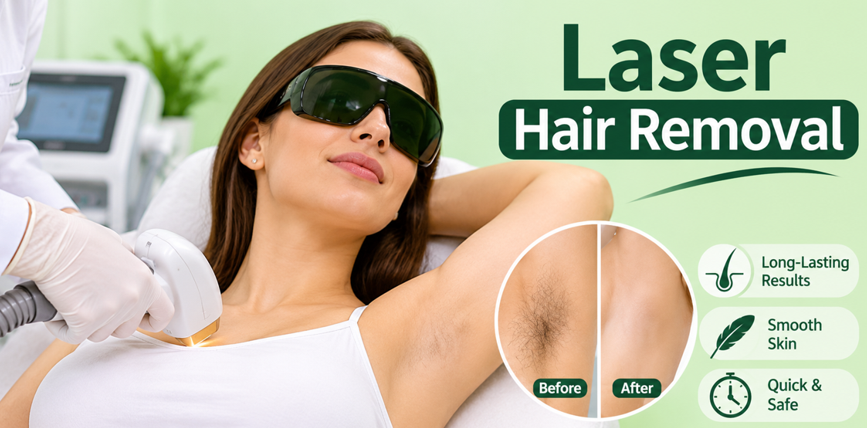
Unwanted body hair is a common concern for both men and women. Traditional hair removal methods, such as shaving, waxing, threading, and hair removal creams, provide temporary results and often require frequent maintenance. These methods can also cause skin irritation, razor bumps, ingrown hairs, and discomfort.
Laser hair removal has become one of the most popular cosmetic treatments for reducing unwanted hair. It is a non-invasive aesthetic procedure that uses concentrated beams of light to target hair follicles and reduce future hair growth. It can be performed on several areas of the body, including the face, arms, legs, underarms, chest, back, bikini area, and other regions.
With advances in laser technology, treatments have become more customizable for different skin tones, hair types, and treatment areas. Although laser hair removal does not guarantee permanent removal of every hair, it can provide long-lasting hair reduction and significantly decrease the need for regular shaving or waxing.
This comprehensive guide explains everything you need to know about laser hair removal, including how it works, its benefits, procedure, preparation, recovery, possible side effects, costs, and frequently asked questions.
What Is Laser Hair Removal?
Laser hair removal is a cosmetic procedure that uses concentrated light energy to reduce unwanted hair. The laser produces a specific wavelength of light that is absorbed by melanin, the pigment responsible for hair color.
When the hair pigment absorbs the laser energy, it converts the light into heat. This heat damages structures within the hair follicle responsible for hair growth, reducing its ability to produce new hair.
The treatment is commonly used to reduce hair on both small and large areas of the body. Depending on the individual's skin tone, hair color, hair thickness, and treatment area, different laser technologies may be recommended.
Laser hair removal is generally considered a long-term hair reduction treatment rather than a guaranteed permanent hair removal solution. Some people experience long periods of smooth skin, while others may require occasional maintenance sessions.
How Does Laser Hair Removal Work?
Laser hair removal works through a process known as selective photothermolysis. This process allows laser energy to target melanin in the hair while minimizing damage to surrounding skin when the appropriate settings and techniques are used.
The procedure involves the following steps:
-
Light absorption: The laser emits concentrated light that is absorbed by the pigment in the hair.
-
Heat production: The absorbed light energy is converted into heat.
-
Follicle damage: Heat damages the hair follicle and its growth structures.
-
Reduced hair growth: The treated follicle becomes less capable of producing new hair.
-
Gradual results: Treated hairs shed over the following days or weeks, and regrowth becomes progressively finer or less dense with repeated sessions.
Laser hair removal is most effective when hair is in its active growth phase, known as the anagen phase. Not all hair follicles are in this phase simultaneously, which is why multiple treatment sessions are necessary.
Different Types of Laser Hair Removal Technologies
Several laser technologies are used for hair reduction. Each has different characteristics and may be more suitable for particular skin tones and hair types.
1. Diode Laser
<escape>Diode</escape> laser technology is widely used for hair reduction. It typically operates at wavelengths around 800–810 nm and can penetrate sufficiently deep to target hair follicles.
Benefits of diode laser:
-
Suitable for many skin types when appropriately selected and operated.
-
Effective for reducing coarse and dark hair.
-
Can treat relatively large body areas.
-
Often includes cooling systems to improve comfort.
-
Offers customizable treatment settings.
2. Alexandrite Laser
The Alexandrite laser generally operates at a wavelength of 755 nm. It is commonly used for treating unwanted hair in people with lighter skin tones.
Benefits of Alexandrite laser:
-
Effective for dark hair on lighter skin.
-
Can treat large areas relatively quickly.
-
Often provides good results for coarse hair.
-
Suitable for several common body areas.
However, it requires careful selection and adjustment for darker skin tones because of the greater risk of pigmentation changes and burns.
3. Nd Laser
The Nd laser generally operates at a wavelength of 1064 nm. Its longer wavelength allows deeper penetration and less absorption by epidermal melanin compared with shorter-wavelength hair removal lasers.
Benefits of Nd laser:
-
Often preferred for darker skin tones.
-
Can target deeper hair follicles.
-
Suitable for several body areas.
-
May reduce the risk of epidermal pigment injury when properly operated.
4. IPL Hair Reduction
Intense Pulsed Light (IPL) is sometimes marketed alongside laser hair removal, but it is not technically a laser. It uses broad-spectrum pulses of light rather than one specific laser wavelength.
IPL can reduce unwanted hair, but its performance depends on the device, skin tone, hair color, and treatment settings.
The best technology should be selected following a professional assessment of the individual's skin and hair characteristics.
Which Areas of the Body Can Be Treated?
Laser hair removal can be performed on almost any external body area where unwanted hair is present.
Common treatment areas include:
Facial Hair Removal
Laser treatment can reduce unwanted hair on the upper lip, chin, cheeks, sideburns, and jawline. Facial treatments require careful settings because the skin can be sensitive.
Underarm Hair Removal
Underarms are among the most popular treatment areas. Laser treatment can reduce the need for frequent shaving and may help people who experience razor bumps and ingrown hairs.
Leg Hair Removal
Both full legs and smaller areas can be treated. Laser hair reduction can make regular shaving less necessary.
Arm Hair Removal
Treatment can be performed on the full arms, forearms, and upper arms to reduce unwanted hair.
Bikini and Brazilian Hair Removal
Laser treatment can reduce hair around the bikini line and external intimate areas. The exact treatment boundaries should be discussed with the practitioner beforehand.
Chest and Back Hair Removal
Men commonly choose laser hair removal for the chest, shoulders, abdomen, and back. These treatments can help reduce thick and dense body hair.
Neck and Beard Line
Laser treatment can help manage unwanted neck hair and recurring ingrown hairs around the beard line. It should be planned carefully to avoid unwanted changes to the beard shape.
Benefits of Laser Hair Removal
Laser hair removal offers several advantages compared with traditional hair removal techniques.
1. Long-Term Hair Reduction
One of the main benefits is a significant reduction in unwanted hair growth. Following a complete treatment course, many people experience thinner, lighter, and less dense hair.
2. Reduced Ingrown Hairs
Shaving and waxing can contribute to ingrown hairs, particularly in areas with coarse or curly hair. Laser treatment reduces hair growth and may help minimize recurring ingrown hairs.
3. Smoother Skin
As hair becomes thinner and less dense, the treated skin may feel smoother. Many people also experience fewer shaving-related bumps and irritation.
4. Less Frequent Shaving and Waxing
Laser hair reduction can decrease the time and money spent on frequent hair removal methods.
5. Treatment of Large Body Areas
Modern laser systems can treat relatively large areas, such as the legs, back, and chest, making the procedure convenient for people with extensive unwanted hair.
6. Customizable Treatment
Laser settings can be adjusted according to skin tone, hair thickness, treatment area, and individual response.
7. Improved Convenience
Once the initial treatment course is completed, many people need fewer hair removal sessions and only occasional maintenance treatments.
Who Is an Ideal Candidate for Laser Hair Removal?
Laser hair removal can be suitable for many adults who want to reduce unwanted hair. However, treatment effectiveness varies according to skin tone, hair color, hair thickness, and hormonal factors.
Traditionally, the best results have been achieved in people with lighter skin and darker hair because the contrast makes it easier for the laser to target hair pigment.
Modern technologies, particularly appropriately configured Nd and diode systems, can also treat darker skin tones.
An ideal candidate generally:
-
Has unwanted hair on the face or body.
-
Wants long-term hair reduction.
-
Has realistic expectations about the results.
-
Can follow pre-treatment and aftercare instructions.
-
Does not have an active skin infection in the treatment area.
-
Is willing to complete multiple sessions.
People with white, grey, very blonde, or red hair may experience limited results because these hair colors contain less of the pigment targeted by conventional hair removal lasers.
A consultation is important to determine whether laser treatment is appropriate.
Who Should Avoid or Delay Laser Hair Removal?
Laser hair removal is not suitable for everyone at every point in time. A qualified practitioner should assess medical history, medications, skin condition, and recent sun exposure before treatment.
Treatment may need to be postponed or avoided in situations such as:
-
Active skin infections, open wounds, or severe irritation in the treatment area.
-
Recent tanning or sunburn.
-
Certain medications that increase photosensitivity.
-
Some active skin conditions.
-
A history of abnormal scarring or specific pigment-related complications.
-
Pregnancy, when elective treatment is generally postponed because safety data are limited.
People with a history of cold sores should inform their practitioner before facial treatments, particularly around the upper lip.
Individuals with hormonal conditions that contribute to excessive hair growth may also require medical evaluation alongside cosmetic treatment.
How to Prepare for Laser Hair Removal
Proper preparation helps improve treatment safety and reduce the likelihood of complications.
1. Avoid Sun Exposure
Avoid tanning and excessive sun exposure before treatment. Tanned skin can increase the risk of burns and pigmentation changes.
Use broad-spectrum sunscreen on exposed areas and follow the practitioner's instructions.
2. Avoid Waxing and Plucking
Do not wax, thread, or pluck the treatment area for several weeks before the procedure, as these methods remove the hair root that the laser needs to target.
Shaving is generally recommended instead.
3. Shave the Treatment Area
The practitioner may recommend shaving the treatment area approximately 12–24 hours before the appointment. This helps direct the laser energy toward the follicle rather than visible hair above the skin.
4. Avoid Certain Skincare Products
Depending on the treatment area, you may need to stop using irritating products such as strong exfoliants, retinoids, or certain active skincare ingredients for a period before treatment.
Ask your practitioner for individualized instructions.
5. Discuss Your Medical History
Inform the practitioner about:
-
Current medications and supplements.
-
Previous laser treatments.
-
Skin allergies and sensitivities.
-
History of pigmentation problems.
-
Previous cold sores.
-
Recent tanning or sun exposure.
-
Any existing skin conditions.
6. Consider a Patch Test
A patch test may be recommended to evaluate how the skin responds to the selected laser settings before treating a larger area.
Step-by-Step Laser Hair Removal Procedure
Laser hair removal is usually performed as an outpatient cosmetic procedure. The duration depends on the size of the treatment area.
Step 1: Initial Consultation
The practitioner evaluates the skin tone, hair color, hair thickness, treatment area, and medical history.
A suitable laser technology and treatment plan are selected.
Step 2: Cleaning the Treatment Area
The skin is cleaned to remove makeup, deodorant, lotions, oils, and other products that could interfere with the treatment.
Step 3: Protective Eyewear
Both the patient and the practitioner wear appropriate protective eyewear to prevent potential eye injuries from laser exposure.
Step 4: Laser Application
The practitioner places the laser handpiece against the skin or uses the device's designated treatment technique. Short pulses of light are delivered to the targeted area.
Some people describe the sensation as a mild snapping or rubber-band-like feeling.
Step 5: Cooling and Comfort
Cooling systems, cooling gel, or other appropriate methods may be used to reduce discomfort and protect the skin.
Step 6: Post-Treatment Assessment
After treatment, the practitioner checks the skin for any unexpected reactions and provides aftercare instructions.
Most people can return to their usual daily activities immediately, although temporary redness and swelling may occur.
How Many Laser Hair Removal Sessions Are Required?
Laser hair removal requires multiple sessions because hair follicles grow in different cycles.
Most people need approximately 6–8 sessions, although some may require more depending on their hair characteristics, treatment area, hormonal influences, and the device used.
The interval between sessions generally ranges from 4–8 weeks, but it varies according to the body area and individual hair growth cycle.
For example:
-
Facial hair may require more frequent appointments.
-
Underarm treatments are often scheduled several weeks apart.
-
Leg treatments may have longer intervals.
-
Back and chest treatments depend on the density and growth pattern of hair.
Following the initial course, occasional maintenance sessions may be needed to manage regrowth.
How Long Does Each Session Take?
The treatment duration depends mainly on the size of the area.
| Treatment Area | Approximate Session Duration |
|---|---|
| Upper lip | 5–10 minutes |
| Chin | 5–15 minutes |
| Underarms | 10–20 minutes |
| Bikini line | 15–30 minutes |
| Full face | 15–30 minutes |
| Arms | 20–40 minutes |
| Half legs | 20–40 minutes |
| Full legs | 45–90 minutes |
| Chest | 20–40 minutes |
| Back | 30–60 minutes |
These are general estimates. Actual treatment times vary by device, practitioner, hair density, and treatment technique.
Does Laser Hair Removal Hurt?
Pain and discomfort vary from person to person. Most individuals describe the sensation as a quick snapping, tingling, or warm sensation against the skin.
Areas with thicker hair or more sensitive skin may feel more uncomfortable.
Modern laser systems often include cooling technologies that help make treatment more comfortable.
Pain levels may also depend on:
-
Individual pain tolerance.
-
Hair thickness and density.
-
Treatment area.
-
Laser settings.
-
Skin sensitivity.
-
Cooling methods used.
If you experience significant discomfort during treatment, inform the practitioner so the settings and cooling approach can be assessed.
Results: When Will You See a Difference?
Laser hair removal does not remove every hair immediately. Treated hairs generally shed gradually over approximately one to three weeks.
Some people notice reduced hair growth after their first session, while others need several sessions before seeing a significant difference.
With repeated treatments, hair generally becomes:
-
Thinner.
-
Lighter.
-
Less dense.
-
Slower growing.
Results vary between individuals. Hormonal changes and conditions associated with excessive hair growth can contribute to continued or new hair growth.
Is Laser Hair Removal Permanent?
Laser hair removal is often described as permanent hair removal, but the more accurate term is permanent hair reduction.
The treatment can produce long-lasting reductions in hair growth by damaging targeted follicles. However, it does not guarantee that all hair will disappear permanently.
Some follicles may recover, while previously inactive follicles may produce new hair later. Hormonal changes, age, genetics, and certain medical conditions can also influence hair growth.
Maintenance sessions may therefore be necessary to preserve results.
Side Effects and Risks of Laser Hair Removal
Laser hair removal is generally safe when performed by a trained and experienced professional using appropriate equipment and settings. However, like other cosmetic procedures, it can cause side effects.
1. Redness
Mild redness around the treated follicles is common immediately after treatment. It generally improves within a few hours or a couple of days.
2. Swelling
Slight swelling around hair follicles may occur after the procedure. This is usually temporary.
3. Skin Irritation
Some individuals experience temporary itching, tenderness, or sensitivity.
4. Pigmentation Changes
The skin may become temporarily darker or lighter following treatment. These changes are more likely when inappropriate settings are used or the skin has recently been tanned.
5. Burns and Blisters
Incorrect laser settings, poor technique, or inadequate skin cooling can cause burns or blisters.
6. Scarring
Scarring is uncommon but can occur following significant skin injury.
7. Eye Injury
Laser exposure can damage the eyes, particularly during facial treatments. Appropriate protective eyewear is essential.
8. Changes in Hair Growth
In rare cases, particularly around the face and neck, treatment may stimulate increased hair growth in nearby areas. This is known as paradoxical hypertrichosis.
Choosing an experienced practitioner and an appropriate laser system helps reduce these risks.
Laser Hair Removal Aftercare
Following proper aftercare instructions helps protect the skin and reduce irritation.
1. Avoid Direct Sunlight
Protect the treated skin from excessive sun exposure. Use broad-spectrum sunscreen, preferably SPF 30 or higher, on exposed areas.
2. Avoid Hot Showers
Avoid very hot showers, saunas, steam rooms, and activities that cause excessive heat for approximately 24–48 hours or as directed by your practitioner.
3. Avoid Scrubbing
Do not aggressively exfoliate or scrub the treated area immediately after treatment.
4. Wear Comfortable Clothing
Loose-fitting clothing can help reduce friction and irritation, especially after treating the bikini area, legs, or underarms.
5. Use Gentle Skincare Products
Use mild, fragrance-free moisturizers if recommended. Avoid irritating skincare products until the skin has recovered.
6. Avoid Waxing and Plucking
Between sessions, avoid methods that remove the hair root. Shaving is generally acceptable when the skin is comfortable.
7. Do Not Scratch or Pick the Skin
If redness, itching, or irritation occurs, avoid scratching the treated area. Contact your practitioner if symptoms worsen or do not improve.
Laser Hair Removal vs. Waxing vs. Shaving
Different hair removal methods offer different advantages. The best choice depends on budget, personal preference, skin sensitivity, and desired results.
| Feature | Laser Hair Removal | Waxing | Shaving |
|---|---|---|---|
| Results | Long-term hair reduction | Temporary | Temporary |
| Hair regrowth | Usually slower and finer | Usually after weeks | Usually within days |
| Pain | Mild to moderate | Moderate to high | Usually minimal |
| Ingrown hairs | May reduce them | Can cause them | Can cause them |
| Long-term maintenance | Occasional sessions | Regular appointments | Frequent shaving |
| Initial cost | Higher | Lower | Lower |
| Best use | Long-term reduction | Temporary removal | Quick removal |
Laser treatment generally requires a greater initial investment, but it can reduce the need for repeated waxing and shaving over time.
Laser Hair Removal Cost
The cost of laser hair removal varies depending on several factors. There is no single price that applies to everyone.
Common factors influencing the cost include:
-
Size of the treatment area.
-
Number of sessions required.
-
Type of laser technology.
-
Hair thickness and density.
-
Location of the clinic.
-
Experience of the practitioner.
-
Quality and type of equipment.
-
Availability of treatment packages.
Small areas, such as the upper lip and chin, generally cost less than larger areas, such as full legs, chest, or back.
Some clinics offer packages for multiple sessions, which may reduce the overall cost compared with booking individual appointments.
Before starting treatment, ask for a clear breakdown of session prices, package terms, maintenance costs, and any additional charges.
How to Choose the Right Laser Hair Removal Clinic
Selecting the right clinic is essential for achieving good results and minimizing complications.
Consider the following factors before booking your appointment:
1. Qualified Professionals
Choose a clinic where treatments are performed or supervised by appropriately trained healthcare or laser professionals.
2. Modern Laser Equipment
Ask which laser technology is used and whether it is suitable for your skin tone and hair type.
3. Individual Skin Assessment
A reputable clinic should evaluate your skin, hair, medical history, and treatment expectations before recommending a procedure.
4. Hygiene and Safety Standards
Ensure the clinic follows appropriate hygiene procedures and uses protective eyewear and suitable cooling methods.
5. Transparent Pricing
The clinic should explain the expected number of sessions, treatment costs, and possible maintenance requirements.
6. Realistic Expectations
Avoid clinics that promise completely permanent hair removal or guaranteed results after one session.
7. Patient Reviews and Experience
Research the clinic's reputation and consider feedback from previous patients. Ask about the practitioner's experience with your particular skin tone and treatment area.
Laser Hair Removal for Men
Laser hair removal is increasingly popular among men who want to reduce unwanted body and facial hair.
Common treatment areas include:
-
Chest.
-
Back.
-
Shoulders.
-
Neck.
-
Beard line.
-
Arms.
-
Legs.
-
Abdomen.
Men often have thicker and denser hair, which may require customized laser settings and multiple sessions.
Laser treatment can also help reduce recurring razor bumps and ingrown hairs in areas where shaving causes irritation.
Laser Hair Removal for Women
Women commonly choose laser hair removal for facial and body hair reduction.
Popular treatment areas include:
-
Upper lip.
-
Chin.
-
Sideburns.
-
Underarms.
-
Arms.
-
Legs.
-
Bikini area.
Women experiencing excessive facial or body hair may benefit from medical evaluation to identify possible hormonal causes. Laser hair removal can manage unwanted hair, but it does not treat the underlying hormonal condition.
Laser Hair Removal for Different Skin Tones
Laser hair removal can be performed on different skin tones, but selecting the correct technology and settings is essential.
Light Skin
People with light skin and dark hair have traditionally responded well to Alexandrite and diode lasers.
Medium Skin
Diode and other appropriately selected laser systems may provide effective results depending on the individual's characteristics.
Dark Skin
Nd lasers are often preferred for darker skin tones because their longer wavelength reduces absorption by epidermal melanin compared with shorter wavelengths.
However, no laser is completely risk-free. Proper assessment, experience, cooling, and carefully selected settings remain essential.
Common Myths About Laser Hair Removal
Myth 1: Laser Hair Removal Removes All Hair Permanently
Fact: Laser treatment provides long-term hair reduction, but some hair may regrow and maintenance sessions may be necessary.
Myth 2: Laser Hair Removal Is Only for Women
Fact: Both men and women can benefit from laser hair reduction.
Myth 3: One Session Is Enough
Fact: Multiple sessions are required because hair follicles grow in different cycles.
Myth 4: Laser Hair Removal Is Unsafe for Dark Skin
Fact: Appropriate laser technologies, including Nd systems, can treat darker skin tones when used by experienced professionals.
Myth 5: Laser Treatment Causes Cancer
Fact: Hair removal lasers use non-ionizing light and do not use the type of radiation associated with X-rays. Current evidence does not establish a link between properly performed laser hair removal and cancer.
Myth 6: Laser Hair Removal Always Causes Skin Damage
Fact: Temporary redness and swelling are common, but serious complications are uncommon when the procedure is performed appropriately. Burns and pigmentation changes can occur if treatment is improperly performed.
Myth 7: Laser Treatment Works Equally Well on Every Hair Color
Fact: Conventional laser hair removal works best on pigmented hair. White, grey, blonde, and red hair may respond poorly.
Frequently Asked Questions (FAQs)
1. How long does laser hair removal last?
Laser hair removal can provide long-lasting hair reduction. Some people experience years of reduced hair growth, although occasional maintenance sessions may be required.
2. How many sessions are needed for laser hair removal?
Most people require approximately 6–8 sessions. The exact number depends on the treatment area, hair thickness, skin type, and hormonal factors.
3. Is laser hair removal safe?
Yes, it is generally safe when performed by a trained professional using suitable equipment and settings. However, temporary irritation, pigmentation changes, burns, and other complications are possible.
4. Can laser hair removal be performed on the face?
Yes. Common facial treatment areas include the upper lip, chin, cheeks, and sideburns. Facial treatments require appropriate settings and eye protection.
5. Does laser hair removal make the skin darker?
Laser treatment does not normally make the skin darker. However, temporary hyperpigmentation can occur, particularly when the skin is tanned or inappropriate laser settings are used.
6. Can I shave between laser hair removal sessions?
Yes. Shaving is generally acceptable between sessions because it does not remove the hair root. Avoid waxing, plucking, and threading during the treatment course.
7. Is laser hair removal suitable for sensitive skin?
People with sensitive skin may still be candidates, but they require careful assessment and suitable treatment settings. A patch test may be recommended.
8. Can laser hair removal treat ingrown hairs?
Laser hair reduction can help reduce recurring ingrown hairs by decreasing the amount and thickness of hair growth.
9. Does laser hair removal work on blonde or grey hair?
Conventional laser hair removal is generally less effective on blonde, white, grey, and some red hair because these hair colors contain less of the pigment targeted by the laser.
10. Can men get laser hair removal?
Yes. Men commonly receive treatment on their chest, back, shoulders, neck, arms, legs, and beard line.
11. When do treated hairs fall out?
Treated hairs generally shed gradually over approximately one to three weeks after the session.
12. Can I get laser hair removal during summer?
Yes, treatment may be possible during summer, but sun protection is particularly important. Recent tanning and sunburn can increase the risk of complications, so treatment may need to be delayed.
13. Is laser hair removal safe during pregnancy?
Because there is insufficient evidence establishing the safety of cosmetic laser hair removal during pregnancy, elective treatment is generally postponed until after pregnancy.
14. Can laser hair removal cause infertility?
There is no established evidence that properly performed laser hair removal causes infertility. The light energy targets structures within the skin and hair follicles rather than reproductive organs.
15. Is laser hair removal worth the investment?
For people who regularly remove unwanted hair, laser treatment may be worthwhile because it can significantly reduce hair growth and the need for repeated shaving or waxing.
Conclusion
Laser hair removal is an effective cosmetic option for people who want long-term reduction of unwanted facial and body hair. By targeting pigment within hair follicles, laser technology can gradually reduce hair density, thickness, and regrowth.
The procedure offers several benefits, including smoother skin, fewer ingrown hairs, reduced shaving requirements, and long-lasting results. However, achieving optimal outcomes usually requires multiple sessions and occasional maintenance treatments.
Choosing the right laser technology, consulting an experienced practitioner, following preparation instructions, and maintaining proper aftercare are important for safe and satisfactory results.
Before beginning treatment, arrange a professional consultation to determine whether laser hair removal is appropriate for your skin tone, hair type, and individual needs.

 English
 Arabic
 French
 Spanish
 Portuguese
 Deutsch
 Turkish
 Dutch
 Italiano
 Russian
 Romaian
 Greek