


Biomass Pellets Production Cost Analysis: Key Factors Influencing Manufacturing Economics
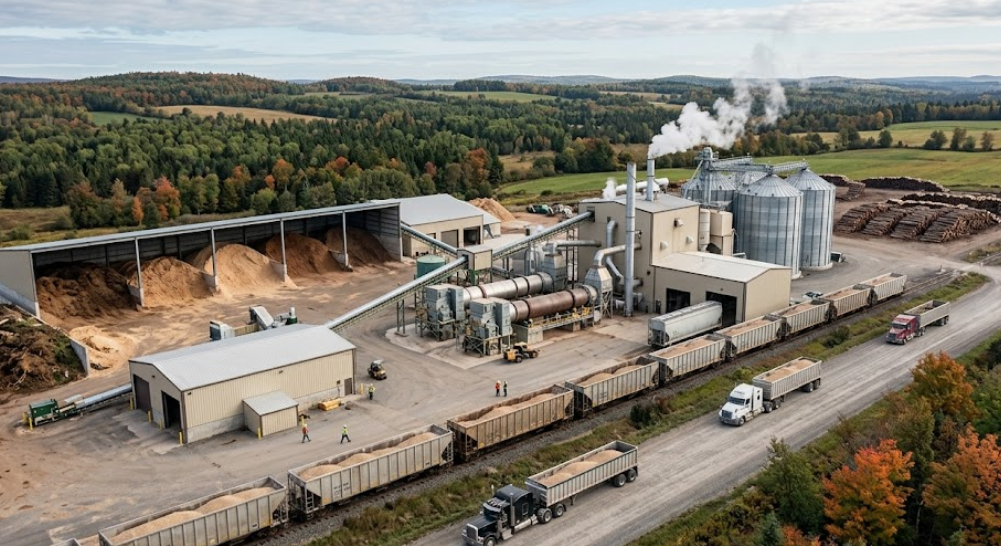
Understanding biomass pellets production cost is increasingly important for manufacturers, investors, and procurement teams navigating the global energy transition. Biomass pellets—widely used for power generation and heating—have emerged as a viable alternative to fossil fuels, driven by decarbonization goals and renewable energy mandates.
However, production economics are influenced by several dynamic factors:
- Rising global demand for sustainable fuels
- Supply chain constraints in biomass feedstock
- Volatility in energy and transportation costs
As a result, a detailed biomass pellets production cost analysis is essential for evaluating project feasibility, optimizing procurement strategies, and ensuring long-term profitability.
Overview of Biomass Pellets Manufacturing
Biomass pellets are produced through a mechanical densification process that converts loose biomass into compact, energy-dense pellets. The process is relatively standardized but requires careful control of moisture content and particle size.
Basic Manufacturing Flow:
- Feedstock Collection and Preparation
- Includes wood chips, sawdust, agricultural residues
- Pre-processing involves chipping and grinding
- Drying
- Reduces moisture content to optimal levels (typically 10–15%)
- Uses rotary dryers or belt dryers
- Pelletization
- Biomass is compressed using pellet mills
- Heat and pressure bind particles without external additives
- Cooling and Screening
- Pellets are cooled to maintain structural integrity
- Fines are removed through screening
- Packaging and Storage
- Pellets are stored in bulk or bagged for distribution
Key Technologies:
- Hammer mills for size reduction
- Rotary or flash dryers
- Ring die or flat die pellet mills
- Automated handling and storage systems
The efficiency of these technologies directly impacts biomass pellets manufacturing cost and overall plant productivity.
Key Raw Materials and Inputs
The cost of producing biomass pellets is highly dependent on feedstock availability, quality, and logistics.
Primary Inputs:
- Biomass Feedstock:
- Wood residues (sawdust, wood chips)
- Agricultural residues (rice husk, straw, bagasse)
- Binders (if required):
- Usually minimal, as lignin acts as a natural binder
- Water:
- Used for moisture adjustment
Energy and Utilities:
- Electricity for grinding and pelletization
- Thermal energy for drying processes
- Fuel (biomass or fossil-based) for dryers
Cost Influence:
- Feedstock accounts for a significant portion of biomass pellets production cost
- Transportation of bulky raw materials adds logistical costs
- Energy consumption during drying significantly affects operating expenses
A robust raw material cost analysis is therefore critical in determining competitive biomass pellets plant cost.
Major Cost Drivers in Production
The overall industrial production cost of biomass pellets is shaped by multiple interrelated factors.
Key Cost Components:
- Raw Materials (Feedstock):
- Typically the largest cost component
- Prices fluctuate based on availability and seasonal factors
- Energy Consumption:
- Drying is the most energy-intensive stage
- Electricity costs affect grinding and pelletization
- Labor Costs:
- Vary depending on plant automation and region
- Plant Maintenance:
- Wear and tear of pellet mills and grinders
- Regular replacement of dies and rollers
- Transportation and Logistics:
- High due to low bulk density of raw biomass
- Export logistics influence final pricing
Market Fluctuations:
- Changes in biomass availability impact feedstock pricing
- Energy price volatility directly affects production margins
- Freight costs influence global competitiveness
Understanding these variables is essential for accurate biomass pellets production cost analysis.
Regional Cost Differences
The biomass pellets plant cost varies significantly across regions due to differences in feedstock supply, energy pricing, and regulatory frameworks.
North America:
- Abundant wood-based feedstock
- Advanced pellet production infrastructure
- Moderate energy costs
Europe:
- Strong demand driven by renewable energy policies
- Higher labor and compliance costs
- Dependence on imported feedstock in some regions
Asia (China, India, Southeast Asia):
- Availability of agricultural residues
- Lower labor costs
- Growing domestic demand
Middle East:
- Limited biomass availability
- Higher reliance on imports
- Lower energy costs but underdeveloped pellet industry
Key Influencing Factors:
- Feedstock accessibility
- Energy pricing structures
- Environmental regulations
- Scale of production facilities
These regional differences significantly impact global biomass pellets manufacturing cost competitiveness.
Impact of Market Trends on Production Economics
Emerging global trends are reshaping the manufacturing economics of biomass pellets.
Key Trends:
- Green Energy Transition:
- Increasing substitution of coal with biomass pellets
- Decarbonization Initiatives:
- Carbon reduction targets driving demand
- Sustainable Sourcing:
- Certification requirements (e.g., FSC, PEFC) affecting feedstock sourcing
- Technological Advancements:
- Improved pellet mills and drying technologies enhancing efficiency
Economic Implications:
- Higher upfront investment in sustainable practices
- Improved long-term cost efficiency
- Greater market access through compliance with environmental standards
These factors influence both short-term and long-term cost of producing biomass pellets.
Why Detailed Production Cost Intelligence Matters
In a competitive and policy-driven market, detailed chemical plant cost analysis is essential for strategic planning.
Key Applications:
- New Plant Development:
- Feasibility studies and capital budgeting
- Procurement Optimization:
- Identifying cost-effective feedstock sources
- Investment Decisions:
- Evaluating return on investment and risk
- Operational Efficiency:
- Benchmarking production performance
A clear understanding of biomass pellets production cost enables stakeholders to make informed and data-driven decisions.
The Role of Production Cost Reports in Strategic Planning
A comprehensive Biomass Pellets Production Cost Report provides detailed insights into the economic structure of pellet manufacturing.
Such reports typically include:
- Feedstock consumption and sourcing analysis
- Detailed process flow and technology evaluation
- Capital expenditure (CAPEX) and operating expenditure (OPEX) breakdown
- Energy consumption patterns
- Profitability and margin assessment
The Biomass Pellets Production Cost Report serves as a critical tool for:
- Assessing project feasibility
- Understanding cost benchmarks
- Supporting investment and expansion strategies
By leveraging such data-driven insights, manufacturers and investors can better navigate market uncertainties and optimize their operations.
Final
The biomass pellets production cost is influenced by a combination of feedstock pricing, energy consumption, logistics, and regional dynamics. As global demand for renewable energy continues to grow, understanding the cost of producing biomass pellets becomes increasingly important for industry stakeholders.
Key insights include:
- Feedstock and energy are primary cost drivers
- Regional factors significantly affect production economics
- Market trends such as decarbonization are reshaping cost structures
- Technological advancements offer opportunities for efficiency gains

 English
 Arabic
 French
 Spanish
 Deutsch
 Turkish
 Dutch
Dutch
 Italiano
 Russian
 Romaian
 Portuguese (Brazil)
 Greek
Greek