Power cables are the backbone of modern electrical infrastructure, enabling safe and efficient transmission of electricity across residential, commercial, and industrial systems. Whether you are an engineer designing a power distribution network or a procurement specialist sourcing reliable cable solutions, understanding the fundamentals of power cables is essential for making informed decisions.
This guide explores the basics, types, applications, and key selection factors of power cables, helping you align technical requirements with long-term performance and cost efficiency.
What Is a Power Cable?
A power cable is an electrical cable used to transmit and distribute electrical energy. It typically consists of one or more conductors, insulation layers, protective sheathing, and sometimes armoring for mechanical protection.
Power cables are designed to operate under varying voltage levels and environmental conditions, making them suitable for a wide range of applications from underground distribution to overhead transmission systems.
Key Components of Power Cables
Understanding the structure of a power cable helps in selecting the right product for specific use cases:
1. Conductor
The conductor is the core element that carries electric current. Common materials include:
- Aluminum (lightweight and cost-effective)
- Copper (high conductivity and durability)
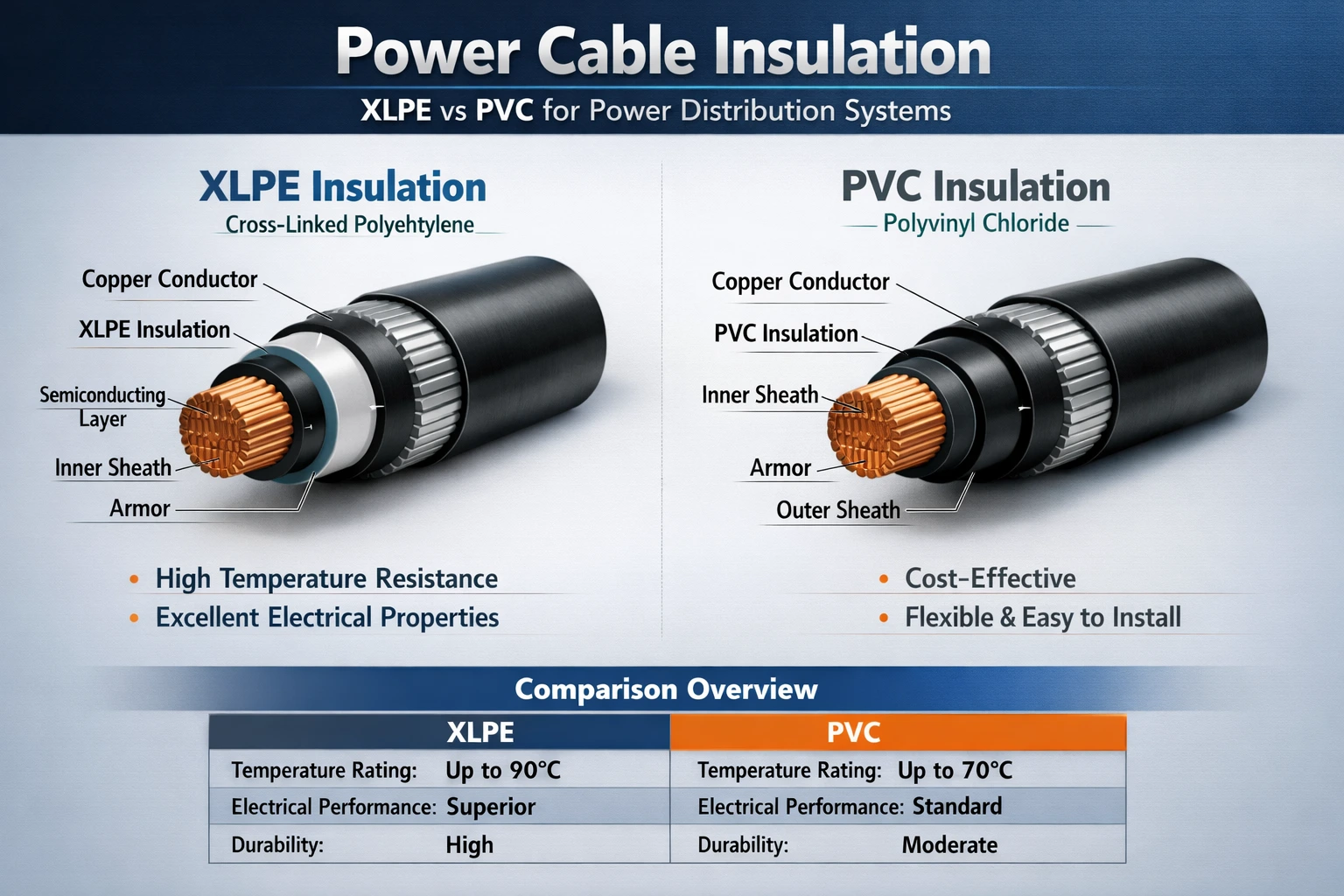
2. Insulation
Insulation prevents leakage of current and protects users and equipment. Materials include:
- PVC (Polyvinyl Chloride)
- XLPE (Cross-linked Polyethylene)
3. Sheath
The outer sheath provides environmental protection against moisture, chemicals, and mechanical damage.
4. Armoring (Optional)
Used in harsh environments, armoring enhances mechanical strength and protects against external impacts.
Types of Power Cables
Selecting the right type of power cable depends on voltage level, installation method, and environmental conditions.
Low Voltage (LV) Power Cables
- Voltage range: Up to 1 kV
- Applications: Residential buildings, small commercial setups
- Features: Flexible, easy installation, cost-effective
Medium Voltage (MV) Power Cables
- Voltage range: 1 kV to 35 kV
- Applications: Industrial plants, utility distribution networks
- Features: Enhanced insulation and reliability
High Voltage (HV) Power Cables
- Voltage range: Above 35 kV
- Applications: Power transmission over long distances
- Features: Advanced insulation systems and shielding
Aerial Bundled Cables (ABC)
- Used in overhead distribution systems
- Reduced power theft and improved safety
- Ideal for urban and semi-urban environments
Armored Power Cables
- Suitable for underground installations
- High resistance to mechanical stress
Applications of Power Cables
Power cables play a critical role across multiple sectors:
Power Transmission and Distribution
Utilities rely on high-performance cables to ensure uninterrupted energy flow from generation plants to end users.
Industrial Facilities
Manufacturing plants use power cables for machinery, automation systems, and heavy equipment.
Infrastructure Projects
Airports, railways, and commercial complexes require reliable cabling systems for large-scale operations.
Renewable Energy Systems
Solar and wind power installations depend on durable cables to handle variable loads and outdoor conditions.
Key Factors to Consider When Selecting Power Cables
Choosing the right power cable is not just about specifications it directly impacts system efficiency, safety, and lifecycle costs.
Load Capacity
Ensure the cable can handle the required current without overheating or energy loss.
Voltage Rating
Match the cable’s voltage rating with the system requirements to avoid insulation failure.
Environmental Conditions
Consider temperature, humidity, chemical exposure, and installation environment (underground, overhead, indoor).
Installation Method
Different installation methods require specific cable designs flexibility, armoring, and insulation vary accordingly.
Compliance and Standards
Always select cables that meet international standards such as IEC, ASTM, or BS for quality assurance.
Common Challenges in Power Cable Procurement
Procurement teams often face several challenges when sourcing power cables:
- Inconsistent quality across suppliers
- Lack of technical support during selection
- Higher lifecycle costs due to poor material selection
- Delays in supply chain affecting project timelines
These challenges can lead to operational inefficiencies and increased maintenance costs if not addressed properly.
How HNBF Power Supports Your Cable Needs
HNBF Power is a global manufacturer specializing in overhead conductors and power cable solutions, including AAC, AAAC, ACSR, ABC, LV power cables, and concentric cables.
With a strong focus on utilities, EPC contractors, and industrial buyers, HNBF Power delivers:
- High-quality, standards-compliant cable products
- Custom engineering solutions tailored to project requirements
- Reliable supply chain and timely delivery
- Technical support for optimal cable selection
By aligning product performance with real-world applications, HNBF Power helps clients reduce operational risks and improve system reliability.
Future Trends in Power Cable Technology
The power cable industry is evolving to meet growing energy demands and sustainability goals:
- Increased adoption of XLPE insulation for higher efficiency
- Smart cable monitoring systems for predictive maintenance
- Eco-friendly materials to reduce environmental impact
- Integration with renewable energy grids
Staying updated with these trends ensures better investment decisions and long-term infrastructure resilience.
FAQs About Power Cables
1. What is the difference between armored and unarmored power cables?
Armored cables have an additional protective layer for mechanical strength, making them suitable for underground or harsh environments, while unarmored cables are used in controlled indoor settings.
2. Which conductor is better: aluminum or copper?
Copper offers higher conductivity, but aluminum is lighter and more cost-effective, making it ideal for large-scale transmission applications.
3. How do I choose the right power cable size?
Cable size depends on current load, voltage level, and installation conditions. Proper calculation ensures safety and efficiency.
4. What is the lifespan of a power cable?
High-quality power cables can last 20–40 years, depending on usage conditions and maintenance.
5. Are power cables suitable for renewable energy systems?
Yes, specialized power cables are designed to handle the dynamic loads and outdoor conditions of solar and wind energy systems.
Conclusion
Power cables are a critical component of any electrical system, influencing performance, safety, and long-term operational costs. From understanding basic components to selecting the right type for specific applications, making informed decisions is essential for engineers and procurement professionals.
If you are looking for reliable, high-performance cable solutions tailored to your project needs, contact HNBF Power today. Their expert team is ready to provide customized power cable solutions that ensure efficiency, durability, and long-term value.




 English
 Arabic
 Spanish
 Portuguese
 Deutsch
 Turkish
 Dutch
Dutch
 Italiano
 Russian
 Romaian
 Portuguese (Brazil)
 Greek
Greek